Program stage
Identify prototype, PPAP, production, service, or aftermarket context and the current change status.
Automotive OEM & Aftermarket request guide
Share the part definition, vehicle or assembly context, PPAP and inspection inputs, quantities, packaging, release pattern, and change status. Pearson reviews the request before confirming a manufacturing path.
Capability review
This page describes common request types. Available processes, equipment, tolerances, inspection, documentation, and fulfillment are confirmed for each quote.
Overview
Automotive requests need more than geometry. The review should connect CTQ features, change status, documentation, release quantities, assembly instructions, labeling, and packaging to one controlled baseline.
Identify prototype, PPAP, production, service, or aftermarket context and the current change status.
Mark datums, fits, threads, interfaces, finish boundaries, and assembly-critical features.
State quantity pattern, labeling, packaging, kitting, and requested documentation for review.
Industry request review
Automotive standards, supplier qualifications, PPAP content, manufacturing route, records, and timing are reviewed per request; no program status is implied.
Quote inputs
Provide the current controlled baseline and identify which program, release, and evidence inputs apply.
Interactive request review
Use the markers to connect program stage, part definition, and release evidence.
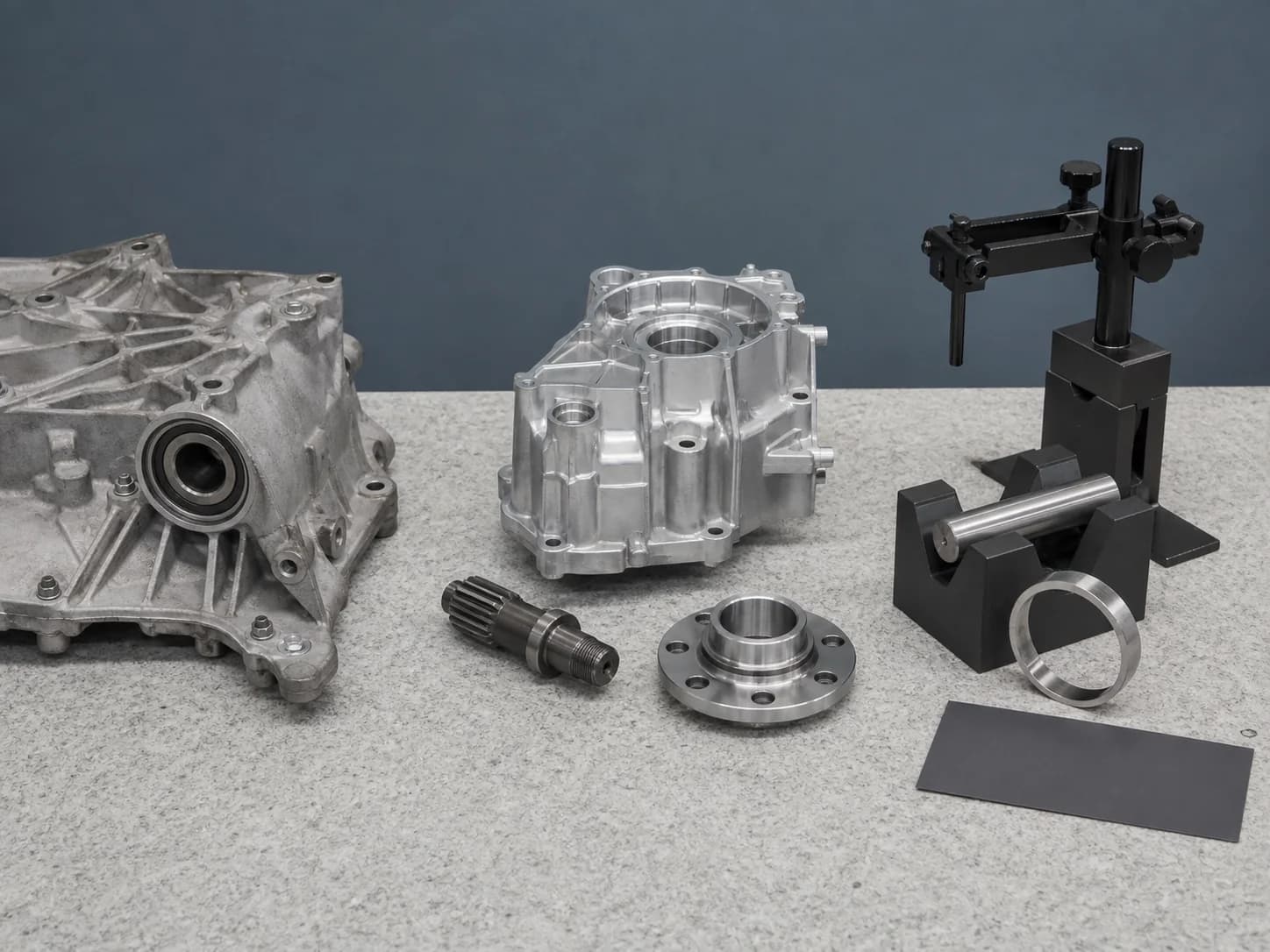
Automotive OEM & Aftermarket request feature map
Housing context, drivetrain geometry, and checking fixture
Illustrative planning reference only. Markers do not establish part function, capability, compliance, acceptance, or suitability.
Automotive OEM & Aftermarket request review
Choose a marker to review the supporting inputs.
State vehicle or assembly context, program stage, change status, quantity, release pattern, and requirement authority.
Helpful request detail
Include the current document index and identify the PPAP request level.
Request contexts
Select the context that best describes the part, release stage, and supporting inputs.
Define test intent, interfaces, controlled deviations, quantity, finish, and expected design changes.
State PPAP level, control plan, gage R&R inputs, templates, and submission quantity.
Provide approved baseline, release pattern, labeling, packaging, change control, and record needs.
Define BOM, torque notes, instructions, branding, line-side packaging, and acceptance checks.
Quote review flow
The review connects the controlled drawing to PPAP, release, assembly, and packaging expectations.
Provide the current drawing, model, revision, automotive oem and aftermarket context, quantity, and target timing.
Identify governing documents, precedence, approved substitutions, restricted data, and customer-controlled decisions.
Connect material, geometry, interfaces, process history, finish, inspection, documentation, and packaging requirements.
Pearson confirms accepted scope, routing, records, timing, and open questions before work proceeds.
Request readiness
Make functional, process, evidence, and release expectations explicit before quoting.
Connect A-B-C datums to assembly interfaces and identify only function-critical relationships.
State thread form, class, depth, insert requirements, access direction, and gage expectation.
Identify deep pockets, relief areas, obstructed features, and any allowed alternate operation.
Provide weld symbols, sequence constraints, fixture datums, and post-weld machining allowance.
Name the finish, controlled revision, affected surfaces, masking, edge condition, and appearance notes.
Identify level, control plan, gage R&R, capability-study request, templates, and approval authority.
Materials
Use grade, condition, form, function, finish, and evidence notes to define the material input.
Review billet, plate, casting, temper, interface, and finish inputs.
View materialReview corrosion, heat, strength, and finish context.
View materialReview bushing, guide, clip, fit, and stability requirements.
View materialReview tooling, wear, shaft, hardness, and heat-treatment inputs.
View materialRelated services
Explore process guides, then let the reviewed program baseline determine the path.
Review brackets, housings, plates, and milled interfaces.
Review joints, symbols, fixtures, and weldment controls.
Review BOM, torque, marking, kitting, and acceptance inputs.
Review shafts, hubs, pins, sleeves, and concentric features.
Review finish, masking, appearance, and evidence inputs.
Review CTQs, gages, records, and acceptance criteria.
FAQ
These answers explain the request inputs without promising program scope, evidence, or manufacturing result.
Submit the required PPAP level, element list, templates, supplier qualifications, and approval authority. Scope and evidence are confirmed during review.
Provide the BOM, drawings, assembly instructions, torque and marking notes, packaging, quantities, and acceptance criteria for review.
No route is assumed. Component, process, supplier, program, documentation, quantity, and timing inputs are reviewed before a path is confirmed.
Identify the datums, CTQs, fits, and relationships that affect assembly or function. Achievable requirements are assessed from the drawing.
State total quantity, release pattern, change status, labeling, packaging, kitting, and requested records.
Provide the current model and drawing, BOM, PPAP list, control-plan inputs, finish notes, quantities, and target timing.
Start with the request
Share the controlled drawing, program stage, PPAP inputs, quantities, release pattern, assembly notes, and packaging requirements.
Request an automotive quote