Duty context
Describe load direction, impact, debris, vibration, duty cycle, and observed failure or wear.
Construction & Heavy Equipment request guide
Share the machine context, drawing, material grade, load and wear conditions, interfaces, service history, quantity, and acceptance details. Pearson reviews the request before confirming any process or fulfillment path.
Capability review
This page describes common request types. Available processes, equipment, tolerances, inspection, documentation, and fulfillment are confirmed for each quote.
Overview
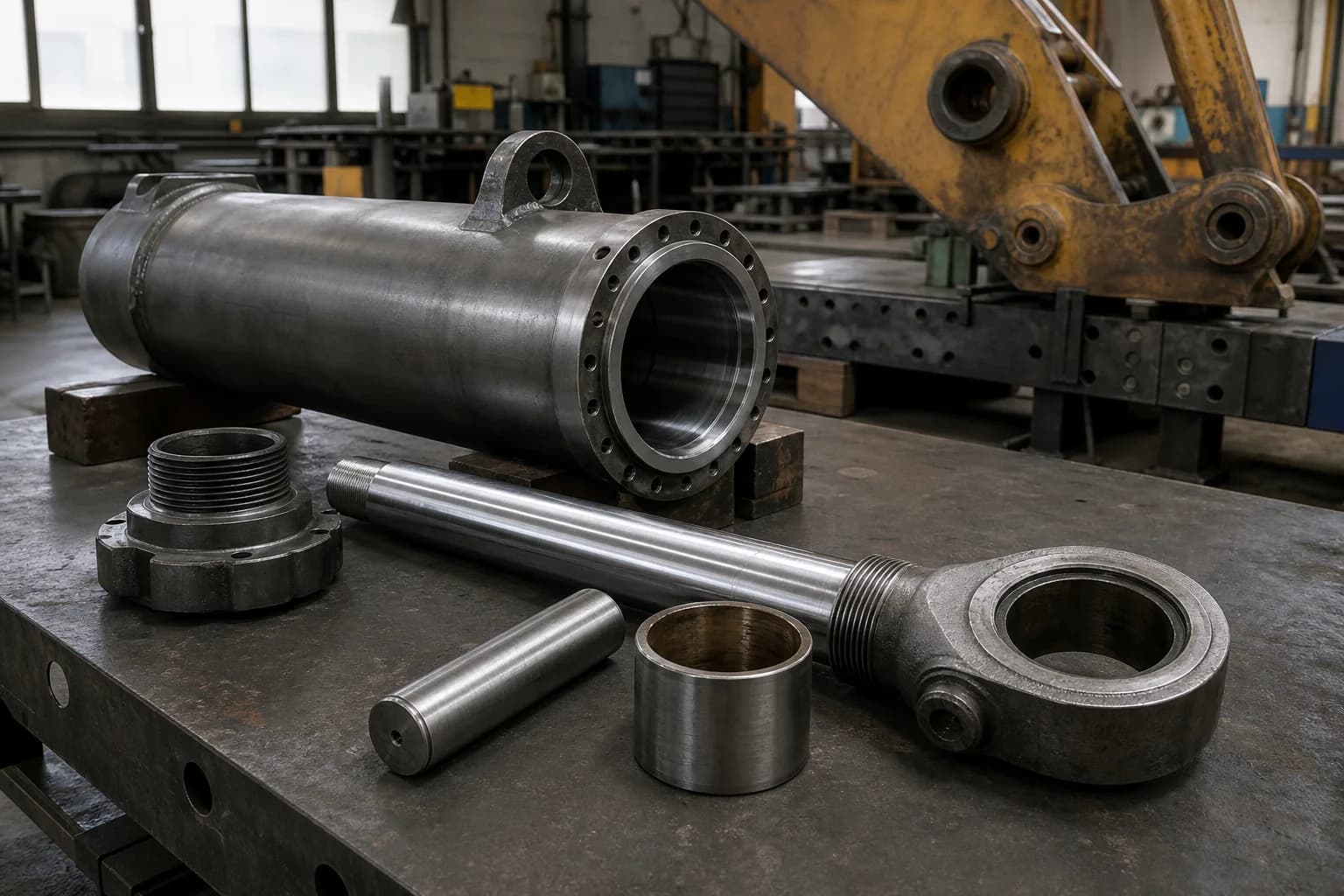
Heavy-equipment requests are easier to review when the drawing is connected to machine duty, loads, wear zones, hydraulic interfaces, field access, and the baseline a replacement must preserve.
Describe load direction, impact, debris, vibration, duty cycle, and observed failure or wear.
Identify bores, pins, mounting faces, ports, adjacent parts, and alignment-sensitive relationships.
State replacement method, access limits, approved changes, and the acceptance baseline.
Industry request review
Manufacturing route, supplier fit, inspection scope, records, and timing are confirmed only after the heavy-equipment request is reviewed.
Quote inputs
Focus on field duty, part interfaces, material identity, fabrication intent, and acceptance requirements.
Interactive request review
Use the markers to connect field duty, component definition, and acceptance inputs.
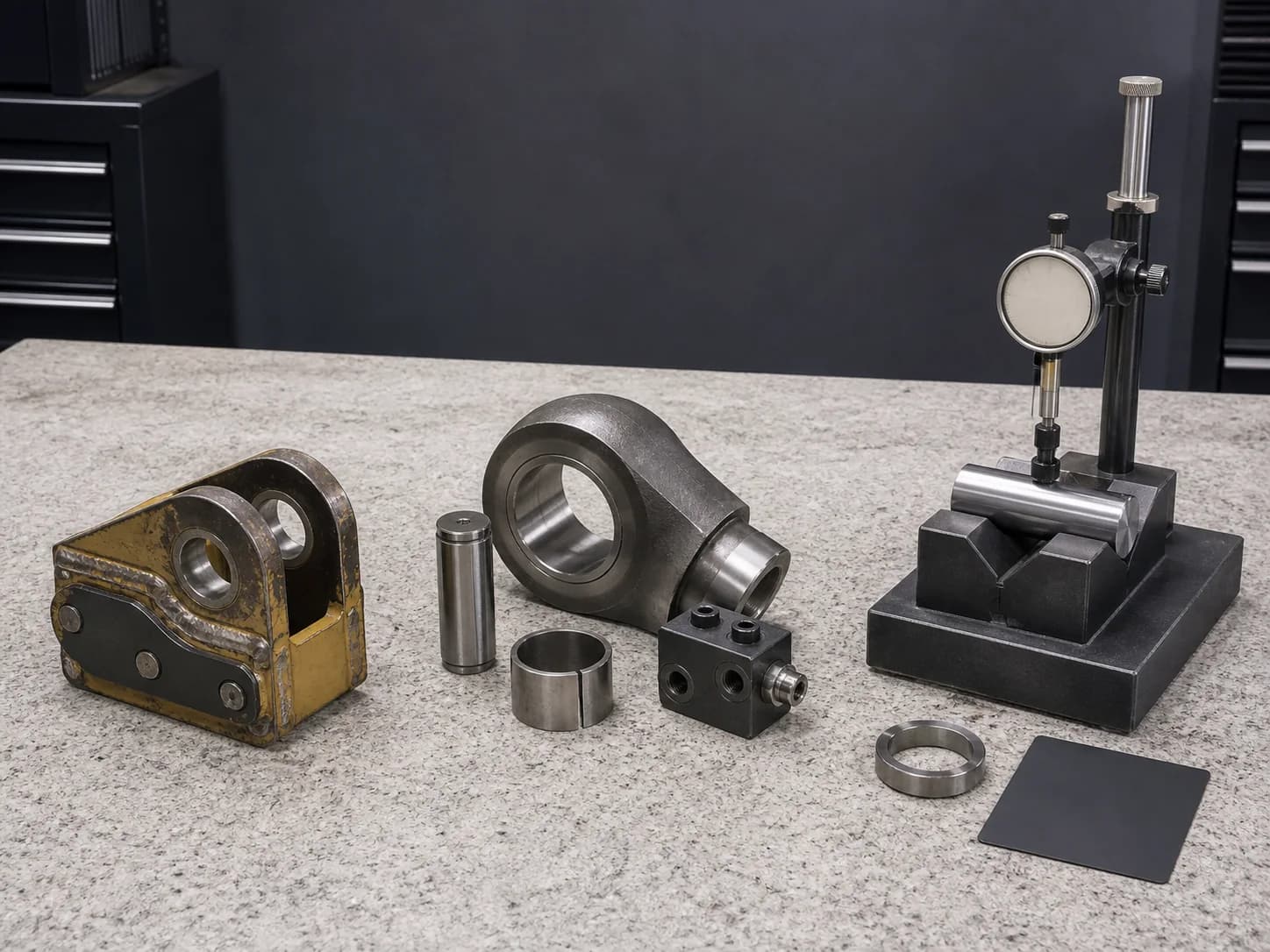
Construction & Heavy Equipment request feature map
Linkage duty, pivot interfaces, and inspection setup
Illustrative planning reference only. Markers do not establish part function, capability, compliance, acceptance, or suitability.
Construction & Heavy Equipment request review
Choose a marker to review the supporting inputs.
Explain the machine, duty, load path, wear or failure history, quantity, service need, and requirement authority.
Helpful request detail
Include assembly photos and a concise service-history note.
Request contexts
Choose the context that best explains the part, service environment, and review inputs.
Define weld symbols, fixture datums, stress-relief notes, load path, and post-weld interfaces.
Identify casting condition, datum and bore strategy, mating faces, and balance requirements.
Define passages, port threads, sealing faces, cleanliness notes, and requested acceptance checks.
State AR plate grade, contact zones, replaceable hardware, service access, and wear direction.
Quote review flow
The review connects machine duty and service history to the controlled part definition.
Provide the current drawing, model, revision, construction and heavy equipment context, quantity, and target timing.
Identify governing documents, precedence, approved substitutions, restricted data, and customer-controlled decisions.
Connect material, geometry, interfaces, process history, finish, inspection, documentation, and packaging requirements.
Pearson confirms accepted scope, routing, records, timing, and open questions before work proceeds.
Request readiness
Make fabrication, machining, hydraulic, wear, and service assumptions explicit.
Mark weldment faces and bores intended for post-weld machining after stabilization.
Connect locating faces to alignment-critical bores, pins, and mating components.
Identify when stabilization belongs before final machining and which interfaces it protects.
State port threads, passage intersections, sealing features, cleanliness, and acceptance requirements.
Show wear direction, material grade, replaceable hardware, clearances, and field access.
Include adjacent-part dimensions, approved changes, assembly sequence, and compatibility checks.
Materials
Define grade, form, condition, load or wear context, finish, and evidence needs.
Review ductile iron housing, hub, bore, and casting inputs.
View materialReview corrosion, washdown, interface, and finish context.
View materialReview guards, covers, brackets, housings, and weight-sensitive parts.
View materialReview pins, wear parts, tooling, hardness, and heat-treatment inputs.
View materialRelated services
Use these guides to prepare process details without assuming manufacturing route.
Review large-envelope geometry and handling inputs.
Review joints, symbols, fixtures, and distortion controls.
Review flatness, stock, and surface relationships.
Review broad parts, weldments, and multi-face access.
Review pins, bushings, shafts, and concentric interfaces.
Review alignment, interfaces, records, and acceptance criteria.
FAQ
These answers explain request inputs without promising capacity, route, timing, or result.
No route is assumed. Part, process, supplier, inspection, documentation, quantity, and timing inputs are reviewed before a path is confirmed.
Provide the full envelope, weight, lifting points, weld symbols, fixture datums, machining stock, quantity, and acceptance needs for review.
State the specified grade and condition for carbon or alloy steel, AR plate, stainless, aluminum, ductile iron, or other material.
Include passage layout, port threads, sealing faces, cleanliness notes, material, quantity, and requested acceptance checks.
Share photos, service interval, contact direction, observed failure, material identity, replacement method, and adjacent-part details.
Provide the current drawing or model, assembly photos, interface dimensions, service history, quantity, and acceptance criteria.
Start with the request
Share the drawing, machine context, material, loads, interfaces, service history, quantity, and acceptance details.
Request a heavy-equipment quote