Identity and authority
State the family, grade or designation, classification, governing specification, chemistry requirements, source precedence, and substitution authority.
Tool steel material guide
Share the controlled part, exact family and grade, product form, condition, source, thermal sequence, hardness basis, and critical requirements. Pearson reviews process, inspection, documentation, fulfillment, and timing before acceptance.
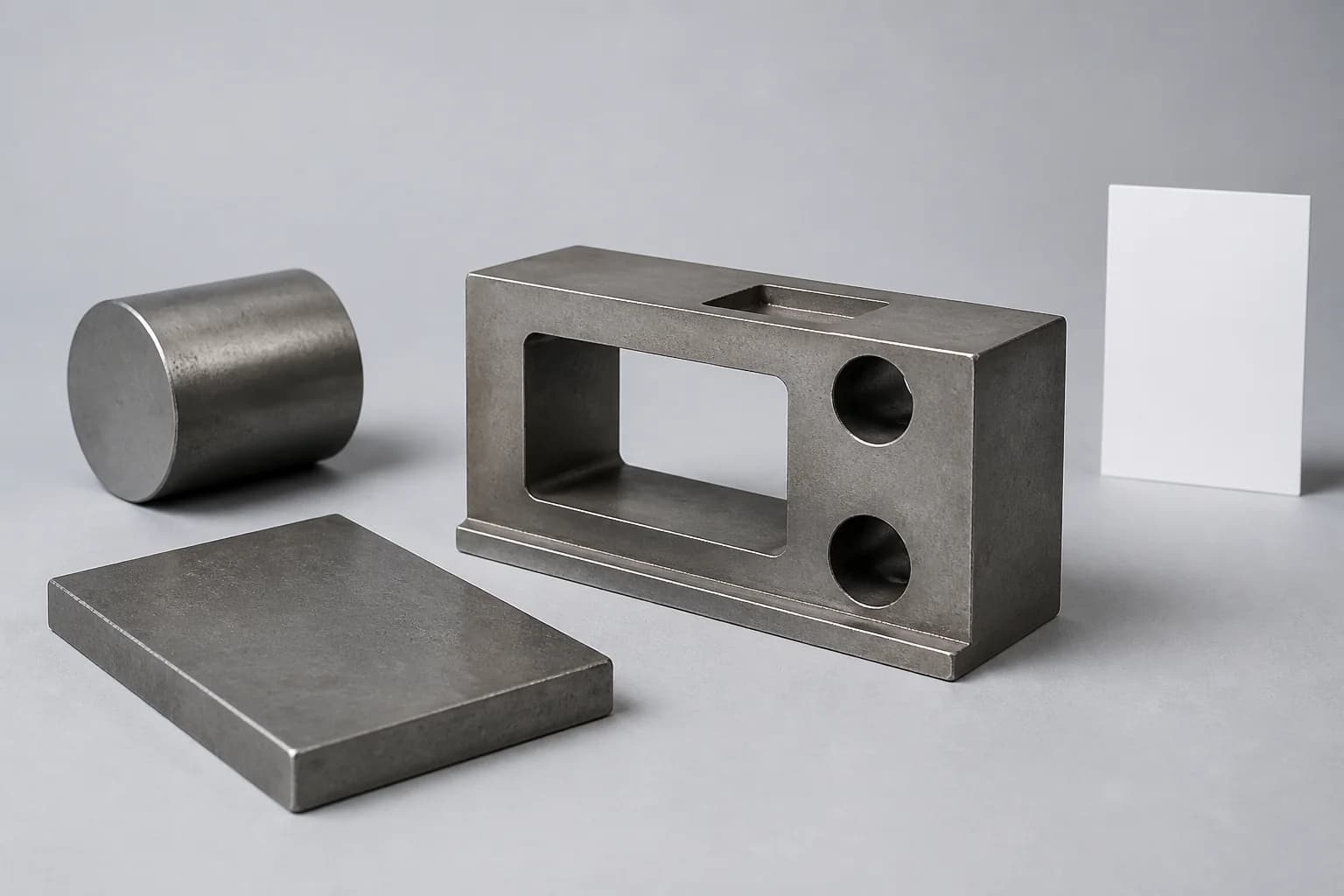
Material review
Grades, forms, finishes, and applications shown here are examples for quote review. Availability and achievable tolerances are confirmed for each request.
Overview
A family, grade, or classification is incomplete without its governing specification, product form, manufacturing route, supplied and heat-treated condition, and acceptance basis. Appearance, a coupon, or a local hardness value alone does not establish identity, whole-part properties, conformity, or suitability.
State the family, grade or designation, classification, governing specification, chemistry requirements, source precedence, and substitution authority.
Identify product form, declared route, dimensions, supplied and heat-treated condition, surface-treatment state, quantity, source, and heat or lot mapping.
Mark critical interfaces, thermal sequence, allowances, hardness or metallurgical basis, surface integrity, inspection, acceptance, traceability, and requested records.
Material review
Grades, forms, finishes, and applications shown here are examples for quote review. Availability and achievable tolerances are confirmed for each request.
Quote inputs
Share what is known in a private file or description. Process, Material, Material source, quantity, and timing may remain open for follow-up.
Interactive request review
Select a marker to review identity, thermal sequence, or evidence boundaries. The illustration does not establish material identity, hardness, process results, tool role, or suitability.
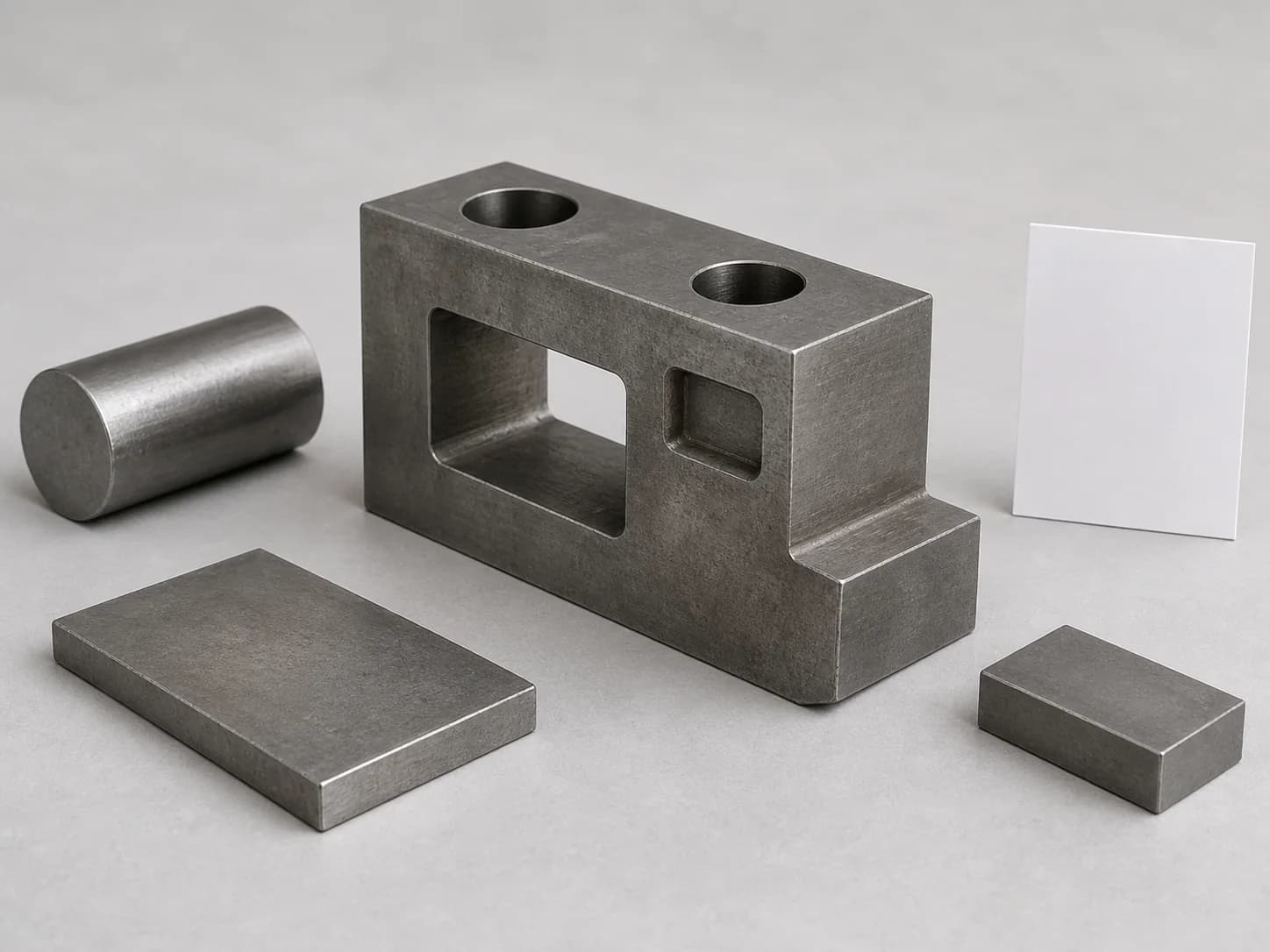
Three connected tool-steel request zones
Identity, part requirements, and evidence stay visible together.
Illustrative layout only. Markers identify review topics; the image or coupon does not establish identity, hardness, results, tool role, records, or suitability.
Tool-steel request review
Select a marker for concise review details.
Define the family, grade, classification, specification, product form, route, supplied and heat-treated condition, surface-treatment state, source, and records.
Helpful request detail
Match grade, form, condition, source, and records to controlled files.
Request contexts
These examples organize request inputs. Material, process, heat treatment, inspection, availability, fulfillment, and timing remain subject to project review.
Define the family, grade or designation, classification, specification, chemistry, condition, source, certificate fields, and heat or lot mapping.
State product form, dimensions, direction, supplied and heat-treated condition, quantity, source, allowances, surface, and inspection basis.
Identify the exact input form, declared route, condition, source, process history, retained regions, test basis, and requested records.
Define heat treatment, EDM or grinding boundaries, allowances, hardness or case basis, surface integrity, inspection, acceptance, and records.
Quote workflow
A short review keeps identity, sequence, final state, evidence, and open questions visible before acceptance.
Upload the controlled files or description, grade, form, condition, quantity, source, sequence, critical requirements, and timing.
Family, grade, classification, form, route, condition, source, certificate fields, heat or lot mapping, and conflicts are reviewed.
Geometry, interfaces, thermal sequence, allowances, hardness, surface integrity, inspection, acceptance, and requested records are connected.
Accepted files, requirements, records, timing, and authorized changes become the reference for project communication.
Request readiness
Clear, controlled inputs are more useful than assumptions about a grade, coupon, local reading, or illustrated form.
Separate family, grade, classification, specification, chemistry, units, source precedence, and substitution authority.
State form, route, dimensions, condition, heat treatment, surface-treatment state, source, and quantity.
Identify ownership, markings, heat or lot, custody, verification, substitution authority, and remnant return.
Mark interfaces, prior processing, thermal sequence, envelopes, distortion limits, removal allowances, and protected regions.
Name method, scale, item or specimen, preparation, state, locations, coverage, result, and acceptance.
State inspection, acceptance, rejection, traceability, records, preservation, packaging, and disposition.
Materials
Use these guides for alternatives or mating materials without assuming interchangeability, compatibility, availability, or shared properties.
Grade, form, condition, treatment, and interfaces.
Grade · form · condition · interface contexts
View materialRole, designation, form, wear, and interfaces.
Role · designation · form · wear contexts
View materialType, casting state, section, repair, and interfaces.
Type · casting · section · repair contexts
View materialAlloy, temper, mass, isolation, and interfaces.
Alloy · temper · mass · interface contexts
View materialRelated
Use these service guides to organize process-specific geometry, sequence, surface, inspection, and acceptance inputs before fit is confirmed.
Tool geometry, sequence, finish, and inspection.
Affected surfaces, allowances, sequence, and inspection.
Flat features, allowance, surface, and inspection.
Diameters, allowance, surface, datum, and inspection.
Condition, damage, repair authority, sequence, and acceptance.
Measurement, coverage, acceptance, and records.
FAQ
Share a model, drawing, specification, record, photos, or description. Add grade, form, condition, source, sequence, quantity, critical requirements, inspection needs, and timing.
State family, grade, classification, specification, form, route, dimensions, condition, surface-treatment state, source, certificate fields, and heat or lot mapping.
Define sequence, item or specimen, preparation, state, method, scale, locations, coverage, result, acceptance, and record. A local or converted value does not establish whole-part properties.
Choose Customer supplied, then identify ownership, grade, form, condition, source, markings, quantity, heat or lot, custody, verification, substitution authority, and remnants. These remain owner-declared pending receipt and review.
Declare history, sequence, affected surfaces, envelopes, removal allowances, protected regions, measurement state, inspection method, coverage, acceptance, traceability, and records.
Grades, forms, finishes, and applications shown here are examples for quote review. Availability and achievable tolerances are confirmed for each request. Requests are reviewed manually. The fulfillment route and availability are confirmed before acceptance.
Start with the files you have
Share the controlled files, exact grade, form, source, condition, sequence, critical requirements, inspection needs, requested records, quantity, and timing. Pearson will follow up on open details.
Request a tool-steel quote