Machine context
Identify weaving, knitting, cutting, dyeing, finishing, or handling context, motion, web path, and governing files.
Textile & Apparel Machinery request guide
Share the controlled drawing, roller interfaces, spindle interfaces, speed inputs, balance grade, residual-unbalance limit, materials, finish masks, inspection plan, acceptance criteria, and responsibility boundaries for quote review.
Capability review
This page describes common request types. Available processes, equipment, tolerances, inspection, documentation, and fulfillment are confirmed for each quote.
Overview
Textile machinery requests depend on controlled geometry, speed inputs, balance grade, roller and spindle interfaces, material and process history, wear surfaces, finish masks, inspection, and acceptance authority.
Identify weaving, knitting, cutting, dyeing, finishing, or handling context, motion, web path, and governing files.
Define roller interfaces, spindle interfaces, speed inputs, balance grade, residual-unbalance limit, datums, and fits.
State wear surfaces, finish masks, inspection plan, acceptance criteria, identification, and requested records.
Industry request review
Industry examples are starting points for quote review. Capability, equipment, tolerances, testing, documentation, supplier qualifications, fulfillment, and program eligibility are confirmed before acceptance.
Quote inputs
Share customer-controlled motion and surface requirements; identify unresolved machine decisions.
Interactive request review
Select a marker to organize machine context, rotating interfaces, surfaces, inspection, records, and acceptance inputs.
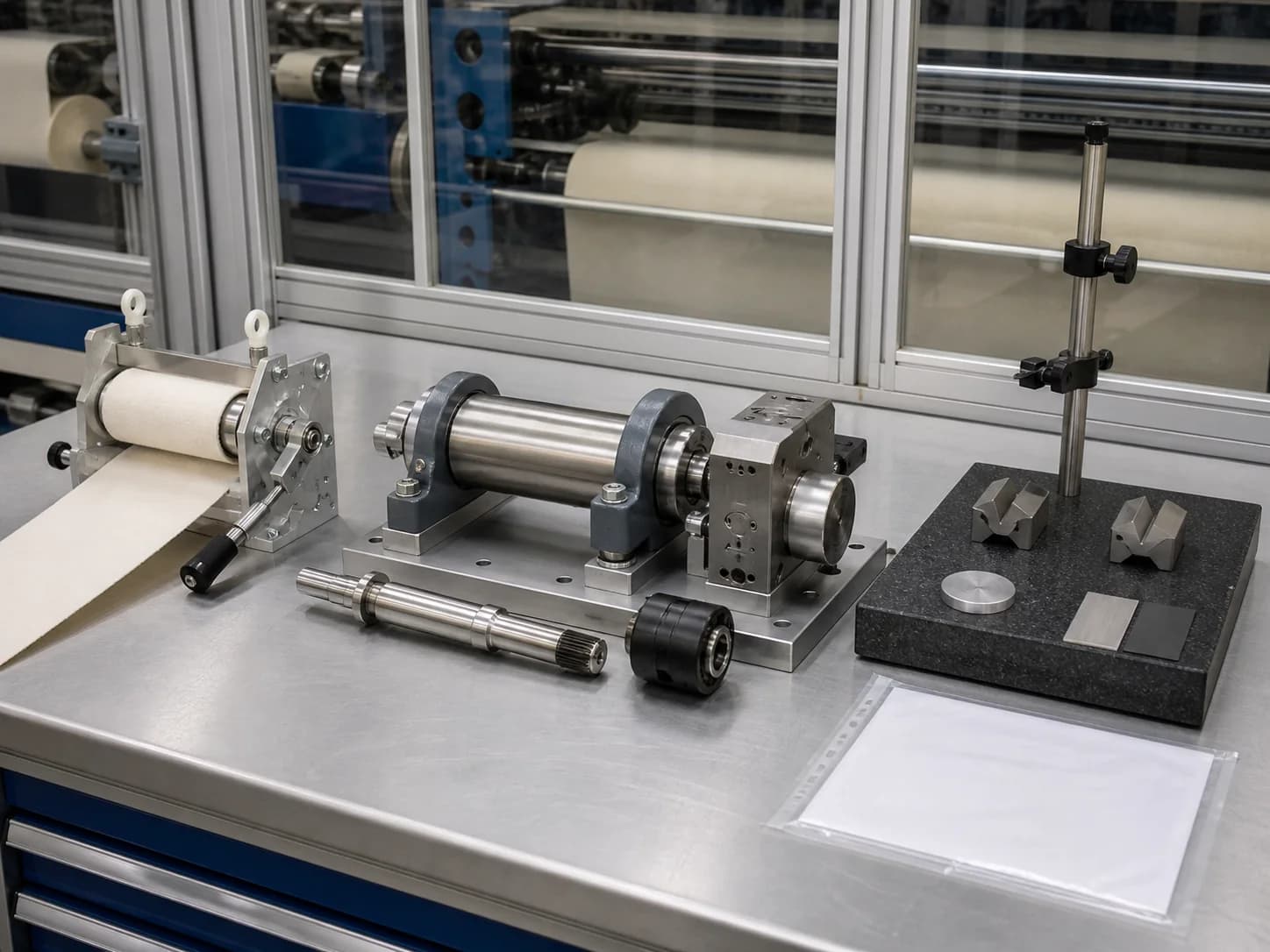
Textile & Apparel Machinery request feature map
Stationary web context, roller geometry, and support fixtures
Illustration only; markers do not establish identity, function, process, inspection, acceptance, or suitability.
Textile & Apparel Machinery request review
Choose a marker to review the supporting inputs.
Connect the part to its machine, web path, motion, environment, and governing files.
Helpful request detail
Include the assembly view and controlled drawing.
Request contexts
Use the machine context that matches the controlled request.
Define web path, roller interfaces, surface, runout requirement, finish masks, and acceptance.
Identify speed inputs, spindle interfaces, fits, balance grade, lubrication, wear, and records.
State material, heat history, cutting geometry, mating support, wear surfaces, inspection, and handling.
Provide motion, load, datums, gear or belt interfaces, adjustment, guarding, and assembly inputs.
Quote review flow
Controlled inputs keep motion, interfaces, surfaces, and acceptance decisions visible.
Provide the current drawing, model, revision, textile and apparel machinery context, quantity, and target timing.
Identify governing documents, precedence, approved substitutions, restricted data, and customer-controlled decisions.
Connect material, geometry, interfaces, process history, finish, inspection, documentation, and packaging requirements.
Pearson confirms accepted scope, routing, records, timing, and open questions before work proceeds.
Request readiness
These inputs distinguish customer requirements from machine assumptions.
State machine, station, web path, material handled, motion, environment, and responsibility boundaries.
Show roller interfaces, spindle interfaces, datums, fits, bearings, drives, fasteners, and adjustment.
Provide speed inputs, mounting condition, balance grade, residual-unbalance limit, method, and acceptance authority.
Mark wear surfaces, web-contact zones, finish, finish masks, coatings, edges, and protected areas.
List characteristics, methods, coverage, acceptance criteria, identification, balance records requested, and traceability.
Provide quantity, preservation, packaging, supplied items, destination, and requested delivery context.
Materials
Material identity, condition, history, and surface remain request-specific.
Grade, condition, surface, joining, and environment inputs.
View materialAlloy, temper, surface, mass, and interface inputs.
View materialGrade, condition, heat history, wear, and acceptance inputs.
View materialNamed material, grade, formulation, wear, and interface inputs.
View materialRelated services
Choose links that match the controlled scope.
Prismatic geometry and datum review.
Surface, bore, datum, and acceptance inputs.
Rotational surface and datum inputs.
Assembly, verification, and record inputs.
Rotational geometry and datum review.
Surface, masking, and acceptance inputs.
FAQ
Answers describe quote inputs, not confirmed manufacturing scope.
Manufacturing location, routing, supplier controls, and responsibility are confirmed only through quote review. This page does not identify a facility or routing path.
Provide speed inputs, mounting condition, balance grade, residual-unbalance limit, method, datum scheme, acceptance criteria, and records. Scope is decided during quote review.
State the exact process specification, preparation, finish masks, protected zones, hardness or surface requirements, inspection, records, and supplier qualifications.
Tolerance review depends on geometry, material and process history, speed and balance inputs, datum scheme, interfaces, inspection method, and customer acceptance authority.
Include the controlled drawing, revision, machine context, speed inputs, balance grade, quantity, materials, surfaces, inspection plan, records, and acceptance criteria.
Provide roller or spindle interfaces, datums, fits, bearings, drives, web-contact zones, speed inputs, balance requirement, surfaces, inspection, and records.
Start with the request
Share the controlled files, machine context, interfaces, speed and balance inputs, surfaces, inspection, quantity, and open questions for review.
Request a textile quote