Movement path
Identify pivots, pulleys, cables, sliding interfaces, stops, guards, and service access.
Fitness & Gym Equipment request guide
Share the equipment context, drawings, tube and material details, pivots, welds, finish, branding, assembly, load criteria, quantity, and packaging. Pearson reviews the request before confirming a manufacturing path.
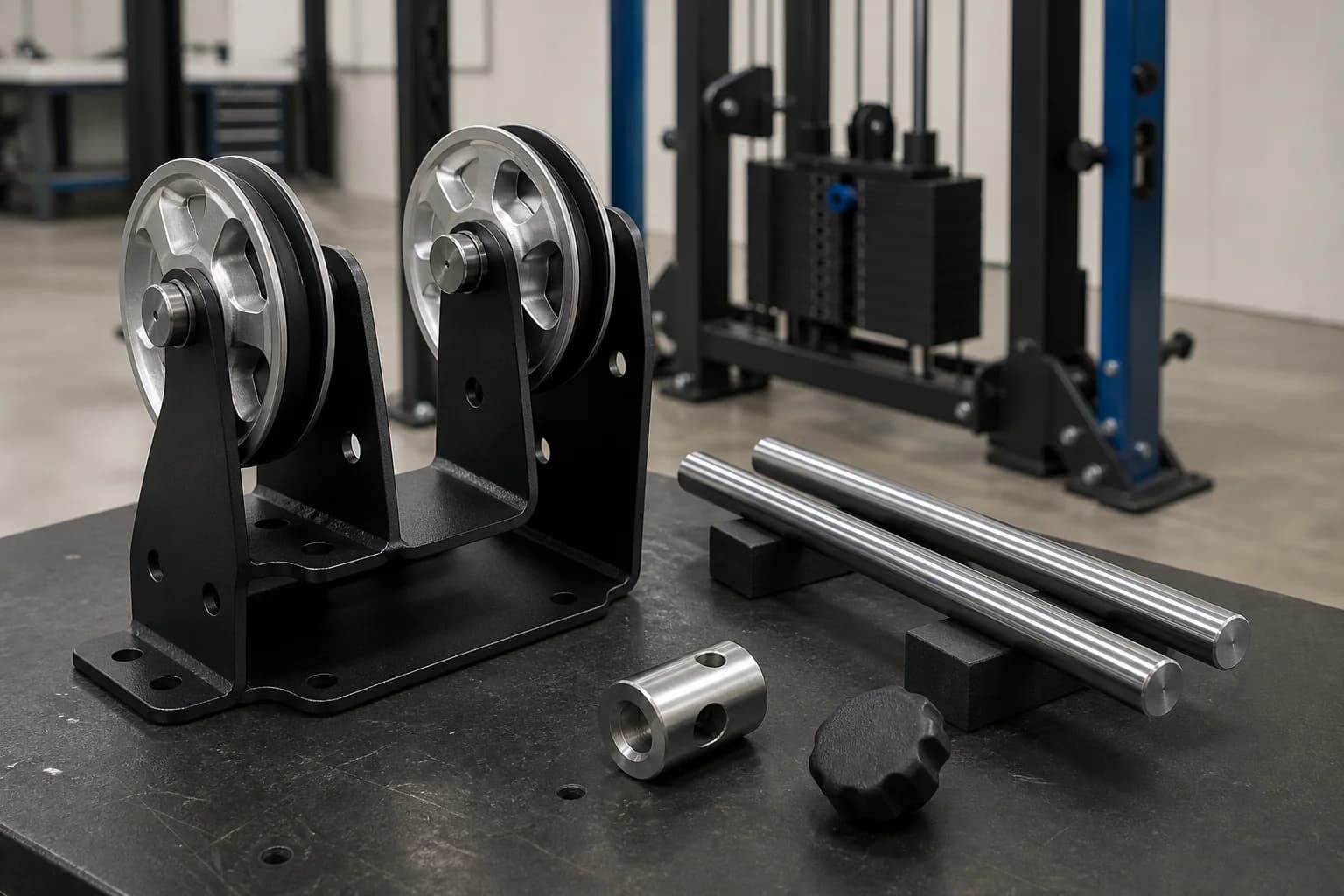
Capability review
This page describes common request types. Available processes, equipment, tolerances, inspection, documentation, and fulfillment are confirmed for each quote.
Overview
Fitness-equipment requests need a shared baseline for frame geometry, pivots, clearances, welds, user-contact surfaces, load criteria, finish, branding, cable routing, assembly, and packaging.
Identify pivots, pulleys, cables, sliding interfaces, stops, guards, and service access.
State required load criteria, direction, fixture method, acceptance authority, and requested records.
Define RAL colour, texture, gloss, marking, decals, protected threads, and packaging.
Industry request review
Process route, supplier fit, finish, assembly, load-check scope, records, and timing are confirmed only after request review.
Quote inputs
Connect equipment use and movement to geometry, load criteria, finish, assembly, and packaging.
Interactive request review
Use the markers to connect equipment context, component definition, and acceptance inputs.
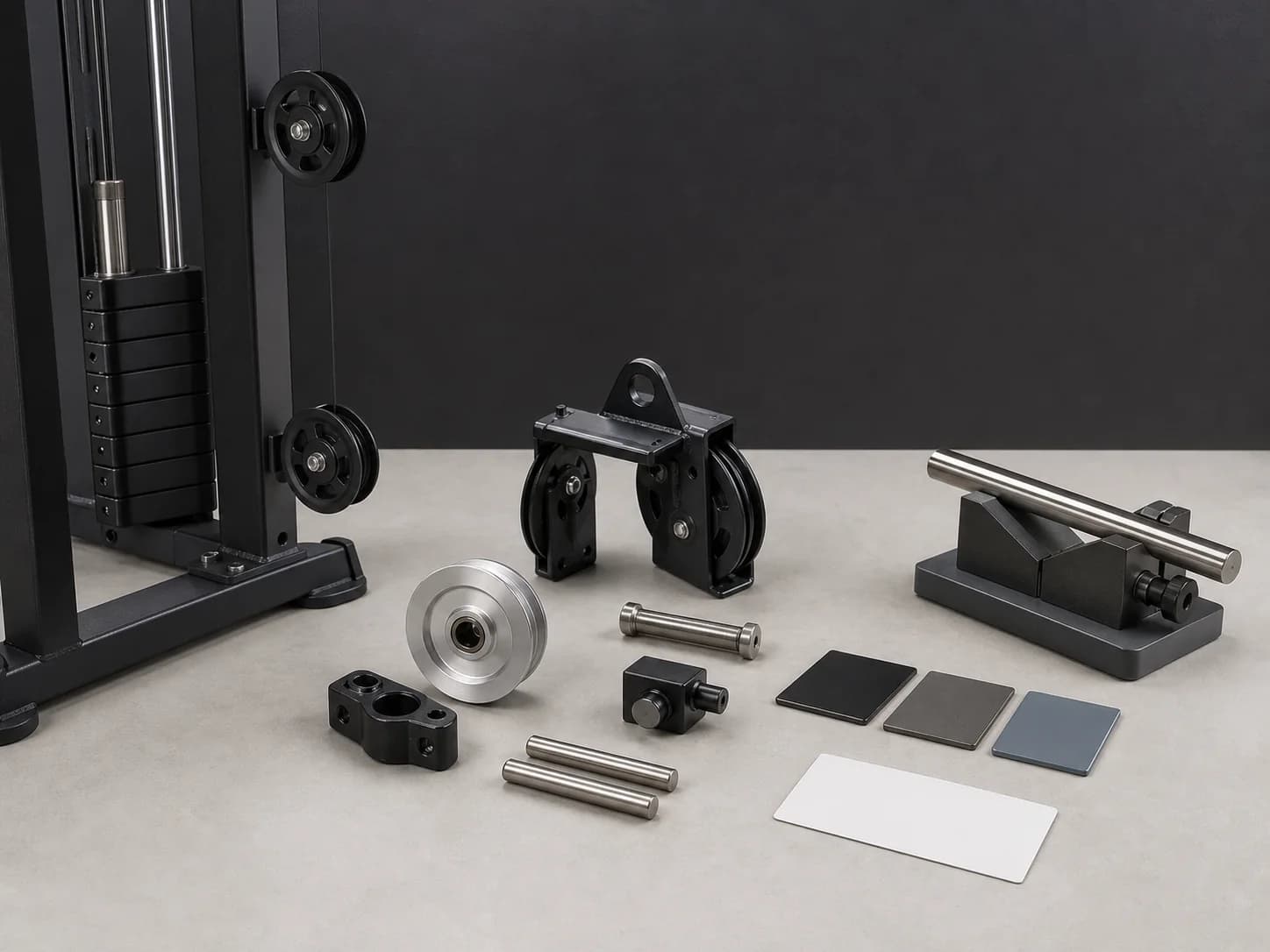
Fitness & Gym Equipment request feature map
Cable station, pulley interfaces, and fit setup
Illustrative planning reference only. Markers do not establish part function, capability, compliance, acceptance, or suitability.
Fitness & Gym Equipment request review
Choose a marker to review the supporting inputs.
Explain equipment type, user interaction, movement path, load criteria, build stage, quantity, and requirement authority.
Helpful request detail
Include an assembly view and identify user-contact and moving areas.
Request contexts
Choose the context that best explains build stage, movement, finish, and assembly inputs.
Define learning goals, movement, load intent, adjustable interfaces, finish, and expected changes.
Provide approved baseline, fixture datums, quantity pattern, change control, finish, and packaging.
State RAL colour, gloss, texture, marking, decals, hardware colour, and acceptance reference.
Define equipment identity, interfaces, wear history, compatibility, approved changes, and replacement access.
Quote review flow
The review connects movement and load context to fabrication, finish, assembly, and acceptance.
Provide the current drawing, model, revision, fitness and gym equipment context, quantity, and target timing.
Identify governing documents, precedence, approved substitutions, restricted data, and customer-controlled decisions.
Connect material, geometry, interfaces, process history, finish, inspection, documentation, and packaging requirements.
Pearson confirms accepted scope, routing, records, timing, and open questions before work proceeds.
Request readiness
Make tube, weld, movement, finish, assembly, and load intent explicit.
State tube size, wall, bend centreline, orientation, end condition, and adjacent features.
Identify pivot, pulley, bearing, sliding, and mounting relationships that control movement or fit.
Protect sliding interfaces, bearing seats, hardware access, user contact, and coated mating faces.
Identify threads, grounding points, bearing seats, hardware fits, and areas excluded from powder coat.
State tab-and-slot features, fixture datums, fasteners, torque requirements, and cable routing.
Provide load direction, method, fixture, cycles if applicable, acceptance criteria, and required records.
Materials
Define grade, form, condition, contact, movement, finish, and assembly requirements.
Review guards, pulleys, brackets, housings, and finish inputs.
View materialReview handles, pins, hardware, corrosion, and appearance inputs.
View materialReview guides, bushings, rollers, fit, wear, and stability.
View materialReview wear pads, guides, liners, clearances, and fastener inputs.
View materialRelated services
Explore process guides, then let the reviewed equipment baseline determine the route.
Review guards, brackets, panels, bends, and hardware.
Review colour, texture, masking, marking, and acceptance criteria.
Review assembly, torque, load method, fit checks, and records.
Review tube size, bends, orientation, and end details.
Review joints, symbols, fixtures, and weld keep-outs.
Review pivots, pulleys, pins, bushings, and interfaces.
FAQ
These answers explain request inputs without promising finish, testing, route, timing, or result.
No route is assumed. Component, fabrication, finish, supplier, assembly, quantity, load, packaging, and timing inputs are reviewed first.
Provide RAL colour or another controlled reference, gloss, texture, pretreatment, masking, marking, visible surfaces, and acceptance criteria.
Identify the datums, pivots, bearing seats, sliding interfaces, clearances, and relationships that affect movement or assembly.
Submit the BOM, assembly instructions, torque requirements, cable routing, load method, acceptance criteria, fixture needs, and requested records.
Provide equipment identity, assembly photos, interface dimensions, wear history, approved changes, replacement access, and quantity.
Provide the model, drawings, assembly view, BOM, finish reference, quantities, load method, labels, and packaging notes.
Start with the request
Share the drawings, movement, material, welds, finish, assembly, load criteria, quantity, branding, and packaging.
Request a fitness-equipment quote