Envelope and condition first
Raw and finished dimensions, approximate mass, stock form, current condition, and any projecting features help establish the physical review context without implying a published capacity.
Large turning services
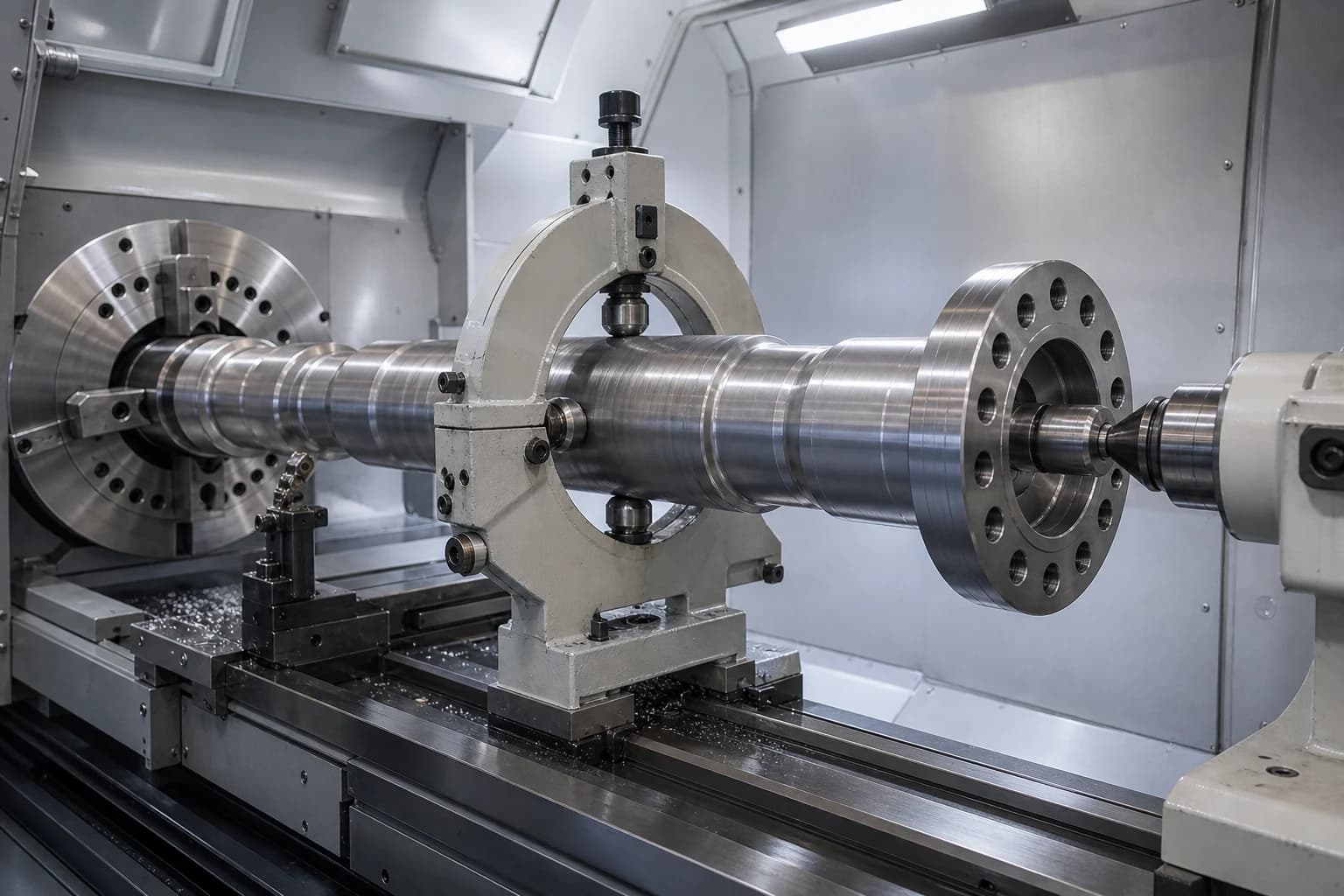
Large shafts, rollers, drums, rings, flanges, sleeves, and round housings raise review questions around raw and finished geometry, approximate mass, material condition, support, access, journals, bores, faces, rotational datums, runout relationships, finish, and inspection. Share the model and drawing so those constraints can be organized and a project path confirmed before acceptance.
Capability review
This page describes common request types. Available processes, equipment, tolerances, inspection, documentation, and fulfillment are confirmed for each quote.
Overview
Scaling a turned component changes the questions before a path is selected. Starting and finished envelope, approximate mass, stock form and current condition, support and contact zones, end and radial access, functional journals, bores and faces, rotational datums, runout relationships, finish, and inspection context should be visible in the request.
Raw and finished dimensions, approximate mass, stock form, current condition, and any projecting features help establish the physical review context without implying a published capacity.
Allowed support and contact zones, protected surfaces, journal locations, end access, radial access, and possible orientation constraints belong in the files.
The controlling axis and faces, functional fits, runout relationships, required measurement condition, and documentation expectations should be stated instead of inferred.
Fulfillment review
Requests are reviewed manually. The fulfillment route and availability are confirmed before acceptance.
Quote inputs
You do not need every answer before submitting. Share what is known and mark the rest for follow-up.
Interactive large-turning review
Select a feature on the sample flanged shaft to see what the model and drawing should communicate before the project path is confirmed.
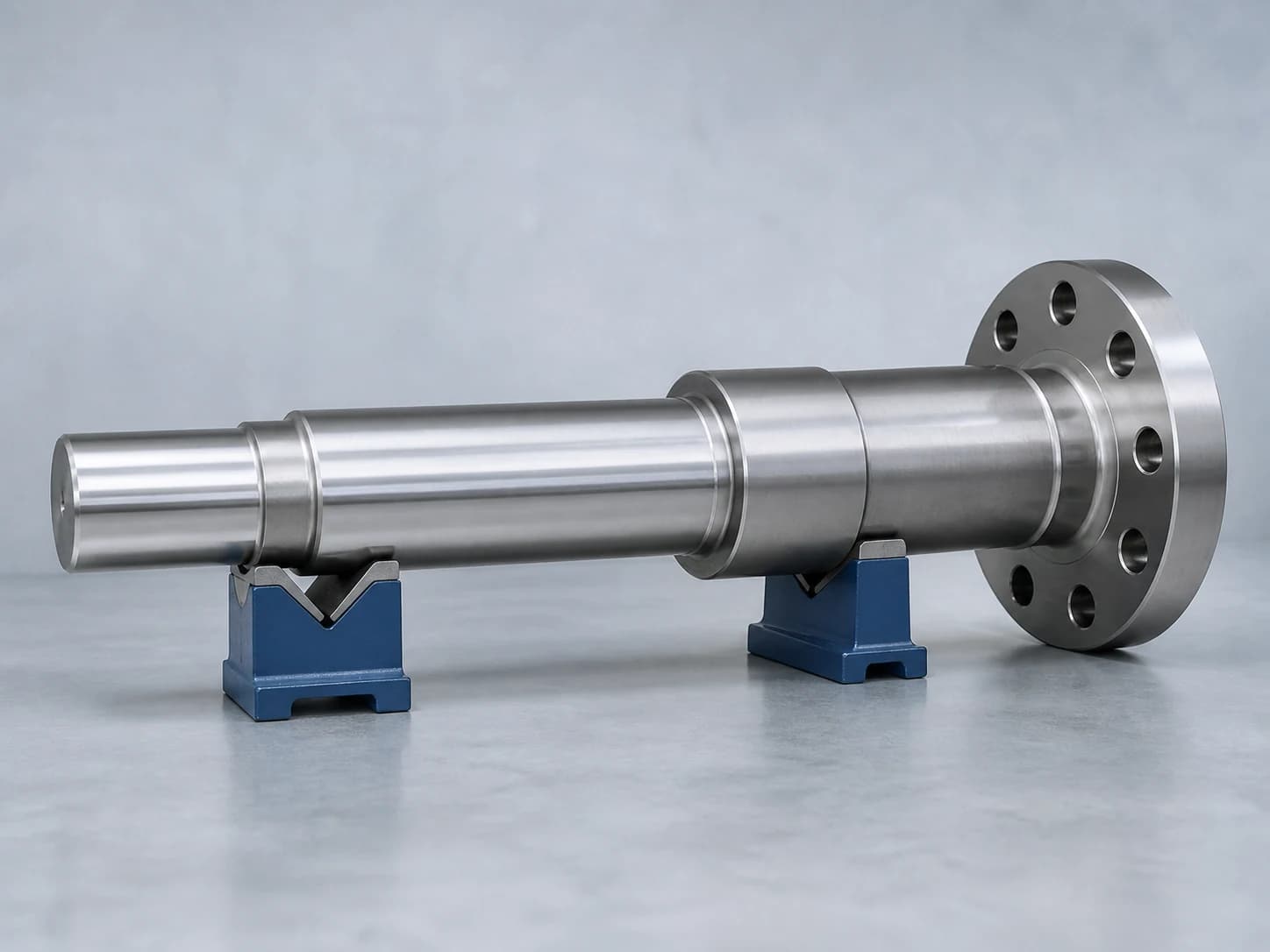
Sample large-turning review map
The numbered markers match the review features and guidance panel.
Illustrative example only; markers identify review areas, not dimensions, capacities, setup approval, or tolerances.
Large-turning feature review
Select a review feature to see the details that help clarify the request.
A journal request is clearest when its finished diameter is connected to the mating bearing or seal, surface condition, and datum relationship instead of being reviewed as a size alone.
Helpful drawing detail
Place size, fit, surface-texture, and runout callouts on the drawing and identify the functional mating component or assembly requirement.
Process fit, equipment fit, achievable tolerances, inspection, documentation, fulfillment, and timing are confirmed from the project information during quote review.
Capabilities
These examples help identify the likely starting point. Process fit, equipment fit, achievable tolerances, and availability are confirmed from the project files.
Long or large shaft, roller, and drum requests reviewed from their raw and finished envelope, approximate mass, stock condition, journal layout, shoulders, end features, support context, rotational datums, finish, and inspection intent.
Ring, flange, sleeve, collar, and round-housing requests reviewed from their outside and inside geometry, faces, bolt circles, wall sections, access, datum relationships, support, finish, and inspection intent.
Rotational features reviewed from their size, depth or length, transitions, reliefs, mating context, access, datum axis, functional relationship, edge condition, and finish requirements.
Allowed support and contact zones, protected surfaces, functional runout relationships, acceptance intent, measurement condition, documentation, and finish expectations reviewed together.
Quote workflow
A short, human-managed review keeps envelope, condition, support, rotating geometry, datums, and open questions visible before work is accepted.
Upload the model, drawing, photos, raw and finished dimensions, approximate mass, material grade or preference, quantity, and known functional requirements.
Envelope, current condition, support, access, journals, bores, faces, rotational datums, runout relationships, finish, and inspection intent are organized for follow-up.
Process fit, equipment fit, achievable tolerances, fulfillment, timing, and remaining questions are resolved before acceptance.
Approved files and requirements become the reference point for project communication and requirement control.
Drawing readiness
Clear physical and functional intent is more useful than assuming a method or applying close requirements everywhere.
Include starting and final overall diameter and length, approximate mass, stock form, and any projections, temporary features, or starting allowances that change the physical review context.
Show whether a journal, bore, centre feature, outside diameter, shoulder, or flange face establishes the primary functional reference and how other features relate to it.
Identify customer-approved support or contact areas, protected surfaces, keep-clear regions, available end and radial access, and any existing centre, journal, or locating features.
Distinguish the journal, bore, face, or flange relationships that control the assembly from general dimensions and identify the datum reference used for acceptance.
Specify bores, journals, shoulders, faces, grooves, reliefs, tapers, threads, transitions, ends, and edge requirements with the depth, length, standard, fit, or mating context that applies.
Identify the material grade and current condition, known roughing, treatment, coating, or finishing sequence, required surface areas, measurement condition, acceptance intent, and documentation needs.
Materials
Grade, form, current condition, starting allowance, finish, and availability are confirmed for each request.
Large ring, housing, drum, and replacement-component requests where grade, casting condition, allowance, datum, support, feature, and finish intent need review.
Gray · ductile · Ni-Resist examples
View materialShaft, roller, ring, sleeve, flange, and housing requests where the exact grade, form, current condition, access, support, sequence, and finish belong in the review.
304 · 316/316L · 17-4 PH examples
View materialRoll, journal, sleeve, bushing, and tooling-related requests where grade, current condition, allowance, support, sequence, and final geometry need review.
A2 · D2 · O1 · H13 examples
View materialRoller, drum, ring, flange, sleeve, and fixture-related requests where grade, stock condition, support, datum, feature, and finish intent matter.
6061 · 7075 · MIC-6 examples
View materialContinue exploring
Review cylindrical components, outside and inside diameters, shoulders, grooves, threads, fits, datums, finish, and inspection intent.
Review journal diameter, roundness, runout, finish, stock allowance, datum, and inspection requirements that may follow turning.
Review large plates, frames, bases, shafts, rails, weldments, support, access, handling context, datums, finish, and inspection intent.
Review functional datums, journal, bore, face, runout, measurement-condition, acceptance, and documentation requirements.
See common shaft, roller, drum, sleeve, housing, replacement-component, and equipment-request contexts.
See common shaft, roller, ring, flange, sleeve, and rotating-component request considerations for energy applications.
FAQ
A STEP or STP model and matching PDF drawing are a strong starting pair. Add raw and finished diameter and length, approximate mass, material grade and current condition, photos, quantity, target timing, rotational datums, critical features and relationships, support or access constraints, finish, and inspection or documentation needs when known.
Long or large shafts, rollers, drums, rings, flanges, sleeves, collars, round housings, and replacement components may be submitted. Physical fit, process fit, equipment fit, achievable tolerances, support requirements, and availability are confirmed from the project files.
Those details frame physical fit, support, access, orientation, contact, and inspection questions. Include starting allowances, projections, temporary features, and customer-approved support information where relevant.
Identify the axis and locating face that establish the functional reference, then relate journals, bores, faces, flanges, and other critical features to that reference. State the required acceptance intent and measurement condition instead of assuming one inspection approach.
Mark customer-approved support or contact zones, protected surfaces, keep-clear areas, usable end and radial access, finished journals and faces, critical dimensions, acceptance intent, measurement conditions, and required documentation on the drawing.
Requests are reviewed manually. The fulfillment route and availability are confirmed before acceptance.
Start with the files you have
Share the model, drawing, photos, raw and finished dimensions, approximate mass, current condition, and known functional requirements. Pearson will follow up on the details that still need confirmation.
Request a large-turning quote