Contact-zone authority
Mark product-contact, splash, and non-contact areas and identify the document that controls each requirement.
Food & Beverage Processing request guide
Share the controlled drawing, product-contact zones, material, finish, cleaning method, test criteria, requested records, quantity, and timing. Pearson reviews the requirements before confirming an accepted project path.
Capability review
This page describes common request types. Available processes, equipment, tolerances, inspection, documentation, and fulfillment are confirmed for each quote.
Overview
A useful food or beverage equipment request distinguishes product-contact from non-contact areas, identifies the controlled material and connection details, and states how finish, cleaning, inspection, records, and packaging will be accepted. Those inputs keep application requirements separate from assumptions about process or fulfillment.
Mark product-contact, splash, and non-contact areas and identify the document that controls each requirement.
Describe drainability, joint access, cleaning method, chemistry limits, and protected or masked areas.
List finish checks, test criteria, traceability fields, requested records, and handling instructions.
Industry request review
Product-contact expectations, cleaning requirements, supplier qualifications, and requested records are reviewed per project. This page does not establish regulatory compliance.
Quote inputs
Provide what is controlled and mark unknown items for follow-up rather than filling the request with assumptions.
Interactive request review
Use the markers to connect application context, controlled component details, and objective acceptance inputs.
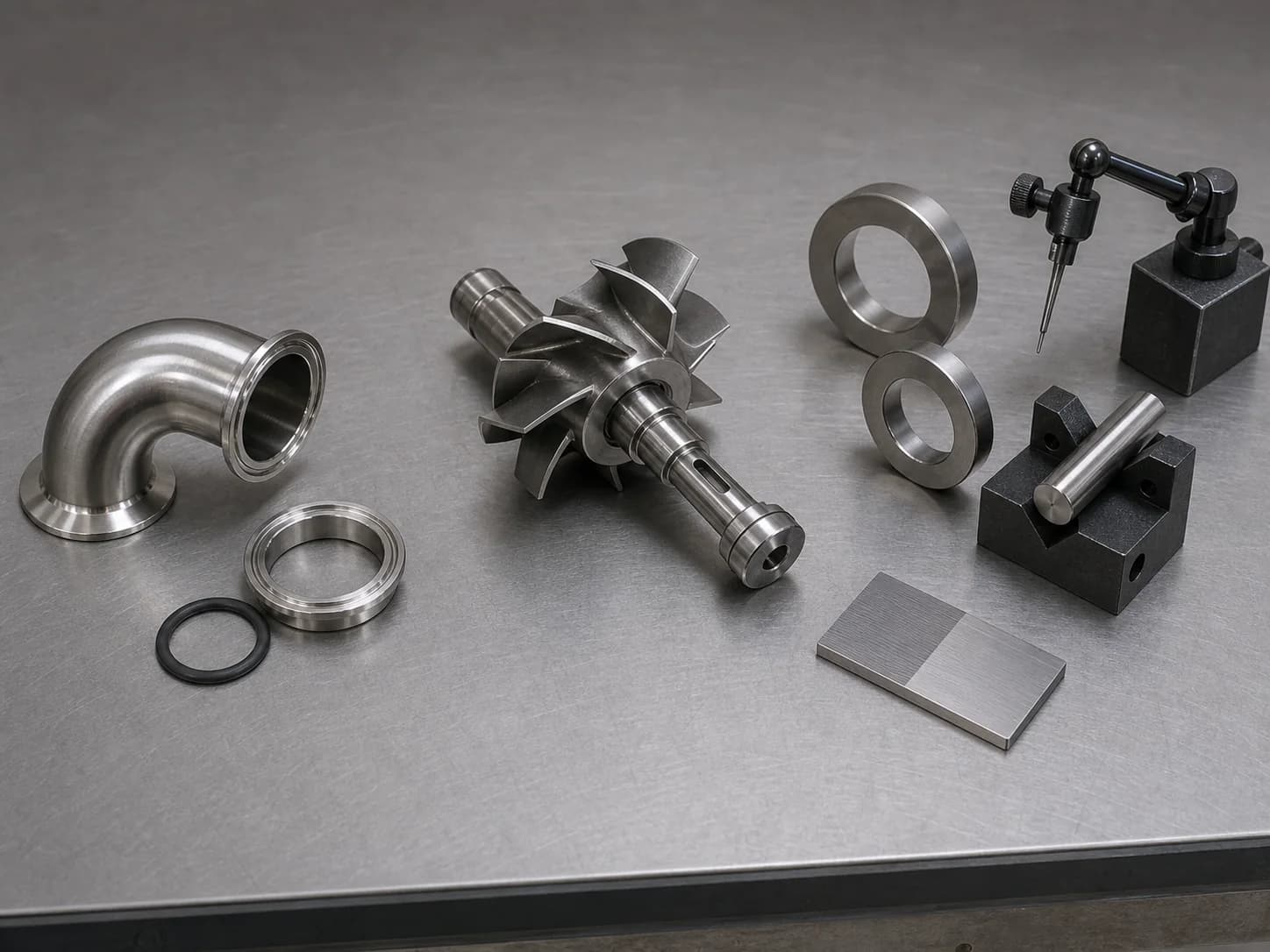
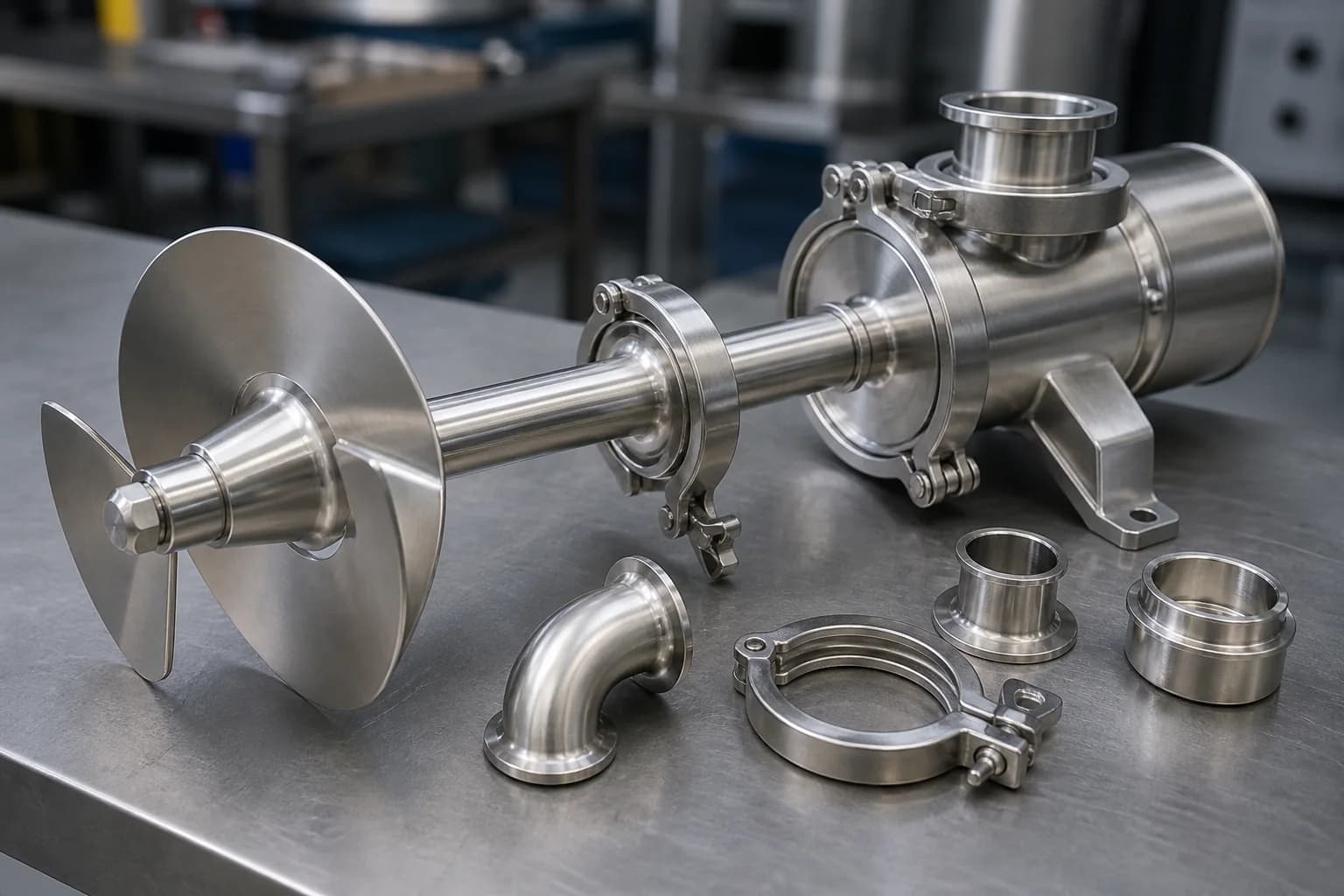
Food & Beverage Processing request feature map
Elbow, impeller, and unmarked inspection-reference zones
Illustrative planning reference only. The image and markers do not establish industry identity, part function, material, process, capability, compliance, inspection result, acceptance, or suitability.
Food & Beverage Processing request review
Choose a marker to review the supporting inputs.
Define the equipment function, process exposure, contact zones, cleaning method, and governing requirement source.
Helpful request detail
Include a marked drawing that separates product-contact, splash, and non-contact surfaces.
Request contexts
These examples organize the request; they do not confirm process fit, result, or fulfillment.
Hubs, shafts, nozzles, housings, and fittings defined by contact zone, material, finish, and cleaning requirements.
Manifolds, frames, and vessels described by joint access, weld notes, drainability, finish zones, and test criteria.
Guides, wear strips, star wheels, bushings, and timing parts defined by interfaces, cleaning, and replacement context.
Supports, guards, fixtures, and line hardware tied to layout, washdown exposure, finish, and installation interfaces.
Quote review flow
A short review flow keeps contact zones, cleaning, finish, testing, and record expectations visible.
Provide the current drawing, model, revision, food and beverage processing context, quantity, and target timing.
Identify governing documents, precedence, approved substitutions, restricted data, and customer-controlled decisions.
Connect material, geometry, interfaces, process history, finish, inspection, documentation, and packaging requirements.
Pearson confirms accepted scope, routing, records, timing, and open questions before work proceeds.
Request readiness
Six concise checks prevent critical application and acceptance details from being buried in general notes.
Mark product-contact, splash, and non-contact surfaces and identify which document governs each zone.
State cleaning method, chemistry limits, drainability, crevice restrictions, and access expectations.
Include connection details, weld symbols, blend boundaries, internal access, and protected interfaces.
Tie each finish requirement to a surface, measurement method, measurement state, and acceptance rule.
State medium, test method, hold conditions, inspection points, and objective pass or reject criteria.
Name traceability fields, requested records, identification, clean handling, bagging, and packaging instructions.
Materials
State the exact grade, form, source, condition, substitution authority, and contact-zone relationship.
Define grade, condition, source, contact zone, finish, and requested records.
View materialDefine grade, stock form, interfaces, cleaning context, and acceptance requirements.
View materialDefine resin identity, stock condition, fit, cleaning context, and substitution limits.
View materialDefine alloy, temper, form, process exposure, finish, and contact-zone boundary.
View materialRelated services
Use these guides to describe the required process inputs without assuming route or availability.
Review milled geometry, datums, interfaces, finish zones, and inspection inputs.
Review joint access, weld notes, distortion, finishing, and test requirements.
Review assembly state, test method, acceptance, records, and packaging.
Review guards, panels, enclosures, formed features, finishes, and interfaces.
Review shafts, hubs, fittings, cylindrical interfaces, and inspection requirements.
Review measurement method, coverage, acceptance rules, and requested records.
FAQ
Short answers for preparing a controlled, reviewable request.
The route is selected only after material, contact-zone, cleaning, finish, test, documentation, quantity, and timing requirements are reviewed.
Mark each contact zone on the drawing and identify the governing material, finish, cleaning, inspection, and acceptance requirements.
Provide the controlled drawing or model, revision, contact-zone map, weld and finish notes, test criteria, and requested record list.
Tie each finish to a named surface, measurement method, measurement state, coverage rule, and acceptance limit.
State the medium, method, conditions, hold points, measurement locations, and objective pass or reject criteria.
List the material, joining, finish, inspection, test, identification, and traceability records required for acceptance.
Start with the request
Upload the drawing or describe the component, then identify contact zones, material, cleaning, finish, testing, records, quantity, and timing.
Request a food processing quote