Service context
State the medium, pressure, temperature range, leak criterion, environment, and governing requirement source.
HVAC & Refrigeration Systems request guide
Share the controlled drawing, service medium, pressure and leak criteria, material, joint method, finish, test plan, requested records, quantity, and timing. Pearson reviews the inputs before confirming an accepted path.
Capability review
This page describes common request types. Available processes, equipment, tolerances, inspection, documentation, and fulfillment are confirmed for each quote.
Overview
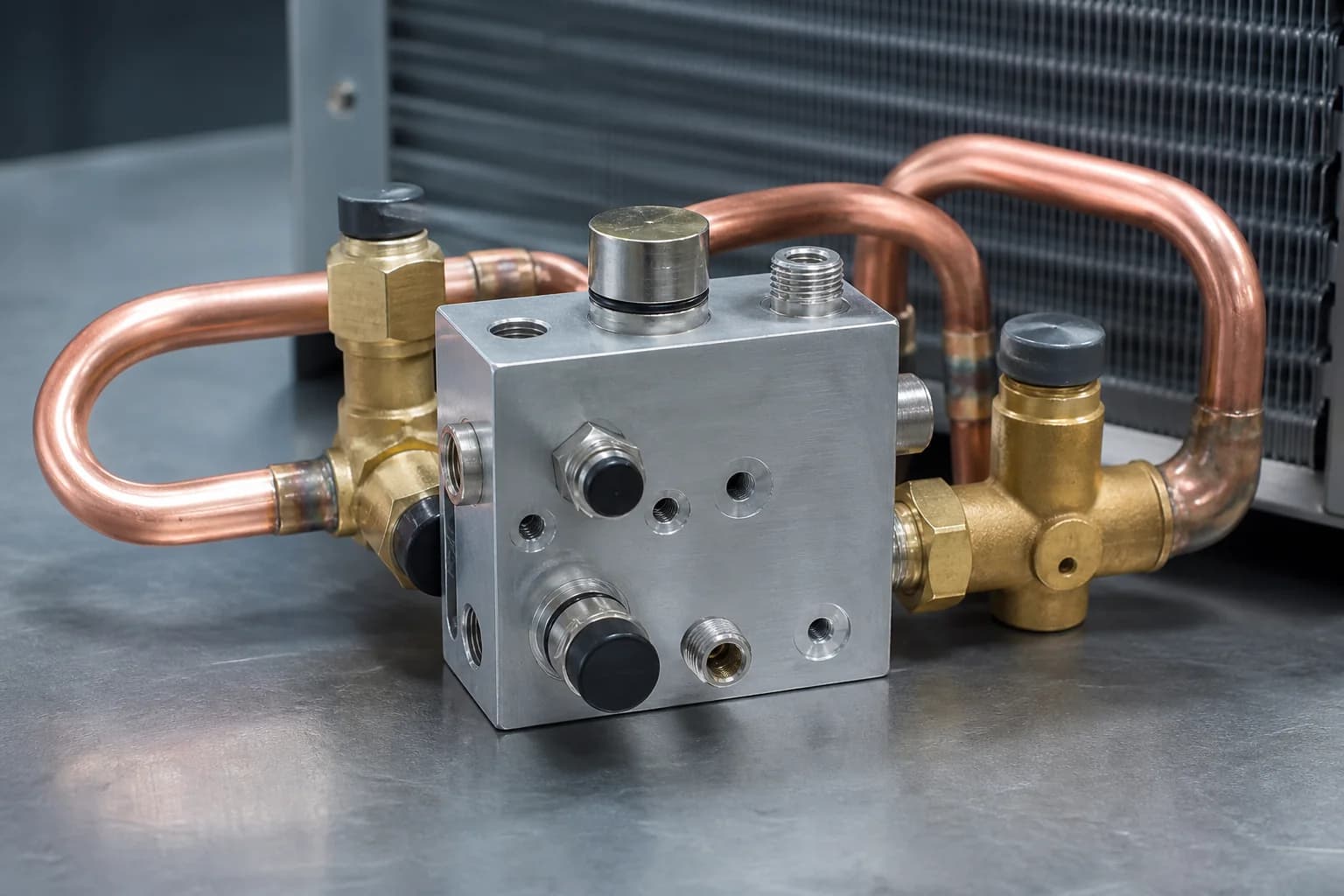
An HVAC or refrigeration request should connect the controlled part or assembly to its medium, pressure, temperature range, joint method, interfaces, environment, test plan, and acceptance records. That context helps distinguish a manifold, tube, duct, enclosure, or fixture requirement without implying a process or result.
State the medium, pressure, temperature range, leak criterion, environment, and governing requirement source.
Describe tubes, ports, seals, bends, joints, mounting faces, electrical interfaces, and protected areas.
Define test method, conditions, measurement points, acceptance, traceability, and requested records.
Industry request review
Codes, supplier qualifications, process fit, test resources, documentation, routing, and timing are reviewed for each request. No compliance or result is implied.
Quote inputs
Provide the controlled service and acceptance information available, then mark open items for follow-up.
Interactive request review
Use the markers to connect service conditions, controlled interfaces, and the test-and-acceptance plan.
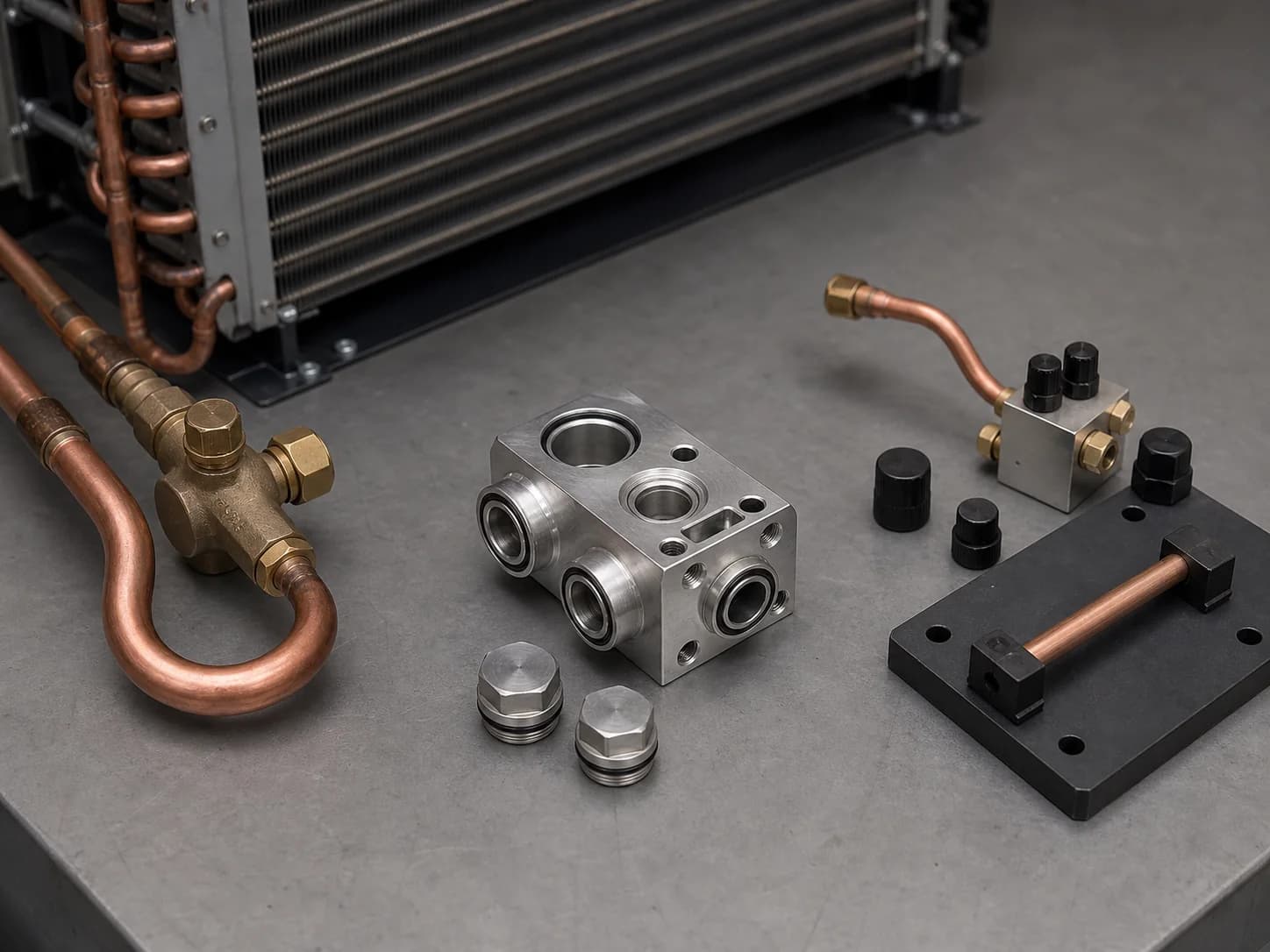
HVAC & Refrigeration Systems request feature map
Valve, manifold, and test-planning fixture zones
Illustrative planning reference only. The image and markers do not establish industry identity, part function, material, process, capability, compliance, inspection result, acceptance, or suitability.
HVAC & Refrigeration Systems request review
Choose a marker to review the supporting inputs.
Define component function, service medium, pressure, temperature range, environment, and governing requirements.
Helpful request detail
Include a service-condition note that identifies medium, pressure, temperature, and acceptance criteria.
Request contexts
These examples organize the request without confirming process fit, testing, result, or fulfillment.
Blocks, bodies, end caps, adapters, and fittings defined by passages, ports, seals, service, and test criteria.
Formed panels and housings defined by gauge, bends, seams, stiffness, interfaces, coatings, and access.
Tube sections, bends, adapters, and end forms defined by material, wall, bend, joint, and inspection inputs.
Joined hardware and fixtures defined by assembly state, service conditions, test sequence, acceptance, and records.
Quote review flow
A short review flow keeps the part, medium, interfaces, joints, finishes, tests, and records connected.
Provide the current drawing, model, revision, hvac and refrigeration context, quantity, and target timing.
Identify governing documents, precedence, approved substitutions, restricted data, and customer-controlled decisions.
Connect material, geometry, interfaces, process history, finish, inspection, documentation, and packaging requirements.
Pearson confirms accepted scope, routing, records, timing, and open questions before work proceeds.
Request readiness
Six checks keep service, joint, finish, and test requirements visible before the route is confirmed.
Identify medium, pressure, temperature range, environment, duty state, and governing requirement source.
State test medium, method, measurement, conditions, hold points, and objective acceptance rule.
Specify tube material, wall, bend geometry, end form, joint method, filler, and access.
Include gauge, bend direction, radii, seams, hems, stiffness features, fasteners, and mating panels.
Mark sealing faces, grooves, edge requirements, cleanliness, plugs, caps, and handling restrictions.
Tie coating, paint, plating, passivation, masking, bonding points, and identification to controlled areas.
Materials
State exact grade, form, source, condition, joint relationship, service context, and substitution authority.
Define grade, tube or stock form, condition, joint method, service, and test inputs.
View materialDefine alloy, form, condition, ports, threads, seals, finish, and acceptance.
View materialDefine alloy, temper, sheet or stock form, joints, finish, and environment.
View materialDefine grade, condition, process history, environment, finish, and requested records.
View materialRelated services
Use these guides to define each required operation without assuming route, resource, or result.
Review manifolds, passages, ports, datums, sealing faces, and inspection inputs.
Review ducts, plenums, enclosures, bends, seams, coatings, and interfaces.
Review tube identity, bend geometry, end forms, joints, and inspection.
Review assembly state, test sequence, conditions, acceptance, and records.
Review coating system, masking, preparation, identification, and acceptance inputs.
Review measurement method, leak or pressure evidence, coverage, and records.
FAQ
Short answers for preparing a controlled, testable request.
Provide the controlled drawing or model, revision, service conditions, joint details, test plan, finish, quantity, and target timing.
Identify the test medium, pressure or vacuum condition, method, duration, measurement points, and objective acceptance rule.
State material, wall, starting form, bend geometry, end forms, joint method, mating interfaces, and inspection requirements.
List customer-specified codes, revisions, supplier qualifications, evidence, inspection scope, and acceptance criteria for project review.
Tie every finish and mask to a controlled area, preparation requirement, environment, measurement method, and acceptance rule.
The route is confirmed after service, material, geometry, joint, finish, testing, documentation, quantity, and timing inputs are reviewed.
Start with the request
Upload the drawing or describe the assembly, then identify service conditions, material, joints, interfaces, finish, testing, records, quantity, and timing.
Request an HVAC quote