Feature type first
Through holes, blind holes, threaded holes, locating holes, counterbores, and countersinks are identified before the process path is confirmed.
Drilling and tapping services
Hole type, depth, position, thread callout, access direction, and edge condition all shape the manufacturing review. Share the model and drawing so Pearson can understand how each feature functions and confirm the project path before acceptance.
Capability review
This page describes common request types. Available processes, equipment, tolerances, inspection, documentation, and fulfillment are confirmed for each quote.
Overview
A useful drilling and tapping review separates each feature by function. A clearance hole, blind thread, dowel location, counterbore, and countersink may look similar in a model, but the drawing should explain the depth, fit, datum relationship, and assembly intent that make each one different.
Through holes, blind holes, threaded holes, locating holes, counterbores, and countersinks are identified before the process path is confirmed.
Entry direction, usable thread depth, total drilled depth, breakout, and edge condition help reveal manufacturing questions early.
Functional hole locations, mating hardware, dowel fits, and inspection expectations belong in the request instead of being inferred later.
Fulfillment review
Requests are reviewed manually. The fulfillment route and availability are confirmed before acceptance.
Quote inputs
You do not need every answer before submitting. Share what is known and mark the rest for follow-up.
Interactive hole review
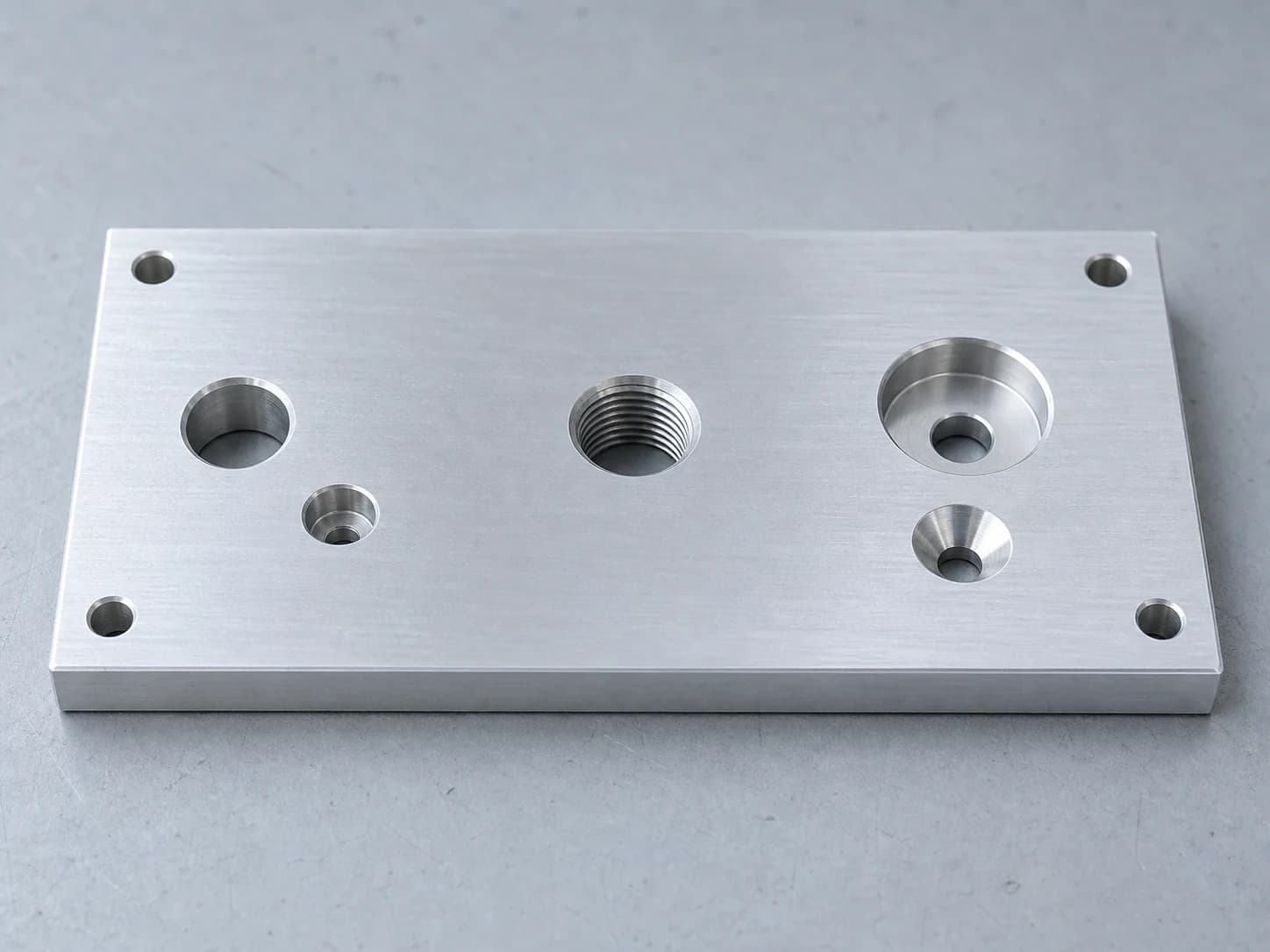
Select a feature on the sample fixture plate to see what the model and drawing should communicate before the project path is confirmed.
Sample hole-feature plate
The numbered markers match the feature groups and review panel.
Illustrative example only; markers identify review features, not dimensions or tolerances.
Hole and thread review
Choose a feature group to see the details that help clarify the request.
The feature definition should distinguish what passes through the part, what stops at depth, and whether diameter or fit controls the assembly.
Helpful drawing detail
Use a section view or depth callout when the blind-hole bottom or breakout condition is not obvious from the model.
Process fit, equipment fit, achievable tolerances, inspection, documentation, fulfillment, and timing are confirmed from the project information during quote review.
Capabilities
These examples help identify the likely starting point. Process fit, equipment fit, achievable tolerances, and availability are confirmed from the project files.
Plates, brackets, housings, fixtures, adapters, and repair components with hole features defined by depth, fit, location, and function.
Through or blind thread requests with complete standards, size, class, usable depth, access direction, and mating intent.
Recessed or flush fastener features defined by their seat geometry, hardware, surface relationship, and edge requirements.
Assembly-critical patterns and locating features reviewed with their functional origin, fit, position, and inspection intent.
Quote workflow
A short, human-managed review keeps feature definitions and open questions visible before work is accepted.
Upload the model, drawing, photos, quantity, material preference, and known hole or thread requirements.
Hole types, depths, threads, fastener seats, pattern relationships, edges, and inspection intent are organized for follow-up.
Process fit, equipment fit, tolerances, fulfillment, timing, and remaining questions are resolved before acceptance.
Approved files and requirements become the reference point for project communication and delivery planning.
Drawing readiness
Clear feature intent is more useful than applying close requirements everywhere.
Identify whether each feature provides clearance, location, a thread, a passage, or a fastener seat instead of relying on geometry alone.
Include the thread standard, size, pitch, class, hand, usable depth, and any insert or verification requirement.
For blind holes, show the required complete thread and the clearance available beneath it as separate requirements.
Provide diameter and depth, or angle and major diameter, along with the mating fastener and seat intent.
Show which faces or features locate the assembly and where hole position or dowel fit affects function.
Identify the entry direction, restricted access, exit-side burr concerns, chamfers, deburring, and finish areas that matter.
Materials
Grade, form, condition, finish, and availability are confirmed for each request.
Plates, brackets, housings, fixtures, adapters, and lightweight parts with holes, threads, and fastener seats.
6061-T6 · 7075-T6 examples
View materialFixture plates, tooling details, wear components, and repair-related parts where grade and condition belong in the review.
A2 · D2 · O1 · H13 examples
View materialCorrosion-resistant brackets, housings, fittings, hardware, and equipment components with defined hole and thread requirements.
303 · 304 · 316/316L examples
View materialGuards, guides, spacers, fixtures, non-metallic plates, and lightweight components with assembly features.
Acetal · UHMW · Nylon · PTFE examples
View materialContinue exploring
Review thread-focused requirements such as standard, class, depth, and verification intent.
Review pockets, faces, datum relationships, and hole features on prismatic parts.
Review damaged threads, rework holes, and controlled feature changes.
Review one-off, replacement, prototype, and unusual machining requests.
See common fixture-plate, bracket, and equipment-component applications.
See common mounting-pattern, locating, fixture, and automation applications.
FAQ
A STEP or STP model and matching PDF drawing are the best starting pair. Add quantity, material preference, a hole table when available, thread callouts, depths, fastener-seat details, pattern datums, finish, inspection or documentation needs, and target timing.
Include the thread standard, size, pitch, class, hand, usable thread depth, total blind-hole depth when applicable, access direction, and any insert or verification requirement.
Identify whether the feature passes through the part or stops at a controlled depth, and define diameter or fit, depth origin, bottom or breakout condition, and edge requirements where they affect function.
Show the functional datums, pattern dimensions, locating-hole fits, and positional requirements that affect assembly. Achievable tolerances and the inspection approach are confirmed from the project files.
Include the seat diameter, depth or angle, mating fastener, flush or locating intent, critical dimensions, and documentation expectations. Scope and availability are confirmed before acceptance.
Requests are reviewed manually. The fulfillment route and availability are confirmed before acceptance.
Start with the files you have
Share the model, drawing, hole table, photos, and known requirements. Pearson will follow up on the details that still need confirmation.
Request a drilling quote