Equipment context
Identify turbine, generator, exchanger, fixture, spare, repair, or retrofit role and operating interfaces.
Energy & Power Generation request guide
Share the equipment context, controlled drawings, materials, interfaces, code and inspection inputs, repair history, handling, quantity, and documentation needs. Pearson reviews the request before confirming any manufacturing path.
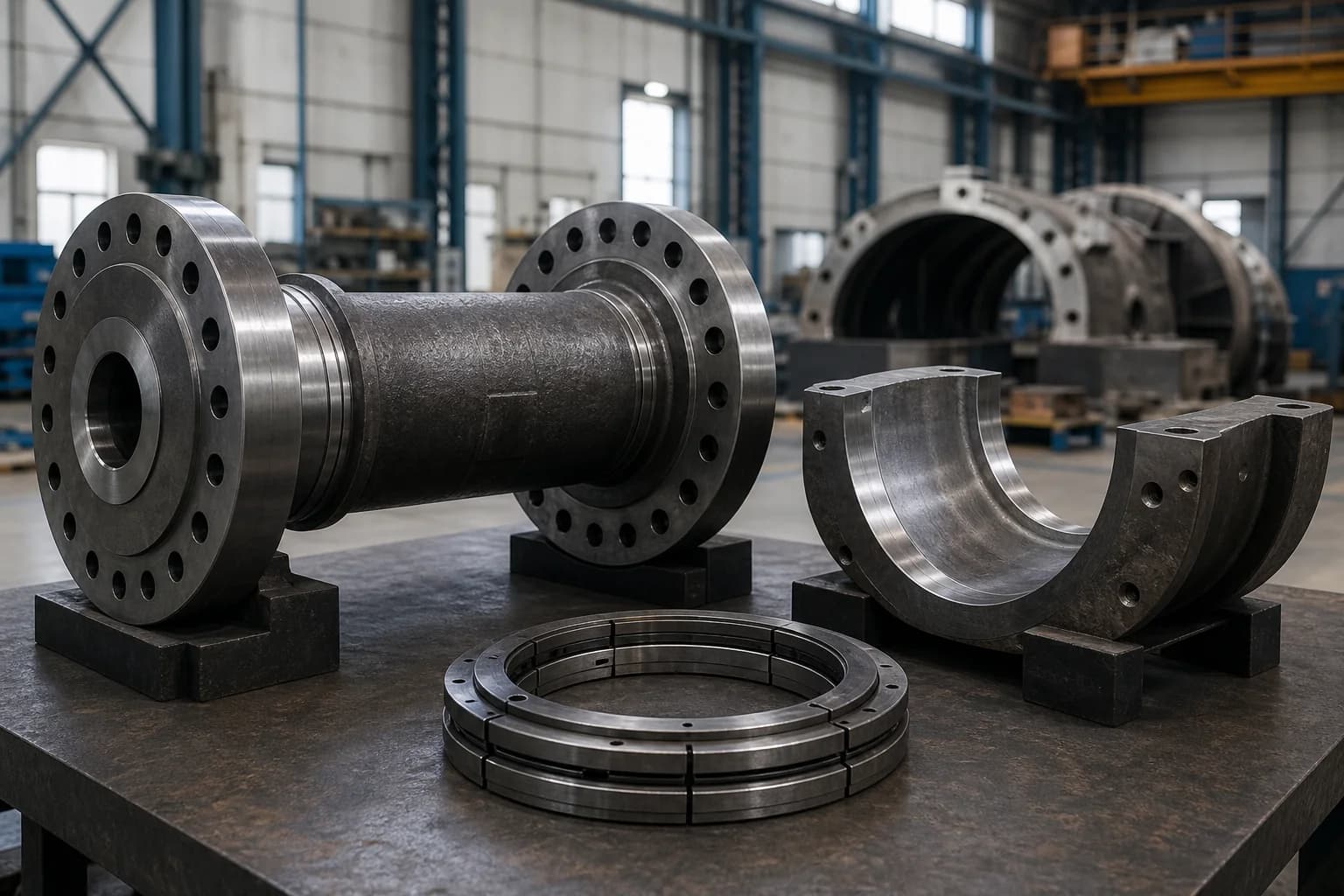
Capability review
This page describes common request types. Available processes, equipment, tolerances, inspection, documentation, and fulfillment are confirmed for each quote.
Overview
Power-generation requests need a controlled view of equipment position, operating interfaces, runout or balance intent, repair history, weld requirements, inspection scope, handling, preservation, and acceptance authority.
Identify turbine, generator, exchanger, fixture, spare, repair, or retrofit role and operating interfaces.
State material, service exposure, prior repair, weld buildup, heat treatment, coating, and known damage.
List code references, WPS/PQR inputs, NDE scope, balance requirements, records, and acceptance authority.
Industry request review
Customer-specified codes, inspection scope, supplier qualifications, documentation, route, and timing are reviewed per request; no code status is implied.
Quote inputs
Connect equipment context and process history to the controlled geometry, evidence, handling, and acceptance needs.
Interactive request review
Use the markers to connect equipment context, geometry or repair history, and acceptance evidence.
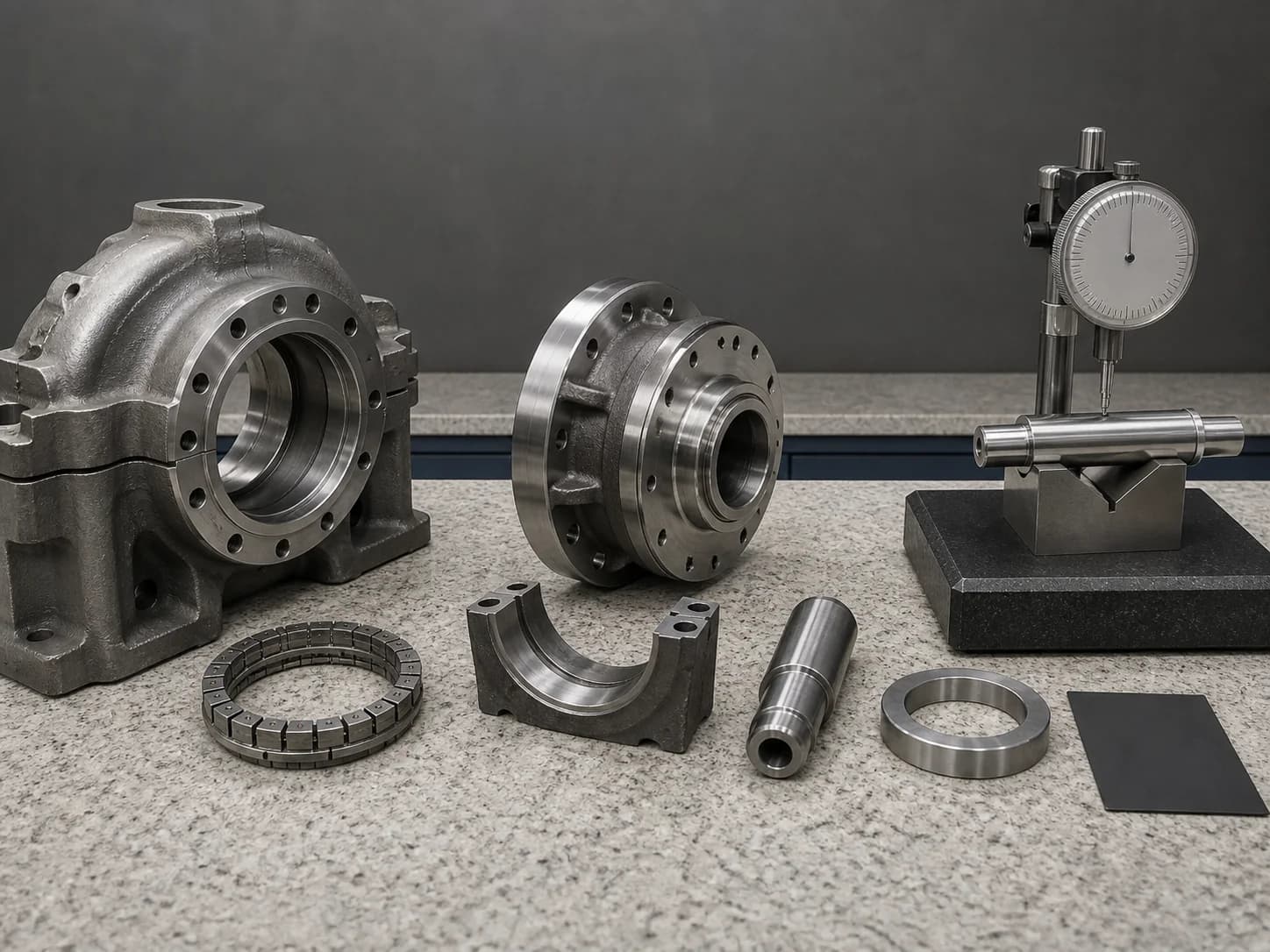
Energy & Power Generation request feature map
Casing context, rotating interfaces, and inspection setup
Illustrative planning reference only. Markers do not establish part function, capability, compliance, acceptance, or suitability.
Energy & Power Generation request review
Choose a marker to review the supporting inputs.
Explain equipment role, operating interface, outage or lifecycle context, service history, quantity, and requirement authority.
Helpful request detail
Include equipment and assembly views plus a concise condition summary.
Request contexts
Choose the context that best explains equipment state, process history, and evidence needs.
Define condition, interfaces, measurement source, approved repair scope, timing target, and acceptance inputs.
State service history, damage, material, buildup allowance, machining baseline, NDE, and balance intent.
Provide controlled geometry, interfaces, weld and heat-treatment inputs, evidence, and change authority.
Explain load path, mounting, corrosion context, lifting, field assembly, and inspection requirements.
Quote review flow
The review connects operating context, geometry, repair history, codes, evidence, and handling.
Provide the current drawing, model, revision, energy and power generation context, quantity, and target timing.
Identify governing documents, precedence, approved substitutions, restricted data, and customer-controlled decisions.
Connect material, geometry, interfaces, process history, finish, inspection, documentation, and packaging requirements.
Pearson confirms accepted scope, routing, records, timing, and open questions before work proceeds.
Request readiness
Make alignment, fit, repair, weld, balance, and inspection intent explicit.
Connect bearing journals, keyways, flanges, and operating interfaces to one clear datum scheme.
State fit class, mating component, surface requirement, assembly method, and measurement basis.
Identify corrosion allowance, coating stack, masked bores and faces, and preservation needs.
Provide weld symbols, process-document requirements, heat-input limits, and post-weld treatment intent.
State governing requirement, planes, trim restrictions, operating context, and requested records.
Identify method, affected zones, acceptance criteria, provider qualifications, and required evidence.
Materials
Define grade, condition, service history, interface, repair, finish, and evidence needs.
Review corrosion, temperature, weld, interface, and finish inputs.
View materialReview tooling, fixture, bracket, housing, and finish inputs.
View materialReview electrical, thermal, joining, interface, and condition inputs.
View materialReview wear, shaft, tooling, hardness, and heat-treatment inputs.
View materialRelated services
Explore process guides, then let the reviewed equipment baseline determine the path.
Review shafts, journals, discs, and concentric interfaces.
Review weld, buildup, fixture, and treatment inputs.
Review condition, measurement, repair history, and acceptance inputs.
Review sheets, covers, bundles, and exchanger interfaces.
Review larger rotating geometry and handling inputs.
Review alignment, NDE, balance, records, and acceptance criteria.
FAQ
These answers explain request inputs without promising code scope, capacity, evidence, timing, or result.
No route is assumed. Equipment, geometry, process, supplier, code, inspection, quantity, handling, and timing inputs are reviewed first.
Submit the governing section, acceptance criteria, supplier qualifications, and evidence list. Scope is confirmed during review; no compliance is implied.
Provide full envelope, weight, centre of gravity, lift points, interfaces, operation list, quantity, and acceptance needs.
List material, weld, NDE, balance, inspection, marking, serialization, preservation, and conformity records required for review.
Share service and repair history, measured condition, damage, material identity, approved repair scope, interfaces, and acceptance criteria.
State weight, centre of gravity, lift points, orientation, crating, moisture protection, preservation, and receiving constraints.
Start with the request
Share the drawing, equipment context, material, interfaces, process history, code inputs, evidence, quantity, and handling.
Request an energy quote