Intended-use boundary
Describe the program, intended use, device or equipment context, restrictions, and requirement authority without sensitive data.
Medical Devices & Healthcare request guide
Start with a non-sensitive project summary, intended use, program context, customer requirements, documentation needs, quantity, and timing. Pearson completes a manual eligibility review before requesting controlled technical information.
Capability review
This page describes common request types. Available processes, equipment, tolerances, inspection, documentation, and fulfillment are confirmed for each quote.
Overview
Healthcare and medical-device requests require an intended-use boundary, customer-specified standards, supplier qualifications, documentation, cleanliness, inspection, packaging, and restricted-data review before acceptance. Begin with a non-sensitive summary so Pearson can determine whether a controlled technical review should follow.
Describe the program, intended use, device or equipment context, restrictions, and requirement authority without sensitive data.
Identify customer standards, supplier qualifications, documentation, restricted-data status, and review contacts.
Define inspection, cleaning, handling, packaging, records, and acceptance only after eligibility is confirmed.
Industry request review
Regulated medical-device work is not accepted through the standard quote workflow. Contact Pearson for a manual eligibility review before sharing sensitive technical or patient-related information. Review does not guarantee acceptance.
Quote inputs
Start with non-sensitive context. Detailed files are requested only if the program proceeds to controlled technical review.
Interactive request review
Use the markers to separate non-sensitive context, invited technical review, and the accepted evidence baseline.
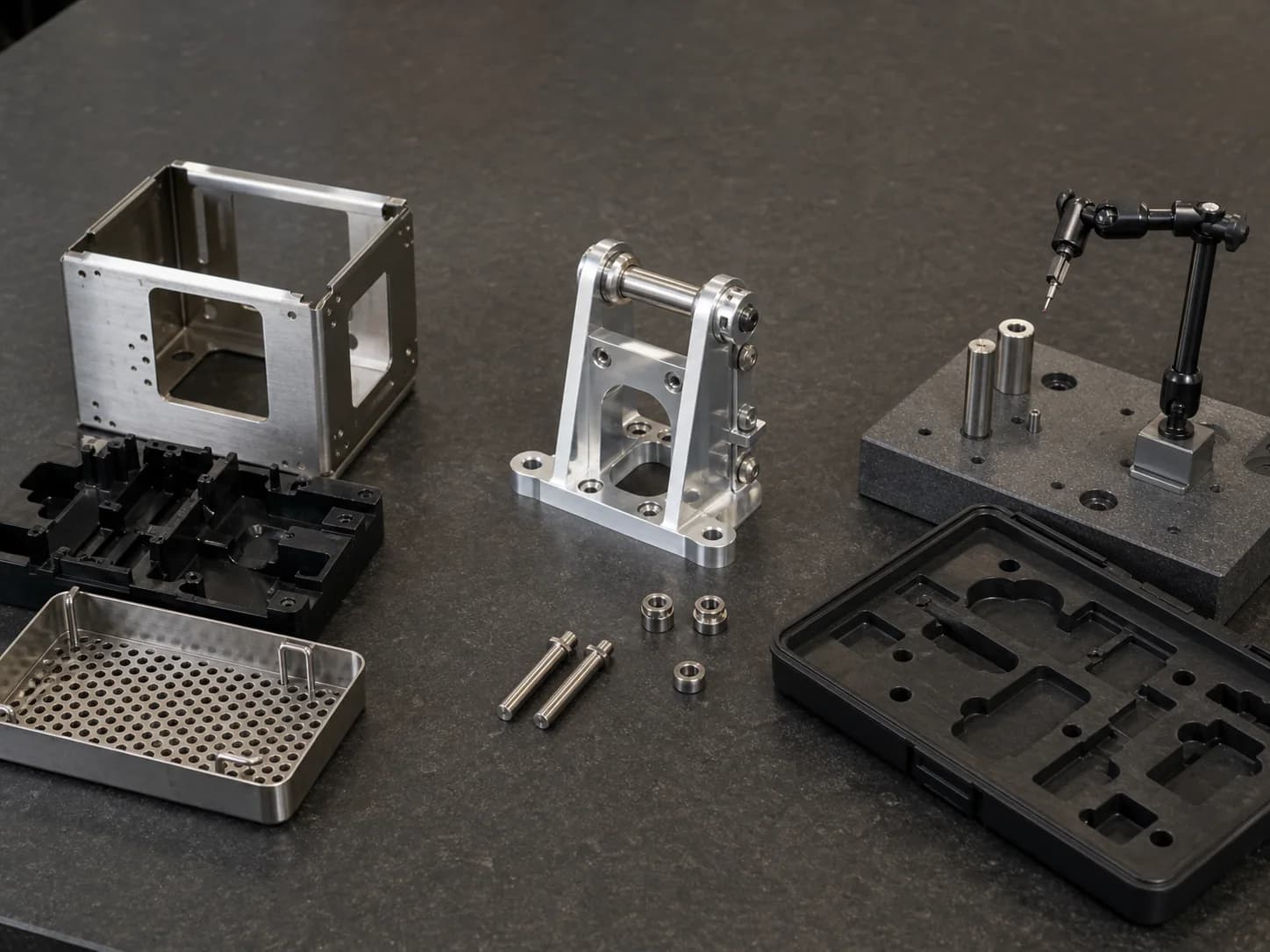
Medical Devices & Healthcare request feature map
Development context, linkage geometry, and handling-reference zones
Illustrative planning reference only. The image and markers do not establish industry identity, part function, material, process, capability, compliance, inspection result, acceptance, or suitability.
Medical Devices & Healthcare request review
Choose a marker to review the supporting inputs.
Begin with intended use, program type, development stage, restrictions, customer requirements, and review contacts.
Helpful request detail
Send a non-sensitive summary first; do not attach controlled technical or patient-related information.
Request contexts
These examples do not confirm program eligibility, process, qualification, acceptance, or fulfillment.
Fixtures, trial hardware, and feasibility components described by intended use, interfaces, restrictions, and acceptance authority.
Frames, housings, mounts, handles, and general equipment parts described by function, cleaning, interfaces, and records.
Controlled fixtures described by equipment context, datums, contact surfaces, inspection, handling, and acceptance.
Repeat requests considered only after eligibility, supplier, technical, evidence, handling, and acceptance requirements are confirmed.
Quote review flow
The review separates initial context from controlled technical data and accepted program requirements.
Describe intended use, program context, development stage, customer requirements, restrictions, quantity, and timing without controlled data.
Pearson reviews program fit, supplier qualifications, data handling, required evidence, and acceptance authority.
If requested, share controlled drawings, material, interfaces, finish, cleaning, inspection, documentation, and packaging requirements.
Eligible work proceeds only after scope, routing, evidence, handling, timing, and open questions are documented.
Request readiness
Six checks keep intended use, restrictions, technical authority, and acceptance evidence clear.
Describe program, device or equipment context, development stage, user boundary, and acceptance authority.
State controlled-data, privacy, access, supplier, jurisdiction, and handling restrictions before files are shared.
After review, identify datums, fits, sealing or contact areas, edge condition, finish, and marking.
State cleaning method, chemistry limits, sterilization compatibility requirements, residues, handling, and packaging.
List measurement methods, coverage, sampling, traceability, reports, review points, and acceptance criteria.
Name identification, records, handling sequence, packaging, storage, access, and final acceptance responsibilities.
Materials
Material identity, application suitability, supplier evidence, and process compatibility require project review.
Define grade, condition, interfaces, finish, cleaning, inspection, and evidence requirements.
View materialDefine alloy, temper, form, equipment context, finish, coating, and acceptance.
View materialDefine resin identity, stock condition, contact context, cleaning, fit, and limits.
View materialDefine resin, grade, condition, environment, cleaning, sterilization inputs, and evidence.
View materialRelated services
Service eligibility, supplier qualifications, process, evidence, and acceptance are reviewed before use.
Review small features, interfaces, edges, material, finish, inspection, and evidence.
Review geometry, datum transfer, affected surfaces, process sequence, and acceptance.
Review assembly state, test method, acceptance, records, handling, and packaging.
Review controlled-environment eligibility, cleanliness, handling, evidence, and packaging.
Review measurement method, setup, coverage, traceability, acceptance, and records.
Review geometry, datums, interfaces, edges, finish, inspection, and evidence.
FAQ
Short answers for the manual eligibility path.
Send a non-sensitive summary of intended use, program context, development stage, requirements, restrictions, quantity, and timing.
Regulated medical-device work is not accepted through the standard quote workflow. Begin with a manual eligibility review.
Share controlled technical files only after Pearson confirms the eligibility, access, data-handling, and review path.
Customer standards, supplier qualifications, evidence, documentation, access, and acceptance criteria are reviewed before acceptance.
Review does not guarantee acceptance. Scope, eligibility, supplier qualifications, evidence, routing, and handling must be confirmed first.
State customer requirements, method, residues, handling controls, evidence, packaging sequence, storage, and acceptance for review.
Start with the request
Contact Pearson with intended use, program context, customer requirements, restrictions, documentation, quantity, and timing before sharing controlled technical information.
Request an eligibility review