Cleanroom assembly services

Cleanroom assembly requests, organized around customer-specified environment, contamination-control, handling, packaging, and acceptance requirements.

A cleanroom assembly request needs more than an environment class. Share the controlling product revision, component and incoming condition, sensitive and no-touch surfaces, assembly sequence and permitted materials, customer-specified airborne-particle and other contamination limits, operating state and monitoring basis, transfer and gowning rules, approved tools and consumables, cleaning and handling instructions, electrostatic controls when applicable, packaging configuration, inspection or test methods, acceptance criteria, identification and record boundaries, quantity, and timing so the request can be organized without assuming an environment, result, or project route.

  • Configuration, surfaces, and sequence
  • Environment, consumables, and packaging
  • Scope confirmed per quote
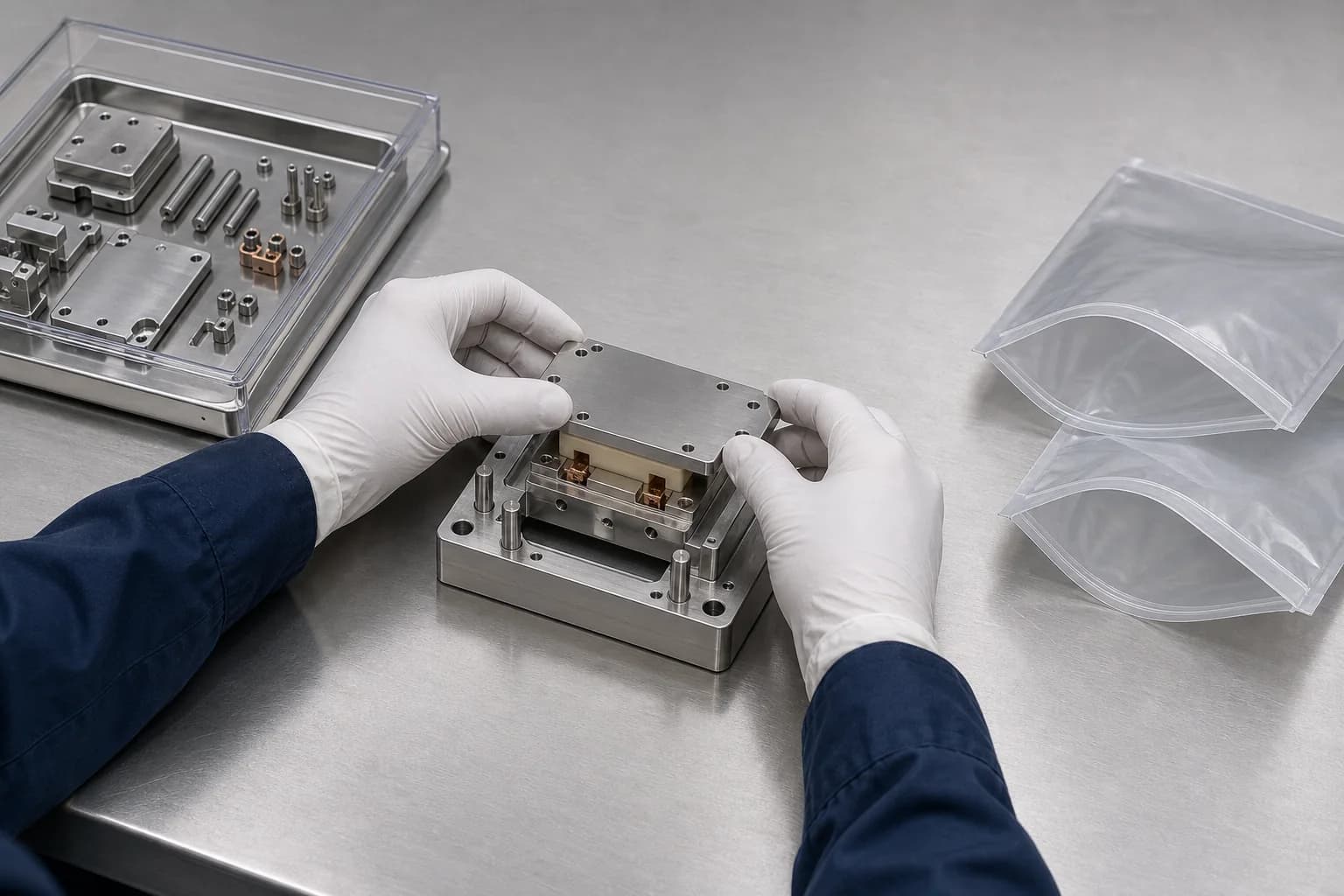
Illustrative controlled-environment assembly planning scene with gloved hands positioning a compact metal-and-polymer module in a cleanable fixture beside covered components and open nested clear protective pouches
Illustrative cleanroom assembly planning referenceCleanroom Assembly

Capability review

This page describes common request types. Available processes, equipment, tolerances, inspection, documentation, and fulfillment are confirmed for each quote.

Overview

An airborne-particle class is only one part of the contamination-control definition.

A customer-specified ISO class classifies air cleanliness by airborne-particle concentration under a defined occupancy state; it does not by itself establish surface particle cleanliness, chemical contamination, viable contamination, electrostatic control, or product sterility. Operational control also depends on personnel and material entry, gowning, transfer, cleaning, maintenance, monitoring, and the suitability of equipment and consumables for the product and process. The request should connect those boundaries to the controlling product revision, sensitive surfaces, incoming condition, assembly sequence, cleaning method, package configuration, inspection or test method, acceptance limits, and required record fields without treating an environmental designation as proof of product cleanliness, validated processing, accepted results, or regulated-product status.

Product configuration and sensitive surfaces

Identify the assembly and component revisions, BOM quantities and sources, incoming and pre-cleaned condition, material and finish, sensitive cavities and flow paths, contact, no-touch and protected surfaces, assembly orientation, sequence, tooling interfaces, and permitted exposure.

Environment and contamination-control boundaries

State the governing specification, requested class and occupancy state, local-zone boundary, airborne-particle sizes and limits, monitoring basis, personnel and material transfer, gowning, cleaning, electrostatic, chemical, viable, temperature, humidity, and event-response requirements that actually apply.

Cleaning, packaging, and acceptance definition

Define approved cleaning agents and methods, consumables and compatibility, handling and glove-change rules, in-process checks, re-clean triggers, inner and outer packaging, closure or seal method, label and opening boundary, inspection or test method, acceptance and rejection criteria, identification, and requested record fields.

Fulfillment review

Requests are reviewed manually. The fulfillment route and availability are confirmed before acceptance.

Quote inputs

The information that starts a useful cleanroom assembly review.

The quote form accepts private files or a written project description, plus optional process, material, material-source, quantity, and timing details. Select Assembly when useful and describe the controlled product revision, environment and contamination-control requirements, cleaning and handling definition, packaging boundary, and acceptance basis.

Product definition and contamination sensitivity
Assembly-level STEP or STP model and matching PDF drawing, assembly number and revision, BOM line items and quantities, component identity, hardware identity and revisions, approved alternates, purchased or customer-supplied component status, material and finish condition, incoming and pre-cleaned state, sensitive cavities and flow paths, critical contact surfaces, no-touch and protected surfaces, orientation, assembly sequence, access, adjustment, lubrication or adhesive state, permissible exposure limits, and foreign-material risks
Environment and operational-control definition
ISO 14644-1 or other governing standard or customer specification and revision, customer-specified ISO class, occupancy state, airborne-particle sizes and particle concentration limits, local zone or separative-device boundary, pressure, airflow, temperature and humidity conditions when specified, monitoring parameters, locations, method, frequency and action limits, environmental-monitoring record fields when required, personnel and material entry and exit, transfer boundary, gowning, cleaning, maintenance, access and segregation, ESD controls and other electrostatic requirements, chemical-contamination and viable-contamination requirements, and response to an excursion or contamination event
Materials, consumables, cleaning, and handling
Approved consumables; approved and prohibited components, materials, finishes, tools, fixtures, gloves, garments, wipes, swabs, bags, containers, cleaning agents, lubricants and adhesives; material compatibility with the product and process; required particle, chemical, viable, outgassing, shedding and electrostatic attributes; incoming package state; unbagging and transfer sequence; cleaning method, agent concentration and residue limit when specified; rinse, drying, verification and re-clean triggers; cleaning validation status and owner when applicable; gowning requirements; glove-change, handling method, exposure-time, hold-time and protected-surface instructions; and substitution rules
Packaging, acceptance, identification, and records
Assembly and in-process checks, inspection method or test method, surface-cleanliness or residue method when specified, sample and measurement locations, operating condition, sampling or coverage, acceptance and rejection criteria, nonconformance response, inner and outer bag or pouch materials, bagging or pouch sequence, closure or seal method, label location and allowed marking materials, package opening boundary, preservation, storage and handling conditions, packaging validation status and owner when applicable, sterilization or sterile-barrier requirement only when specified with its controlling process and validation owner, traceability requirement, component, lot or serial mapping, requested record fields, record-retention requirement and deliverable boundary, quantity, and target timing
Interactive request review

Explore the request boundaries that connect the environment to the product and package.

Select a review point on the fixed planning image to see how the customer-specified environment, cleaning and handling definition, and packaging and record boundaries connect to one controlled product configuration.

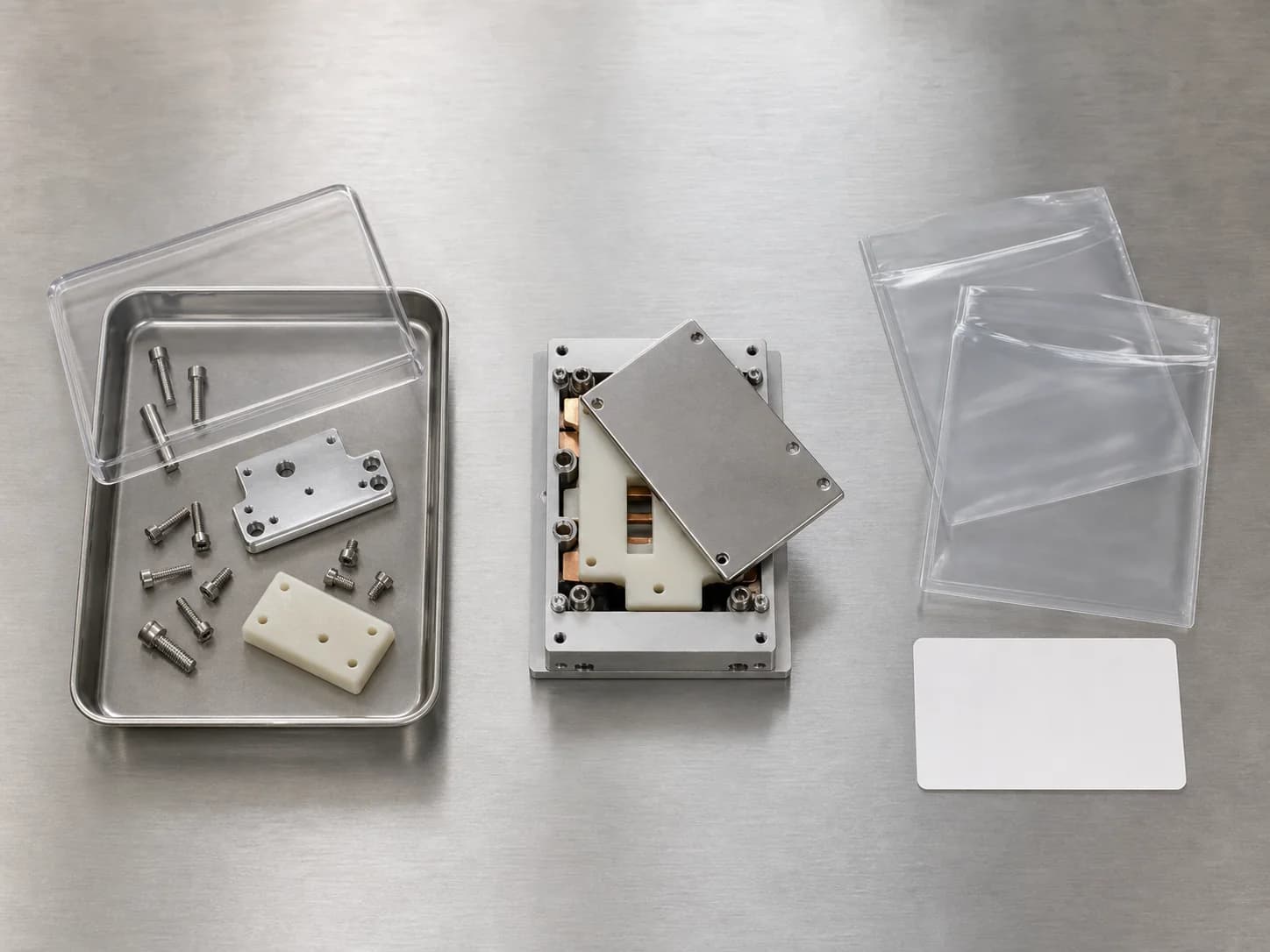
Illustrative controlled-environment assembly planning layout with a covered tray of stainless components, a partially assembled metal-and-polymer module, and open nested clear protective pouches beside an unlabeled record card

Three request zones in one fixed planning view

The covered incoming-parts tray, partially assembled module, and open packaging materials remain visible together while the request details change.

Illustrative example only; markers identify request-review areas, not an environment classification, contamination result, completed cleaning, package-validation status, accepted assembly, released record, project route, or capability.

Controlled-environment assembly review

What should the product, handling, and packaging definition explain?

Select a review feature to see the details that help clarify the request.

Incoming condition, preparation, and protected surfaces

Identify each component and package state, incoming cleanliness or preparation status, approved material and finish, sensitive cavities and flow paths, and the contact, no-touch and protected surfaces that must remain controlled.

  • Component and package identity, revision, quantity, source, incoming state, preparation status, material, and finish
  • Sensitive cavities and flow paths, contact and no-touch regions, protected surfaces, and permitted support or handling areas
  • Specified cleaning method and verification status, re-clean triggers, acceptance criteria, and response to a suspect condition

Helpful request detail

Map every component to the BOM and drawing, then identify its incoming package and preparation state, sensitive features, contact limits, protected surfaces, cleaning definition, and acceptance basis.

Start with your assembly files
Environment and process fit, achievable contamination-control, cleaning, handling, inspection, packaging and record requirements, fulfillment path, availability, and timing are confirmed from the submitted information during quote review.

Capabilities

Common cleanroom assembly request patterns, kept easy to scan.

These examples help organize the starting point. Environment and process fit, achievable contamination-control, cleaning, handling, inspection, packaging and record requirements, input availability, fulfillment, and timing are confirmed from the project files.

Customer-specified classification, state, monitoring, and local-zone boundaries

Environment definition

Environment requests reviewed from the governing specification and revision, requested class and occupancy state, airborne-particle sizes and limits, local or separative boundary, operating conditions, monitoring parameters and locations, entry and transfer rules, action limits, event response, and any separately defined chemical, viable, electrostatic, temperature or humidity controls.

Particulate, chemical, viable, contact, and electrostatic requirements

Contamination controls

Contamination-control requests reviewed from the product sensitivity and use, exposed cavities and flow paths, contact and no-touch surfaces, residue and foreign-material risks, component and package condition, personnel and material movement, segregation, exposure and hold limits, electrostatic controls, protected regions, and response to an observed event.

Incoming condition, cleaning method, transfer, consumables, and exposed surfaces

Cleaning & handling

Cleaning and handling requests reviewed from the incoming state, approved agents and methods, rinse and drying definition, required verification method, re-clean triggers, tools and fixtures, gloves and garments, wipes, swabs and other consumables, compatibility and substitution rules, unbagging and transfer sequence, glove changes, assembly order, handling points, and in-process checks.

Protective packaging, identification, acceptance, and requested records

Packaging & records

Packaging requests reviewed from the required product state, inner and outer material, bagging or pouch sequence, closure or seal definition, label location and allowed marking materials, opening boundary, handling and storage conditions, inspection or test method, acceptance and rejection criteria, validation status and owner when applicable, item mapping, and requested record fields.

Quote workflow

From controlled product definition to a confirmed assembly-review path.

A short, human-managed review keeps product configuration, environmental and contamination-control requirements, cleaning, handling, packaging, acceptance, requested records, and open questions visible before work is accepted.

  1. 01

    Share the controlled request baseline

    Upload the assembly model and drawing, BOM, component condition, sensitive-surface definition, assembly sequence, customer-specified environment and contamination limits, operational controls, approved materials and consumables, cleaning and handling instructions, packaging specification, acceptance criteria, quantity, and target timing.

  2. 02

    Reconcile the contamination-control drivers

    Product configuration, incoming state, environment class and occupancy state, local-zone boundary, contamination risks, personnel and material transfer, cleaning and consumable suitability, assembly and handling sequence, monitoring basis, packaging configuration, inspection or test method, acceptance limits, and record boundaries are organized for follow-up.

  3. 03

    Confirm the project path

    Environment and process fit, achievable contamination-control, cleaning, handling, inspection, packaging and record requirements, supplied and enabling items, monitoring and validation boundaries, fulfillment, timing, and remaining questions are resolved before acceptance.

  4. 04

    Coordinate the approved baseline

    The approved product revision, component and package condition, contamination-control plan, environment and monitoring definition, cleaning and handling instructions, permitted materials and consumables, assembly sequence, packaging configuration, acceptance criteria, identification, record boundary, and authorized changes become the reference point for project communication.

Request readiness

Small decisions that make cleanroom assembly requests easier to review.

Clear product, contamination, environment, cleaning, handling, packaging, acceptance, and record intent is more useful than assuming a facility, class, process, result, or evidence package.

Design intent before assumptions
  1. 01

    Define the environment class and occupancy state from the governing requirement.

    Name the standard or customer specification and revision, requested class, as-built, at-rest or operational state, airborne-particle sizes and limits, local-zone or separative-device boundary, operating conditions, monitoring locations and method, and action or excursion response. Do not use a class label alone.

  2. 02

    Separate airborne, surface, chemical, viable, and electrostatic requirements.

    Air cleanliness does not define product or surface cleanliness, residue, molecular contamination, microorganisms, pyrogens, sterility, electrostatic control, temperature, or humidity. State which attributes matter, their methods, limits, conditions, sampling, and acceptance basis.

  3. 03

    Mark sensitive surfaces, cavities, flow paths, and handling points.

    Show contact, no-touch and protected regions, critical cavities and passages, orientation, allowed supports and handling tools, temporary covers, permissible exposure and hold times, foreign-material risks, permitted adjustment, and the response to a dropped, touched, exposed or otherwise suspect item.

  4. 04

    Approve every material and consumable for its intended use.

    Identify component materials and finishes, tools and fixtures, gloves and garments, wipes and swabs, bags and containers, cleaning agents, lubricants and adhesives. State particle, chemical, viable, outgassing, shedding, electrostatic, compatibility, packaging, lot, expiry and substitution requirements that apply.

  5. 05

    Connect cleaning and handling instructions to the assembly sequence.

    Define incoming and pre-cleaned condition, unbagging and transfer order, cleaning method and agent condition, rinse and drying steps, verification method, re-clean triggers, gowning and glove changes, assembly order, in-process checks, protected surfaces, rework boundaries, and allowable time before packaging.

  6. 06

    Make packaging, acceptance, identification, and record boundaries explicit.

    Specify inner and outer package materials, preparation state, bagging or pouch sequence, closure or seal method, label location and allowed inks, opening boundary, handling and storage conditions, inspection or test method, acceptance and rejection criteria, nonconformance response, sterilization or sterile-barrier owner when applicable, item mapping, requested record fields, approvals, format, and release condition.

Materials

Common component materials for controlled-environment assembly review.

Material identity is one layer of the request. Exact grade and condition, surface state, finish, cleaning and chemical compatibility, particle, residue, outgassing, shedding, electrostatic, handling, packaging, inspection, and availability requirements are confirmed for each project.

Material guide

Stainless steel

Housing, plate, fastener, fitting, tube, tray, fixture and mixed-component requests where exact grade and condition, surface finish and treatment, free-iron or residue concern, cleaning-agent compatibility, corrosion context, contact surfaces, assembly condition, handling, packaging, and inspection requirements need review.

304 · 316/316L · 17-4PH · 303 examples

View material
Material guide

Aluminum

Housing, bracket, plate, rail, fixture, cover, tray and mixed-component requests where alloy and temper, bare or finished surface state, conversion or anodize specification when applicable, pores and cavities, cleaning-agent compatibility, particle and residue sensitivity, protected surfaces, handling, packaging, and acceptance intent need review.

6061 · 7075 · 5052 · MIC-6 examples

View material
Material guide

Engineering plastics

Guide, spacer, bushing, insulator, cover, housing, seal-support and mixed-material requests where exact polymer, grade, reinforcement and condition, machining residue, moisture and temperature context, cleaning compatibility, outgassing, shedding, electrostatic behavior, contact, handling, packaging, and inspection requirements need review.

UHMW · Acetal · Nylon · PTFE examples

View material
Material guide

Copper

Contact, conductor, heat-spreader, fitting, seal, insert and mixed-material requests where grade and condition, oxidation and surface state, plating or coating specification when applicable, cleaning compatibility, fingerprints and handling, galvanic and contact context, protective packaging, identification, and acceptance requirements need review.

C110 · C145 · C101 examples

View material

FAQ

Cleanroom assembly quote questions.

Upload an assembly-level STEP or STP model and matching PDF drawing, current BOM, assembly and component revisions, incoming and pre-cleaned condition, sensitive and no-touch surfaces, assembly sequence, customer-specified environment and contamination-control requirements, approved materials and consumables, cleaning and handling instructions, packaging specification, inspection or test method, acceptance criteria, identification and record requirements, quantity, and timing. If files are incomplete, the quote form also accepts a written project description, and Assembly can be selected in the optional process field.

Name the governing standard or customer specification and revision, requested class, as-built, at-rest or operational state, airborne-particle sizes and limits, local-zone or separative-device boundary, operating and occupancy conditions, monitoring parameters and locations, method, frequency and action limits, and response to an excursion. A class label without its state and boundary is incomplete.

No. An ISO air-cleanliness class addresses airborne-particle concentration within its stated scope. It does not by itself establish particle cleanliness on the product or a surface, chemical or molecular contamination, viable contamination, pyrogens, electrostatic controls, a sterile state, package integrity, or product acceptance. Define each required attribute, method, limit, condition, sampling and acceptance basis separately.

State each component’s incoming condition, approved cleaning agent and method, agent concentration or condition when specified, rinse, drying and verification steps, re-clean triggers, protected and no-touch surfaces, transfer and unbagging order, gowning and glove-change rules, handling tools, exposure and hold times, and event response. List approved and prohibited tools, fixtures, gloves, wipes, swabs, bags, lubricants and adhesives with the particle, chemical, viable, outgassing, shedding, electrostatic, compatibility, lot, expiry and substitution requirements that apply.

Define the required product state before packaging; inner and outer package materials; bagging or pouch sequence; closure or seal method; label location and allowed marking materials; opening, handling and storage boundaries; inspection or test method; sample and measurement locations; acceptance and rejection criteria; nonconformance response; validation status and owner when applicable; component, lot or serial mapping; and exact requested record fields and deliverables. A sterile state or package validation is not assumed from a clean assembly request. Inspection and documentation requirements can be reviewed during quoting. No certification or report package is implied until confirmed.

Requests are reviewed manually. The fulfillment route and availability are confirmed before acceptance.

Start with the files you have

Ready to review your cleanroom assembly request?

Share the product definition, component condition, environment and contamination-control requirements, cleaning and handling instructions, approved materials and consumables, assembly sequence, packaging specification, inspection or test method, acceptance criteria, identification and record boundaries, quantity, and timing. Pearson will follow up on the details that still need confirmation.

Request an assembly quote