Pneumatic cylinder repair services

Pneumatic cylinder repair requests, organized around identity, air-system context, condition, scope, and acceptance.

A pneumatic cylinder repair request should identify the controlled manufacturer, owner, model, part or serial reference, nameplate, drawing revision and photos; acting mode and construction; bore, rod, stroke and length data; mounts, pins, ports, cushions, flow controls and sensors; machine function, compressed-air supply and preparation, pressure, temperature, load, speed, cycle, orientation, environment and lubrication context; observed symptoms and prior events; owner-declared isolation, depressurization, disconnection and incoming state; rod, tube or barrel, bore, piston, head or bearing cap, end cap, bearing, bushing, guidance, wear-ring, seal, wiper, groove, tie-rod, fastener, port, mount, cushion and sensor condition; caller-authorized inspection, reuse, repair, replacement, remake or do-not-alter boundaries; material, seal, surface, clearance and interface requirements; caller-defined reassembly, test medium, pressure, dwell, cycling, leakage, motion, cushion, sensor, inspection and acceptance criteria; and final cleanliness, lubrication or dry state, preservation, records, packaging and timing. These inputs allow configuration, condition, scope, interface, test, inspection and fulfillment fit to be reviewed before acceptance without assuming a failure cause, repairability, selected method, passed test or return-to-service result.

  • Controlled cylinder identity and air-system context
  • Component condition, interfaces, and test definition
  • Scope confirmed per quote
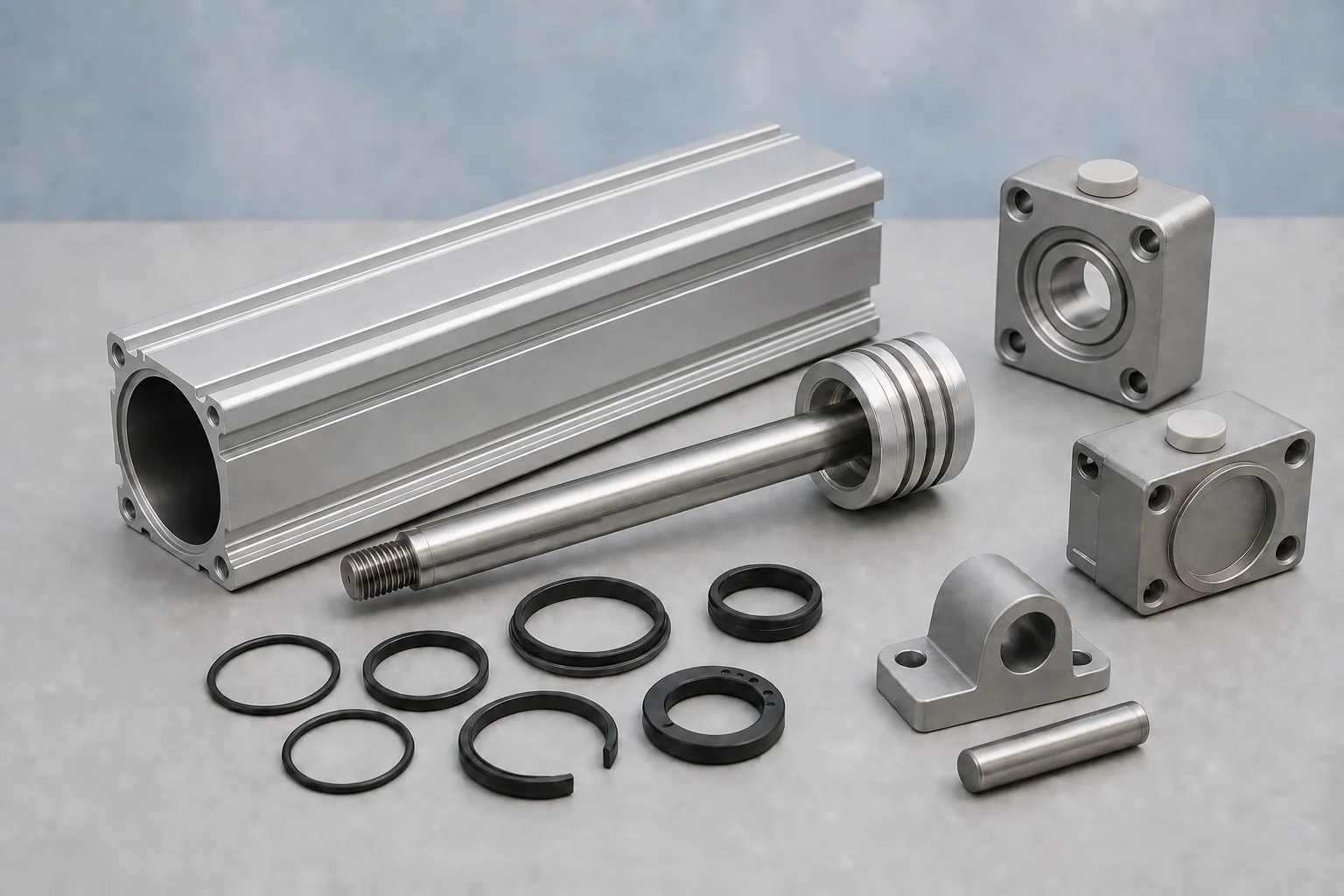
Illustrative pneumatic-cylinder repair planning layout with one dry open profiled-aluminum cylinder tube, its withdrawn piston-and-rod assembly with empty grooves, separate bearing and end caps, and loose uninstalled seal and guidance rings
Illustrative dry open pneumatic-cylinder repair-planning referencePneumatic Cylinder Repair

Capability review

This page describes common request types. Available processes, equipment, tolerances, inspection, documentation, and fulfillment are confirmed for each quote.

Overview

A useful repair request separates air-system symptoms from cylinder condition, authorized decisions, and acceptance.

A pneumatic cylinder is one element of a compressed-air system, and an observed symptom does not by itself isolate a failed component. External leakage, internal bypass, drift or creep, low force, slow or uneven motion, sticking or chatter, incomplete stroke, end impact, cushioning or sensing concerns can involve seals, rod or bore condition, guidance, mounts, side load, alignment, cushions, sensors, supply and regulated pressure, valves, tubing, flow control, exhaust, air purity, lubrication, temperature, load, speed or duty. A useful request therefore connects the controlled cylinder configuration and system context to the declared incoming state, observed component condition, prior work and exact authority for teardown, inspection, reuse, repair, replacement or remake. Standardized envelope or mounting dimensions do not by themselves establish internal design, interchangeability, repairability or condition. Test method, medium, pressure, dwell, cycling, restraint, leakage, motion, cushion, sensor and acceptance criteria remain caller-defined. Requested resealing, polishing, honing, machining, coating, component replacement or remake, reassembly or testing is a scope input—not evidence that a route is available or appropriate, that a symptom’s cause is known, or that any repaired, tested or returned-to-service result has been achieved before quote review.

Controlled cylinder and air-system context

Identify the governing nameplate, manufacturer or owner reference, model, part and serial number, drawing and revision, photos, acting mode and construction, bore, rod, stroke and length data, mounts, pins, ports, cushions, flow controls and sensors, machine function, supply and regulated pressure, air purity and preparation, lubrication, temperature, load, speed, cycle and duty, orientation, alignment or side load, environment, symptoms, incident history and previous work.

Component condition and decision boundaries

Describe the owner-declared incoming state and observed condition of the rod and running surface, tube or barrel and bore, piston, head or bearing cap, end cap, bearing, bushing, guides and wear rings, seals and wiper, grooves, tie rods and fasteners, threads, ports, mounts, pins, cushions, stops, sensor and magnet; then state teardown authority, protected or do-not-alter features, component return needs, dimensional and surface requirements, and reuse, repair, replace, remake or salvage limits.

Test definition, final state, and acceptance

State the caller-controlled reassembly and test procedure, medium, pressure, dwell, stroke or cycle sequence, mount or restraint, external leakage and internal bypass criteria, motion, speed, force, cushion, sensor and end-position requirements, inspection method and measurement state, cleanliness and lubrication or dry-state requirements, caps or plugs, coating and masking, preservation, identification, acceptance and rejection criteria, requested record fields, packaging and timing.

Fulfillment review

Requests are reviewed manually. The fulfillment route and availability are confirmed before acceptance.

Quote inputs

The information that starts a useful pneumatic cylinder repair review.

The quote form accepts private files or a written project description, plus optional process, material, material-source, quantity and timing details. Leave Process unset, or select Other when useful and name pneumatic cylinder repair in the description. Use the file or description to define the cylinder, air-system context, symptoms, incoming and component condition, permitted scope, test definition and acceptance requirements.

Cylinder identity, construction, dimensions, and installed interfaces
Manufacturer, owner, model, part and serial references; nameplate, controlled drawing or model and revision; clear overall and detail photos; single- or double-acting and single- or double-rod mode; tie-rod, profile, round, compact, guided, rodless or other construction when applicable; bore, rod diameter, stroke, retracted and extended or pin-centre lengths; rod-end thread or eye; head or bearing cap, end cap and tube arrangement; base, flange, clevis, eye, trunnion, foot or other mounting; pin and bushing data; port type, thread, size, location and orientation; cushioning, stops, flow controls, sensors or magnets; mating equipment and installed envelope
Operating medium, air-system context, symptoms, and history
Machine and function; compressed-air or other specified operating medium; normal and maximum supply, regulated and cylinder pressure when caller-controlled; air purity or preparation requirements for particles, water and oil; dry or lubricated service; temperature, load, speed, cycle and duty; orientation, guided or side-loaded condition, alignment, shock and external loads; valve, tubing, flow-control and exhaust context; environment; external leakage location, internal bypass, drift or creep, low force, slow or uneven travel, sticking, chatter, incomplete stroke, end impact, cushion or sensor concern and other symptoms; incident sequence, hours or cycles when known; prior repairs, adjustments or component changes; and available system observations
Incoming state, component condition, and permitted repair boundary
Owner-declared installed or removed, isolated, depressurized, vented, disconnected, dry, lubricated, contaminated, externally cleaned or other incoming status; stored mechanical energy or spring-return information; handling and teardown authorization; rod straightness or runout, scoring, pitting, corrosion, coating and thread or eye condition; tube and bore scoring, taper, ovality and surface requirement; piston, head or bearing cap, end cap, bearing, bushing, guide, wear ring, seal, wiper, groove, tie rod, fastener, port, thread, mount, pin, cushion, stop, sensor and magnet condition; component identification and return needs; protected or do-not-alter features; and reuse, clean, reseal, polish, coat, hone, machine, repair, replace, remake or salvage boundaries only where caller-authorized
Reassembly, test, inspection, final condition, records, and timing
Seal, wiper, bearing, wear-ring, cushion and lubricant identity or compatibility requirements; groove, contact-surface and clearance basis; supplied or existing component status; assembly orientation and caller-controlled fastener or adjustment requirements; test method and medium, pressure, dwell, cycle or stroke sequence, mount and restraint, external leakage, internal bypass or drift criteria, travel, speed, force, cushioning, sensor and end-position requirements, temperature and measurement state; inspection method, locations, coverage, decision rule and acceptance and rejection criteria; cleaning and air-purity target, lubrication or dry final state, caps and plugs, coating and masking, preservation, identification, requested record fields and retention, packaging, quantity and target timing
Interactive request review

Explore how component condition, loose wear components, interfaces, and test definition remain connected.

Select a review point on the fixed dry-cylinder layout to examine rod, tube, bore, piston and guidance condition; seals, wiper, wear rings, grooves and cushioning elements; and port, mount, sensor, stroke and caller-defined test boundaries without implying a diagnosed failure, approved repair, installed component, assembled result or passed test.

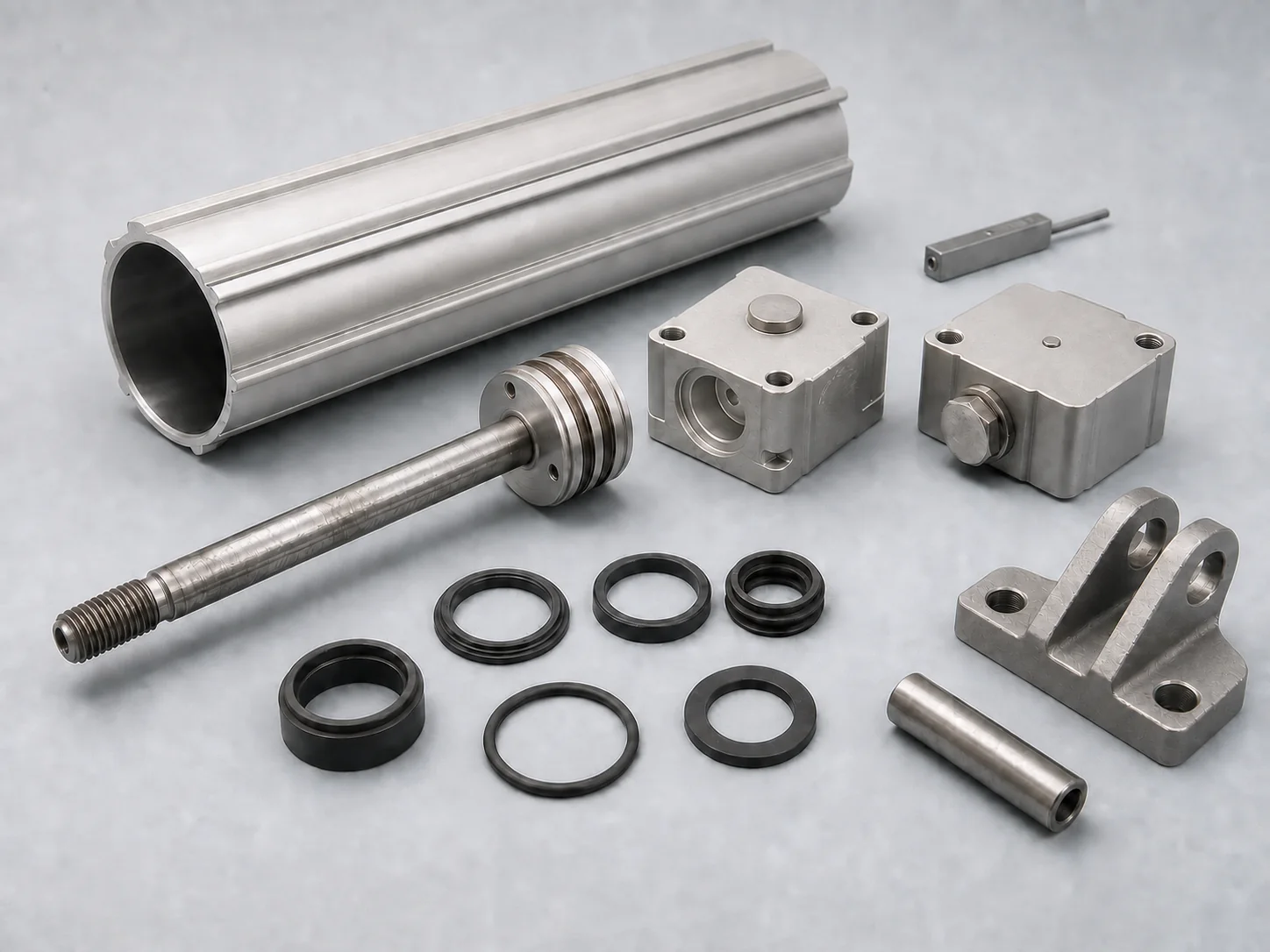
Illustrative pneumatic-cylinder repair request layout with one dry open profiled-aluminum cylinder tube showing its bore and sensor groove, a withdrawn piston-and-rod assembly with empty grooves, separate bearing and end caps, loose uninstalled seal, wiper and wear rings, dry capped ports, a loose mount and pin, and an unconnected sensor beside the tube groove

One dry disassembled cylinder, three repair-request zones

Rod, tube and piston condition, loose seal and guidance components, and port, mount, sensor or test-definition boundaries remain visible together while the request details change.

Illustrative dry open planning example only; markers locate request topics. They do not establish cylinder ownership, failure cause, component identity or condition, repairability or component decision, material or seal compatibility, machining or finishing route, seal-installation or assembly outcome, sensor function, stroke, test setup or pressure, leakage or functional result, inspection decision, acceptance, records, return-to-service state, fulfillment route, timing, or capability.

Pneumatic cylinder repair request review

What should the cylinder definition explain?

Select a review feature to see the details that help clarify the request.

Rod, tube, bore, piston, and guidance condition

Define cylinder identity and declared incoming state; rod diameter, exposed length, end connection, running-surface condition, material or coating requirement, straightness or runout limits; tube and bore dimensions, scoring, corrosion, taper or ovality limits, and surface requirement; piston identity, attachment, grooves and guidance clearances; wear or damage locations; and the supported or free inspection state.

  • Cylinder identity, declared incoming state, rod diameter, exposed length, end connection, running-surface condition, material or coating requirement, and straightness or runout limits
  • Tube and bore dimensions, scoring, corrosion, taper or ovality limits, surface requirement, and the supported or free inspection state
  • Piston identity and attachment, grooves, guidance clearances, and mapped wear or damage locations

Helpful cylinder detail

Connect the rod, tube and piston to the controlled cylinder reference, then mark the running surfaces, bore, grooves, guidance relationships, damage locations, and inspection state.

Start with your pneumatic cylinder files
Cylinder identity, incoming condition, component decisions, material and seal compatibility, reassembly state, interfaces, test definition, inspection, requested records, availability, fulfillment, and timing are confirmed from the submitted information during quote review.

Capabilities

Common pneumatic cylinder repair request patterns, kept easy to scan.

These examples organize caller-defined inputs. Cylinder identity, incoming state, teardown feasibility, component condition, repair or replacement route, achievable geometry and surface state, seal and material compatibility, test method, inspection, requested records, availability, fulfillment and timing are confirmed from the submitted information before acceptance.

Leakage, bypass, motion, force, cushioning, and sensor-context requests

Symptoms & air system

Requests organized from the exact cylinder and machine context, operating medium and air preparation, supply and regulated pressure, temperature, load, speed, cycle and duty, valve, tubing, flow-control and exhaust context, current installed or removed state, external leakage location, internal bypass, drift or creep, low force, slow or uneven travel, sticking, chatter, incomplete stroke, end impact, cushion or sensor concern, side-load or alignment indications, incident and prior-repair history and other system observations without treating a symptom as a confirmed failure cause.

Rod, tube, piston, guidance, seal, and wear-condition requests

Components & wear

Requests organized from rod diameter, length, straightness or runout, coating and seal-running surface; tube and bore size, straightness, taper, ovality and surface; piston attachment and guidance clearance; head or bearing cap and end-cap interfaces; bearings, bushings, guides, wear rings, seals, wiper and grooves; tie rods and fasteners; scoring, pitting, corrosion, impact, contamination or heat evidence; and caller-defined inspection state, surface, clearance, reuse, repair, replacement and acceptance limits.

Mount, pin, port, cushion, flow-control, sensor, and stroke requests

Interfaces & controls

Requests organized from mounting style and datums, base, flange, clevis, eye, trunnion or foot relationships, pin and bushing fits, installed alignment and side-load context, rod-end and component threads, port type, size, thread, location and orientation, cushion type and adjustment intent, stops, flow controls, sensor and magnet identity or compatibility, stroke and end positions, mating equipment, protected features, component source and do-not-alter boundaries.

Repair-versus-replace, component-remake, reassembly, test, and final-condition requests

Scope & acceptance

Requests organized from teardown and inspection authority; reuse, salvage, clean, reseal, polish, coat, hone, machine, repair, replace or remake decisions for each component; material, seal, wear-component and lubricant requirements; assembly orientation and caller-controlled fastener or adjustment details; test method, medium, pressure, dwell, cycling, restraint, leakage, bypass, motion, cushion, sensor and end-position criteria; measurement state and inspection coverage; cleaning, lubrication or dry state, coating, masking, preservation, identification, requested records, packaging and acceptance.

Quote workflow

From controlled cylinder information to a confirmed repair-review baseline.

A short, human-managed review keeps cylinder identity, air-system context, incoming state, component condition, scope authority, interfaces, testing, final condition, acceptance and open questions visible before work is accepted.

  1. 01

    Share the controlled cylinder request

    Upload the available nameplate, drawing or model and revision, photos, dimensions and interfaces, operating medium and air-system conditions, symptoms and history, owner-declared incoming state, observed component condition, teardown and repair authority, test and final-condition requirements, requested records, packaging and timing. Leave Process unset, or select Other when useful and name pneumatic cylinder repair in the description.

  2. 02

    Reconcile identity, system context, condition, and incoming-state boundaries

    Acting mode and construction, bore, rod, stroke and lengths, mounts, pins, ports, cushions, flow controls and sensors, machine function, supply and regulated pressure, air purity and preparation, lubrication, temperature, duty, load, speed, alignment and side load, environment, valve, tubing and exhaust context, symptoms and incident history, previous work, owner-declared isolation, depressurization, venting, disconnection, cleaning or contamination status, spring or other stored-energy information, handling constraints and missing design-authority information are organized for follow-up.

  3. 03

    Define component decisions, test scope, final state, and acceptance

    Rod, tube or barrel, bore, piston, head or bearing cap, end cap, bearing, bushing, guide, wear ring, seal, wiper, groove, tie rod, fastener, thread, port, mount, pin, cushion, stop, sensor and magnet condition; inspection and measurement state; reuse, repair, replacement, remake, salvage and do-not-alter decisions; materials, coatings, surfaces and clearances; seal, lubricant and wear-component compatibility; reassembly; test setup; cleanliness and air-purity requirements; final condition; inspection; requested records; preservation; packaging; fulfillment; timing and remaining dependencies are reviewed before acceptance.

  4. 04

    Coordinate the approved baseline

    Once a request is accepted, the controlled identity and files, air-system and symptom context, incoming state, teardown authority, component-by-component decision boundaries, protected features, material, seal, lubricant and wear-component requirements, dimensions, surfaces and clearances, reassembly state, test method and criteria, inspection and acceptance, final cleanliness and lubrication or dry state, preservation, requested records, packaging, timing and authorized changes become the reference point for project communication.

Request readiness

Small decisions that make pneumatic cylinder repair requests easier to review.

Clear identity, system, condition, scope, interface, test and acceptance information is more useful than assuming a failure cause, standard repair path, seal kit, surface result, pressure test, turnaround or returned-to-service condition.

Design intent before assumptions
  1. 01

    Capture nameplate, drawing, photo, and dimension references before choosing a path.

    Provide manufacturer and owner references, model, part and serial number, drawing or model and revision, acting mode and construction, overall and detail photos, bore, rod, stroke, retracted and extended or pin-centre lengths, current installed or removed state, mating assembly, critical interfaces and precedence when nameplate, drawing, sample or measured data conflict.

  2. 02

    Map mounts, pins, ports, cushions, sensors, and installed geometry.

    Identify base, flange, clevis, eye, trunnion, foot or other mounting; mount and rod-end datums; pin and bushing sizes and fits; rod-end thread or eye; port type, thread, size, location and orientation; cushion type and adjustment intent; stops and flow controls; sensor and magnet identity; installed envelope, alignment, guided motion, side load and interference context.

  3. 03

    Separate operating conditions from observed symptoms and incident history.

    State the operating medium, normal and maximum caller-controlled supply, regulated and cylinder pressure, air purity or preparation for particles, water and oil, dry or lubricated service, temperature, load, speed, cycle and duty, orientation, valve, tubing, flow-control and exhaust context, environment and contamination requirements; then separately describe external leakage, internal bypass, drift, creep, low force, slow or uneven motion, sticking, chatter, incomplete stroke, end impact, cushion or sensor concern and previous repair or adjustment history without declaring a root cause.

  4. 04

    Declare isolation, stored energy, contamination, prior work, and teardown authority.

    State whether the cylinder is installed or removed and the owner-declared isolation, depressurization, venting, disconnection, spring-return or other stored-energy, dry or lubricated, contaminated, externally cleaned and capped status; identify handling, hazard and cleanliness information supplied by the owner; state whether teardown and destructive or non-destructive inspection are permitted; and list components that must be retained, returned or protected.

  5. 05

    Set component-by-component reuse, repair, replace, remake, and do-not-alter boundaries.

    For the rod and coating, tube and bore, piston, head or bearing cap, end cap, bearings, bushings, guides and wear rings, seals and wiper, grooves, tie rods and fasteners, threads, ports, mounts, pins, cushions, stops, sensors and magnet, state observed condition, design-authority dimensions and surfaces, clearances and fits, material, coating, seal, lubricant and compatibility requirements, available manufacturer or owner data, supplied-component status, source restrictions, salvage limits and approval authority before any change.

  6. 06

    Define test setup, final condition, acceptance, records, and packaging.

    State the controlling reassembly and test procedure, medium, pressure and dwell, cycle or stroke sequence, mounting and restraint, temperature and measurement state, external leakage, internal bypass or drift limits, motion, speed, force, cushion, sensor and end-position criteria, inspection method, decision rule and coverage, cleaning and air-purity target, lubrication or dry final state, caps and plugs, coating and masking, preservation, identification, acceptance and rejection criteria, requested record fields, packaging and timing.

Materials

Cylinder-component material contexts for pneumatic repair review.

These links organize caller-specified component materials; they do not establish grade, stock, seal, coating, repair route or replacement availability. Exact component role, specification and condition, air, lubricant and environmental compatibility, treatment or coating, surface and clearance requirements, inspection, supplied-item status, substitution and reuse or replacement authority are confirmed for each request.

Material guide

Aluminum

Caller-specified aluminum tube, extruded profile, body, head, end cap, piston, mount or other component requests where the exact alloy and temper, wrought, extruded or cast form, anodize or other coating, bore, groove, thread and port condition, wear and corrosion context, seal and mating interfaces, surface, clearance, inspection and reuse, repair or replacement boundary need review.

Tube · profile · cap · piston contexts

View material
Material guide

Stainless Steel

Stainless rod, tube, tie rod, pin, bushing, fastener, port, fitting or other component requests where the exact grade, product form and condition, corrosion environment, strength, hardness, galling and wear context, coating or finish, seal-running surface, thread and mating state, inspection and reuse, repair or replacement boundary need review.

Rod · tube · pin · fitting contexts

View material
Material guide

Brass

Caller-specified brass port, fitting, flow-control part, bushing or other small-component requests where the exact brass or other copper-alloy designation, product form and condition, compressed-air, lubricant and mating-material compatibility, wear, galling and corrosion context, fit, thread and sealing interfaces, inspection and replacement authority need review. Brass, bronze and other copper alloys are not assumed interchangeable.

Port · fitting · bushing · small-component contexts

View material
Material guide

Plastic

Caller-specified plastic piston, bearing, guide, wear ring, cushion, spacer or seal-support component requests where the exact resin, polymer or compound, filled or unfilled and molded or machined form, moisture, temperature, compressed-air and lubricant compatibility, friction, wear and dimensional-stability context, fit, groove and contact-surface condition, inspection, supplied-component status and reuse or replacement authority need review. Plastic and elastomer seal compounds are not assumed equivalent.

Piston · guide · wear-ring · support contexts

View material

FAQ

Pneumatic cylinder repair quote questions.

Start with clear private photos, a drawing, model or nameplate image, or a written project description. Add manufacturer and owner model, part or serial references, acting mode and construction, bore, rod, stroke and length data, mounting and port details, cushions, flow controls and sensors, operating medium and air-system conditions, machine context, symptoms and incident history, owner-declared incoming state, observed component condition, teardown authority, reuse, repair, replacement or remake boundaries, test and final-condition requirements, requested records, packaging and timing. Leave Process unset, or select Other when useful and name pneumatic cylinder repair in the description.

Separate the operating context from the symptom. State the medium, normal and maximum caller-controlled supply, regulated and cylinder pressure, air purity and preparation, dry or lubricated service, temperature, load, speed, cycle and duty, orientation, alignment or side-load context, valve, tubing, flow-control and exhaust arrangement and environment; then locate external leakage and describe internal bypass, drift, creep, low force, slow or uneven travel, sticking, chatter, incomplete stroke, end impact, cushion or sensor concern, when it occurs, previous repairs or adjustments and available system observations. A symptom alone does not establish the failed component.

Identify bore, rod diameter, stroke, retracted and extended or pin-centre lengths, rod-end thread or eye, head or bearing-cap and end-cap arrangement, base, flange, clevis, eye, trunnion, foot or other mounting, mount and rod-end datums, pins and bushings, port type, thread, size, location and orientation, cushion type and adjustment intent, stops and flow controls, sensor and magnet identity or compatibility, installed envelope, mating equipment, free, supported or restrained inspection state and the controlling drawing, sample or measured-data convention.

For the rod and coating, tube and bore, piston, head or bearing cap, end cap, bearings, bushings, guides and wear rings, seals, wiper, grooves, tie rods and fasteners, threads, ports, mounts, pins, cushions, stops, sensors and magnet, state observed condition, protected features, design dimensions and surfaces, clearances and fits, material, coating, seal, lubricant and compressed-air compatibility requirements, available manufacturer or owner data, supplied-component status, teardown and inspection authority, retained or returned items and reuse, salvage, clean, reseal, polish, coat, hone, machine, repair, replace, remake or do-not-alter authority. A requested path is not assumed available or appropriate before review.

Inspection and documentation requirements can be reviewed during quoting. No certification or report package is implied until confirmed.

Requests are reviewed manually. The fulfillment route and availability are confirmed before acceptance.

Start with the information you have

Ready to review your pneumatic cylinder repair request?

Share the controlled cylinder identity, photos or drawings, acting mode and construction, bore, rod, stroke and length data, mounts, pins, ports, cushions, flow controls and sensors, operating medium and air-system context, symptoms and history, owner-declared incoming state, observed component condition, teardown and component-decision authority, material, seal, surface, clearance and interface requirements, reassembly and test definition, final cleanliness and lubrication or dry state, inspection and acceptance criteria, requested records, packaging and timing. Pearson will follow up on the details that still need confirmation.

Request a pneumatic cylinder repair quote