Identity and authority
State the specification and revision, wrought or cast copper-alloy designation, temper, composition restrictions, and source precedence.
Brass material guide
Share the drawing, copper-alloy designation, temper, composition restrictions, form, source, interfaces, finish, inspection, and records. Pearson reviews fit before acceptance.
Material review
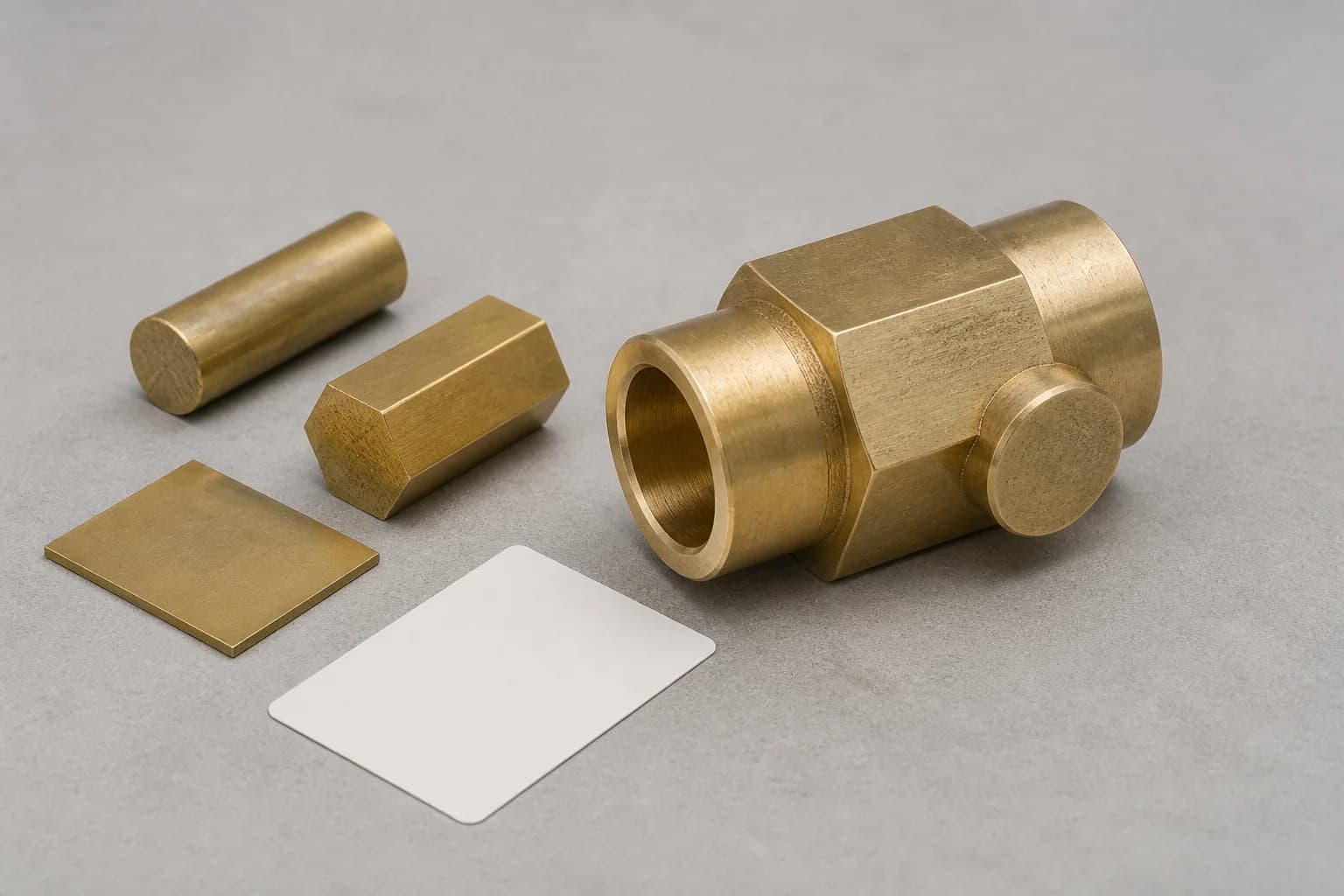
Grades, forms, finishes, and applications shown here are examples for quote review. Availability and achievable tolerances are confirmed for each request.
Overview
A brass family name alone does not establish alloy, composition, temper, form, condition, traceability, availability, or suitability. Pair the drawing with specification, source, interface, finish, inspection, and acceptance requirements.
State the specification and revision, wrought or cast copper-alloy designation, temper, composition restrictions, and source precedence.
Identify sheet, plate, strip, bar, profile, tube, wire, forging, or casting; nominal size; orientation; source; and supplied condition.
Mark fits, threads, seals, contacts, finish and masking areas, measurement state, acceptance criteria, traceability, and requested records.
Material review
Grades, forms, finishes, and applications shown here are examples for quote review. Availability and achievable tolerances are confirmed for each request.
Quote inputs
Upload a private file or written project description. Optional Process, Material, Material source, quantity, and timing fields can add context.
Interactive request review
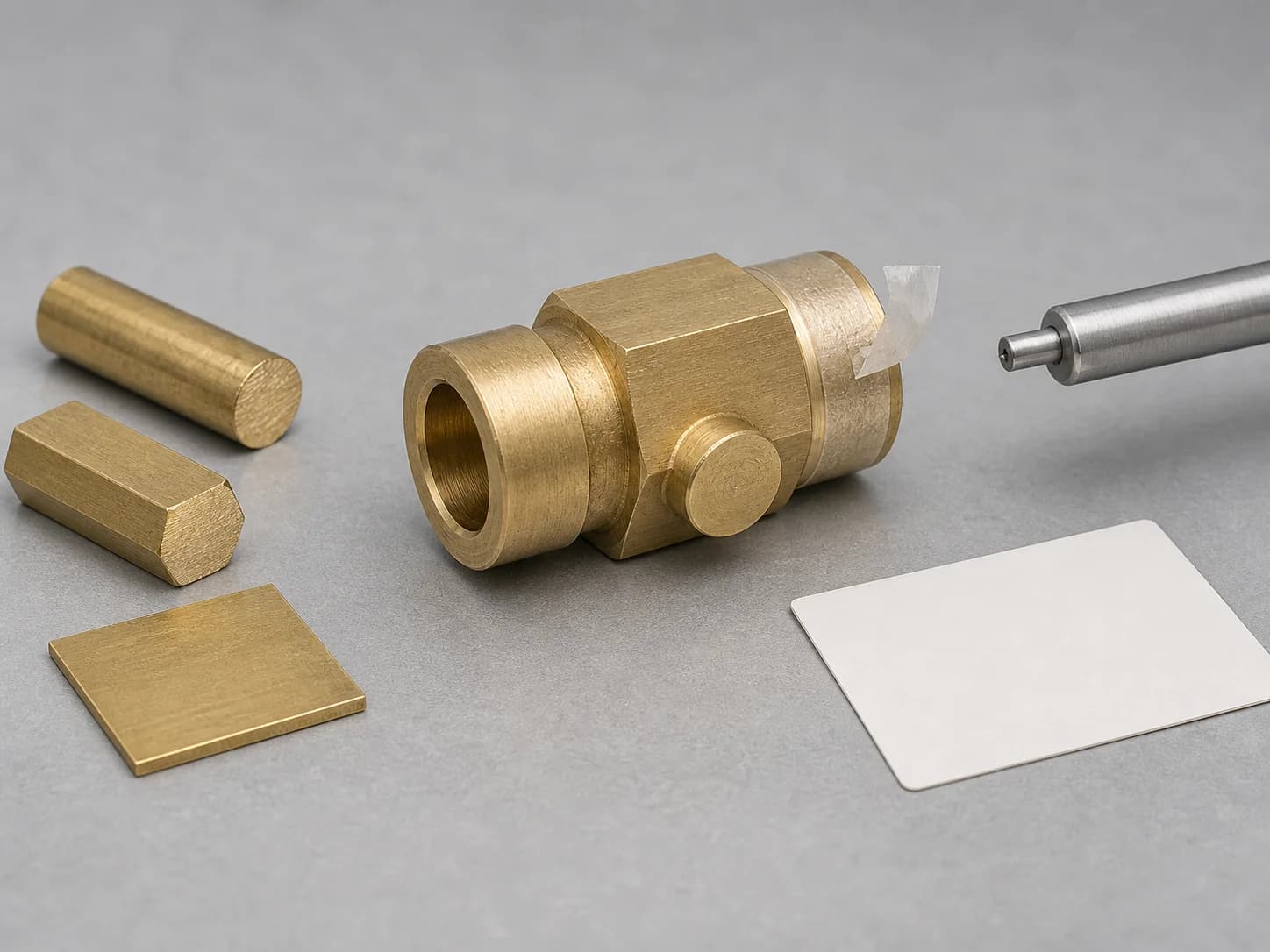
Choose a marker to review identity and form, feature and interface relationships, or finish and acceptance inputs. The illustration confirms no material or result.
Brass request feature map
The markers connect material, interface, and final-state inputs.
Illustrative planning example only. Markers do not establish material identity, composition, availability, process, fit, finish, inspection, records, or timing.
Brass request review
Choose a marker to review the supporting inputs.
Define the specification, copper-alloy designation, temper, composition restrictions, product form, condition, source, certificate fields, and heat or lot mapping.
Helpful brass detail
Pair the drawing with the exact material definition and source.
Request contexts
These examples organize request inputs. They do not confirm alloy, composition, availability, process fit, achieved geometry, finish, inspection, fulfillment, or timing.
Define the specification, designation, temper, composition restrictions, form, source, certificate fields, heat or lot mapping, and substitution boundaries.
Describe form, nominal size, direction, supplied condition, quantity, and its relationship to the controlled part.
Identify the starting shape, material condition, datums, allowances, retained areas, and incoming surface.
Define process stage, joining boundaries, polish, plating or lacquer, masking, measurement state, inspection, acceptance, traceability, and records.
Quote workflow
A short review keeps material, interfaces, final condition, acceptance, records, and open questions visible.
Upload the drawing or model, specification, alloy, temper, composition restrictions, form, source, quantity, finish, inspection needs, and timing.
Review specification precedence, material identity, supplied condition, source, certificates, customer-supplied status, and substitution authority.
Connect starting form to datums, critical features, fits, seals, contacts, allowances, process stage, finish, measurement state, and inspection.
After acceptance, approved files, material requirements, inspection scope, records, fulfillment, and timing form the communication baseline.
Request readiness
Clear material, interface, finish, and inspection intent is more useful than assuming availability, compatibility, achieved results, documentation, or timing.
State specification, revision, designation, temper, composition restrictions, form, substitution authority, and source precedence.
Identify form, size, orientation, supplied condition, surface, and protected boundaries.
State source, customer-supplied status, markings, certificates, quantity, custody, and remnant instructions.
Map starting form to datums, fits, threads, seals, contacts, protected regions, and allowances.
Separate known history from requested joining, finish, plating, masking, heat input, distortion, and inspection state.
Define inspection, coverage, acceptance, identification, traceability, and records. Requested records remain unconfirmed.
Materials
Compare alternatives or mating materials without assuming substitution, compatibility, identity, or availability.
Compare alloy, contact, finish, and isolation.
Alloy · temper · contact · finish contexts
View materialCompare alloy, fit, finish, and isolation.
Alloy · temper · interface · finish contexts
View materialCompare grade, thread, fit, and isolation.
Grade · condition · thread · interface contexts
View materialCompare resin, condition, isolation, and fit.
Resin · condition · isolation · interface contexts
View materialRelated
These guides organize adjacent requirements without confirming process fit, results, fulfillment, or timing.
Review turning geometry, threads, and seals.
Review machining geometry, finish, and inspection.
Review holes, threads, seals, and inspection.
Review sheet condition, bends, and finish.
Review polish, plating, masking, and inspection.
Review datums, coverage, and acceptance.
FAQ
Share a private drawing or model and revision, designation, temper, composition restrictions, form, source, quantity, interfaces, finish, inspection, records, and timing.
State specification and revision, copper-alloy designation, temper, composition restrictions, form, size, condition, source, certificate fields, and heat or lot requirements. A family label establishes none.
State substitution authority and composition, environment, interface, finish, inspection, and record requirements. Alternatives are not assumed equivalent, available, compatible, compliant, or approved.
Identify owner, declared material, condition, markings, certificate, quantity, mapping, custody, and remnant instructions. Owner-declared inputs do not establish identity, acceptance, or usability.
Define incoming condition, sequence, polish, plating or lacquer, masking, measurement state, inspection coverage, and acceptance. Finish, fit, seal, geometry, and results remain unconfirmed.
Grades, forms, finishes, and applications shown here are examples for quote review. Availability and achievable tolerances are confirmed for each request. Requests are reviewed manually. The fulfillment route and availability are confirmed before acceptance.
Start with the files you have
Share the drawing, designation, temper, composition restrictions, form, source, quantity, interfaces, finish, inspection, records, and timing.
Request a brass quote