Finishing and assembly services

Finishing and assembly requests, organized around edge condition, finish boundaries, hardware interfaces, and final-condition requirements.

A component can change dimension, appearance, contact condition, and handling needs as edges are prepared, finishes are applied, hardware or adhesives are introduced, and parts are assembled. Share the controlled part and assembly revision, bill of materials, supplied-item status, incoming material and surface condition, edge requirements, preparation and finish definition, masking and cosmetic zones, hardware or adhesive specifications, mating interfaces, installation and assembly sequence, final inspection, cleaning, identification, preservation and packaging criteria, quantity, and timing so process, sequence, acceptance, and fulfillment fit can be confirmed before acceptance.

  • Edge and surface-condition definition
  • Finish, masking, hardware, and sequence
  • Scope confirmed per quote
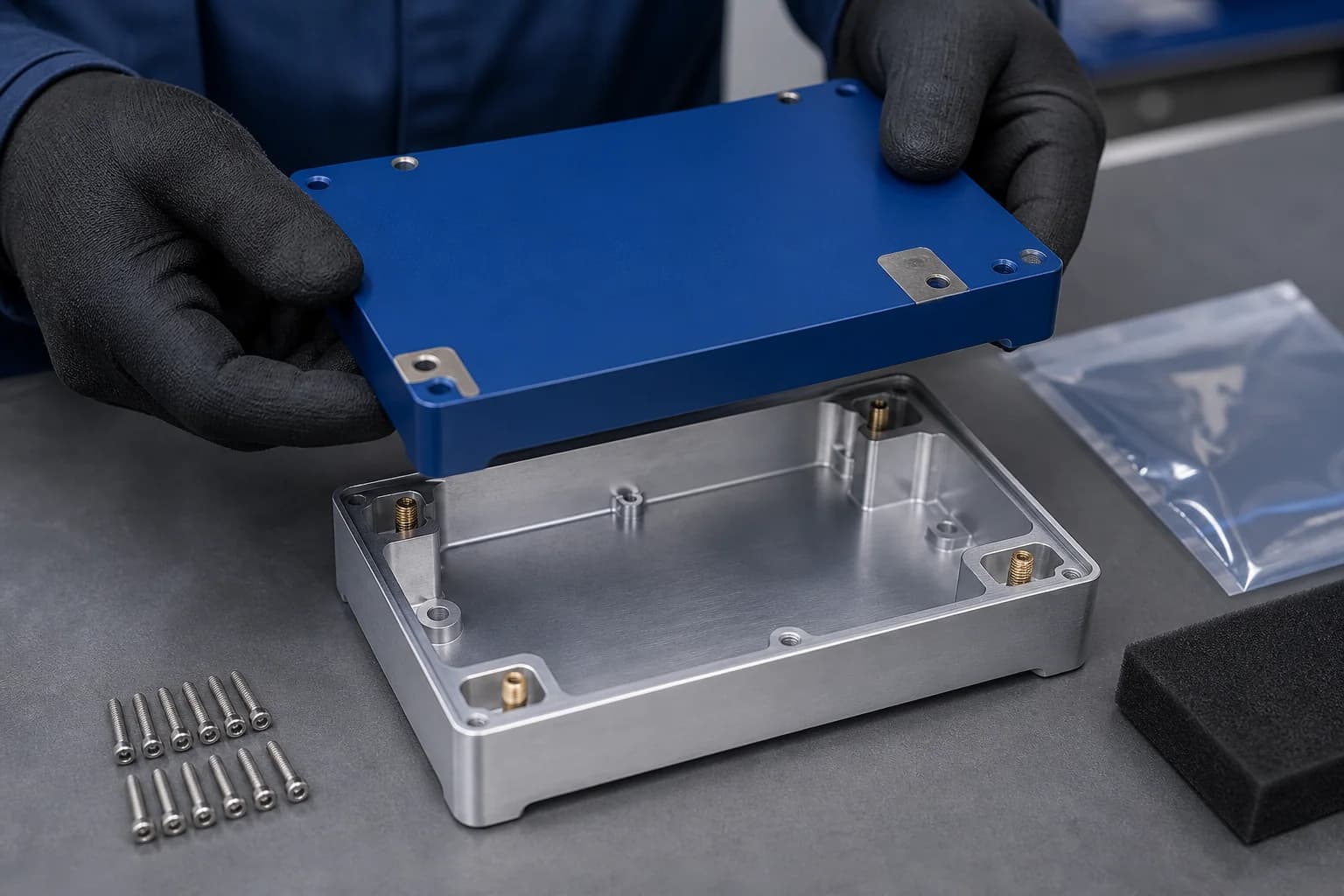
Illustrative generic finishing-and-assembly planning bench with gloved hands aligning a blue-coated aluminum enclosure cover over a silver base with visible standoffs, protected bare contact pads, and organized hardware
Illustrative finishing-and-assembly planning contextFinishing & Assembly

Capability review

This page describes common request types. Available processes, equipment, tolerances, inspection, documentation, and fulfillment are confirmed for each quote.

Overview

A finished assembly needs one controlled definition from incoming condition to protected final condition.

Finishing and assembly requirements can conflict when they are reviewed separately. Finish build can affect threads, fits, contacts, sealing faces, fastener seats, and adhesive areas; surface preparation or deburring can change edges and cosmetic surfaces; self-clinching, threaded, or press-fit hardware can depend on the hole, material, access, and process sequence; adhesive requirements depend on the named product, substrate preparation, bondline, open time, fixturing, and cure definition; and final cleaning, preservation, and packaging can expose or protect critical surfaces. The request should tie every edge, finish zone, installed item, interface, assembly step, inspection method, acceptance criterion, and protected condition to the controlling drawing revision and bill of materials. These inputs support a project-specific review; they do not establish a finish route, installed result, fit result, cleanliness state, inspection record, preservation outcome, fulfillment route, or availability before quoting.

Edge, surface, and finish definition

Identify incoming material and surface condition, burr and edge-break intent, functional edges, cosmetic surfaces, preparation, exact finish specification and colour, coating thickness when specified, masking and protected regions, and pre- or post-finish dimensional intent.

Hardware, adhesive, and interface controls

Define every hardware part number, threaded insert, press-fit item, pin, bushing, standoff and fastener; customer-supplied status; adhesive or retention method; hole or thread condition; installation direction; press-force, torque or cure requirement when specified; mating datum, clearance and fit; access; and assembly sequence.

Final condition and protection boundaries

State cleaning and inspection methods, cosmetic and functional acceptance, acceptance and rejection criteria, identification or label content, item, lot or serial mapping when required, requested record fields, preservation, packaging configuration, contact restrictions, separation, orientation, and protected handling.

Fulfillment review

Requests are reviewed manually. The fulfillment route and availability are confirmed before acceptance.

Quote inputs

The information that starts a useful finishing and assembly review.

The quote form accepts private files or a written project description, plus optional process, material, material-source, quantity, and timing details. The current Process field lists Finishing and Assembly separately; select the one that best represents the request, leave it unset if neither is useful, and describe the combined scope in the project description.

Controlled product definition and incoming condition
Part and assembly STEP or STP models and matching PDF drawings when available, drawing and assembly revision, exploded view or annotated photos, bill of materials (BOM), item quantities and approved alternates, material and finish condition, purchased or customer-supplied hardware and components, current surface condition, existing coatings, prior processing, defects or damage relevant to the request, quantity, and configuration notes
Edges, preparation, finish, and masking
Burr and edge-break requirements, edges that remain sharp, functional edges and cosmetic surfaces, surface-preparation method when prescribed, exact finish system and governing specification, colour or approved sample, texture or direction, coating thickness when specified, coated and coating-free regions, masking and protected features, rack or contact restrictions, drainage or vent context, and dimensions or fits controlled before or after finish
Hardware, adhesive, interfaces, and sequence
Hardware part numbers and supplier instructions; threaded inserts, self-clinching hardware, press-fit hardware, pins, bushings, standoffs, fasteners and washers; source status; mounting-hole or thread condition; installation direction, depth, access, support and press-force requirement when specified; adhesive identity, preparation, mix or application condition, open time, bondline, fixture and cure requirement when specified; retention method; torque value and condition when specified; mating interfaces, datums, clearances, fits, protected regions, and finishing and assembly sequence
Final condition, acceptance, preservation, and packaging
Cleaning method and approved agents when specified, final visual and surface condition, inspection method and locations, cosmetic and functional acceptance, acceptance and rejection criteria, coverage or sampling, nonconformance instruction, identification and label fields, item, lot or serial mapping, requested record fields and deliverable boundary, preservation material or corrosion-protection requirement, caps, plugs and interleaving, packaging materials and configuration, contact restrictions, orientation and separation, quantity, and target timing
Interactive request review

Explore the boundaries that connect finishing, installed items, and final protection.

Select a review point on the fixed enclosure layout to see how edge and surface preparation, masking, hardware and mating interfaces, and final-condition and packaging requirements should remain tied to one controlled definition.

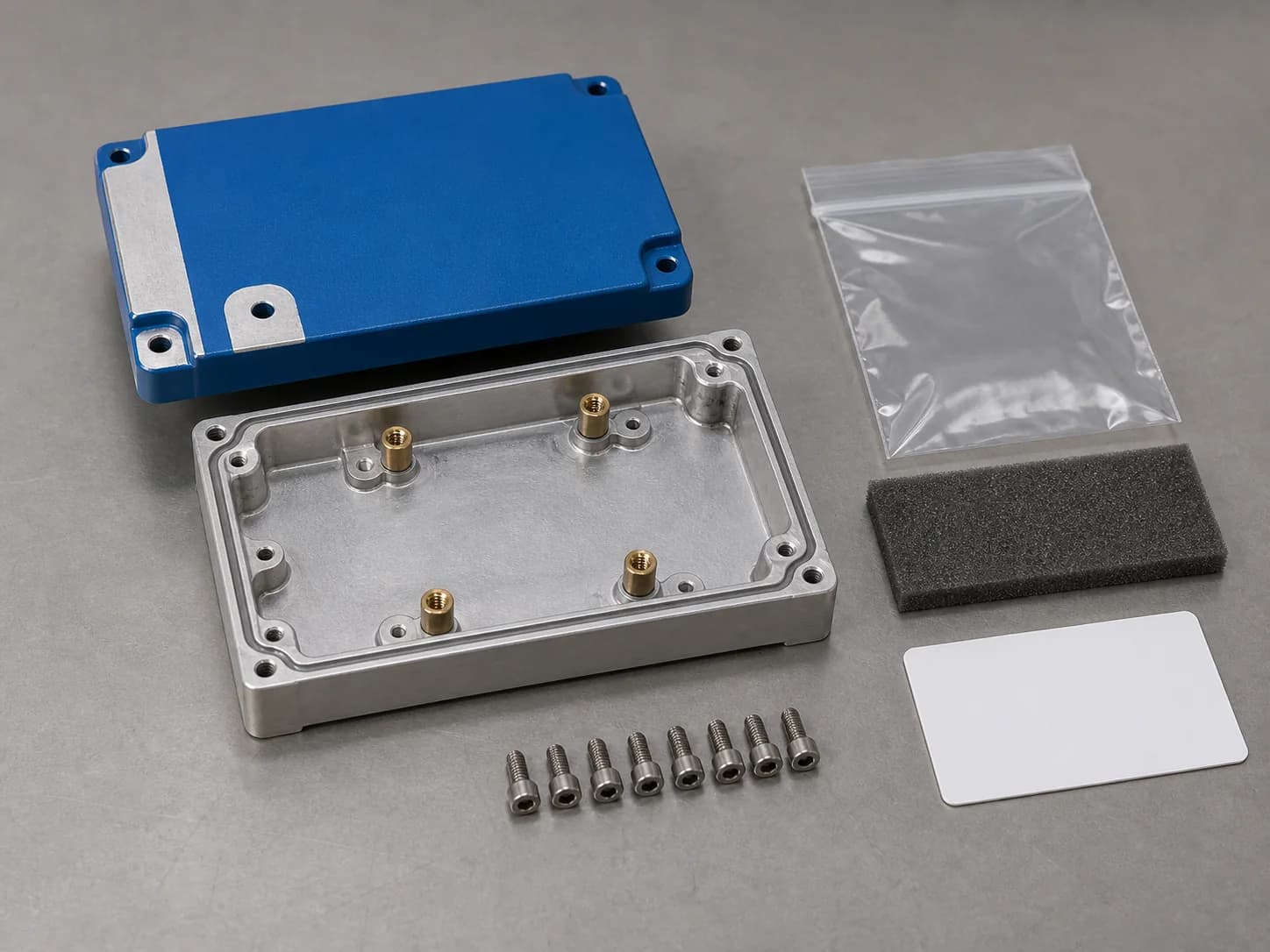
Illustrative finishing-and-assembly planning layout with a blue-coated aluminum enclosure showing protected bare contact pads and edge references, installed standoffs beneath an offset cover, and a clear protective pouch beside an unlabeled inspection card

One enclosure, three connected review zones

The protected finish boundary, hardware interface, and open packaging materials remain visible together while the request details change.

Illustrative example only; markers locate topics for review. They do not establish the starting condition, specified or obtained finish, hardware disposition, interface result, acceptance decision, package status, project route, or capability.

Finishing and assembly review

What should the finish and assembly definition explain?

Select a review feature to see the details that help clarify the request.

Edge condition, surface preparation, masking, and protected areas

Define edge-break and deburring requirements, incoming surface condition, preparation and finish sequence, mask or coating-free boundaries, cosmetic faces, and surfaces or features that must remain protected.

  • Edge-break or deburring callouts, permitted burr direction or residual condition, and the controlling edge references
  • Base material, incoming surface state, preparation, finish specification, colour or texture, and process sequence
  • Mask, plug, coating-free, cosmetic, datum, contact, sealing, thread, bore, and protected-feature boundaries

Helpful finishing and assembly detail

Map each edge and surface to its preparation and finish note, then identify every mask, plug, coating-free feature, cosmetic face, contact region, and protected boundary.

Start with your finishing and assembly files
Process and sequence fit, achievable edge, finish, interface, cleaning, inspection and packaging requirements, hardware responsibility, fulfillment path, availability, and timing are confirmed from the submitted information during quote review.

Capabilities

Common finishing and assembly request patterns, kept easy to scan.

These examples organize the starting point. Process, material and sequence fit; achievable finish, fit and final-condition requirements; supplied-item status; inspection scope; requested records; fulfillment; and timing are confirmed from the project files.

Edge-condition, deburring, and localized surface-preparation requests

Edges & preparation

Requests reviewed from incoming part and surface condition, each burr and edge-break requirement, functional edges, edges that remain sharp, thread and hole cleanup intent, weld or fabrication transitions, cosmetic zones, prescribed preparation, finish sequence, protected features, inspection method, and acceptance criteria.

Specified finish, masking, cosmetic, and sequence requests

Finish boundaries

Requests reviewed from the substrate and current condition, exact finish specification and revision, colour or approved sample, texture or direction, coating thickness when specified, pre- and post-finish dimensional intent, coated and coating-free zones, masking, contacts and fit surfaces, adhesive areas, rack or contact restrictions, sequence, appearance criteria, inspection, and protection.

Hardware, inserts, press fits, adhesives, and retained-item requests

Hardware & bonding

Requests reviewed from exact part and supplier definitions, customer-supplied status, mounting-hole or thread condition, material compatibility, installation direction and depth, support, access, press-force or torque requirement when specified, adhesive preparation and application condition, bondline, fixture and cure definition, retention method, mating datums, clearances, fits, sequence, and acceptance method.

Cleaning, inspection, identification, preservation, kitting, and packaging requests

Final condition

Requests reviewed from the required final visual and surface condition, cleaning method and approved materials, cosmetic and functional inspection, acceptance and rejection criteria, item completeness, identification and label content, item, lot or serial mapping when required, requested record fields, preservation, caps or plugs, interleaving, kitting, package materials and configuration, contact restrictions, orientation, separation, and protected handling.

Quote workflow

From controlled part definition to a confirmed finishing and assembly path.

A short, human-managed review keeps incoming condition, edge and finish boundaries, installed items, interfaces, sequence, final acceptance, protection, and open questions visible before work is accepted.

  1. 01

    Share the controlled product definition

    Upload the part and assembly models and drawings, controlling revisions and BOM, incoming material and surface condition, edge and preparation requirements, finish and masking definition, hardware and adhesive specifications, interface and sequence instructions, final-condition and inspection criteria, preservation and packaging notes, quantity, and target timing.

  2. 02

    Reconcile finishing and assembly drivers

    Drawing and BOM consistency, supplied-item status, edges and cosmetic zones, preparation and finish sequence, masking and coating-free regions, pre- and post-finish dimensions, hardware and mounting conditions, adhesive and retention requirements, mating datums, clearance and fit, assembly access and sequence, final inspection, identification, preservation, packaging, and record boundaries are organized for follow-up.

  3. 03

    Confirm the project path

    Process and material fit, achievable edge, finish, fit and final-condition requirements, sequence and supplied-item needs, inspection method and scope, requested record fields, fulfillment, timing, and remaining questions are resolved before acceptance.

  4. 04

    Coordinate the approved baseline

    Once a request is accepted, the controlled drawing, assembly and BOM revisions, incoming condition, edge and finish definitions, masking map, hardware and adhesive identities, interface and sequence instructions, inspection and acceptance criteria, identification, preservation and packaging boundaries, requested records, quantity, timing, and authorized changes become the reference point for project communication.

Request readiness

Small decisions that make finishing and assembly requests easier to review.

Clear edge, finish, interface, sequence, final-condition, and protection intent is more useful than a generic deburr, finish, assemble, or pack note.

Design intent before assumptions
  1. 01

    Freeze the part, assembly, and BOM revisions.

    Identify every controlled part and assembly revision, BOM item and quantity, approved alternate, purchased or customer-supplied status, incoming material and finish condition, and change note so the request describes one configuration.

  2. 02

    Define every functional edge and burr boundary.

    Mark required edge breaks, chamfers or radii where geometrically controlled, allowable burr direction or size when defined, threads and holes needing attention, cosmetic edges, edges that remain sharp, and inspection method instead of relying on a blanket deburr-all note.

  3. 03

    Name the finish and the incoming surface condition.

    State the exact finish specification and revision, substrate and current surface, prior finish or preparation, colour or approved sample, texture or direction, coating thickness when specified, service objective, and appearance criteria. Do not expect a process family name to define preparation or acceptance.

  4. 04

    Map finish, masking, adhesive, contact, and protected zones.

    Show coated and coating-free regions, threads, bores, datums, sealing and bearing surfaces, electrical contacts, fastener seats, adhesive areas, cosmetic transitions, rack or contact restrictions, drainage or vent context, protected regions, and dimensions controlled before or after finish.

  5. 05

    Control installed items, interfaces, and sequence from exact specifications.

    Provide hardware part numbers and supplier instructions, hole or thread condition, material compatibility, installation direction and depth, support and access, press-force or torque condition when specified, adhesive identity and preparation, bondline, open time, fixture and cure requirement, retention method, mating datums, clearance and fit, and the finish-versus-assembly sequence.

  6. 06

    Define final condition, acceptance, protection, and records together.

    State cleaning method and approved agents, final visual and surface condition, inspection method and locations, cosmetic and functional acceptance, acceptance and rejection criteria, item completeness, identification or label fields, item, lot or serial mapping, requested record fields, preservation, caps or plugs, interleaving, packaging materials, contact restrictions, orientation, separation, and handling notes.

Materials

Common material contexts for finishing and assembly review.

Material identity is one layer of the request. Exact grade and condition, incoming surface, finish compatibility, edge and interface definition, hardware and adhesive requirements, sequence, final acceptance, protection, supplied-item context, and availability are confirmed for each project.

Material guide

Aluminum

Housing, cover, panel, bracket, plate, extrusion and mixed-component requests where alloy and temper, machining or fabrication condition, burr and edge intent, anodic, conversion, paint, powder or other specified finish, masked contacts and fits, coating allowance, self-clinching or threaded hardware, adhesive preparation, cosmetic surfaces, sequence, inspection, preservation, and packaging need review.

6061-T6 · 5052-H32 · 7075-T6 examples

View material
Material guide

Stainless steel

Panel, bracket, guard, cover, housing, pin, fastener and mixed-component requests where exact grade and condition, cut, machined, welded or prior-finished surface, edge condition, specified passivation, brushing, polishing, blasting, paint, powder or plating, masking, hardware and press-fit interfaces, adhesive or retention requirements, cleaning, inspection, and protected handling need review.

303 · 304 · 316/316L examples

View material
Material guide

Brass

Insert, bushing, standoff, contact, fitting, sleeve, trim and mixed-material requests where alloy and condition, incoming surface, edge and cosmetic intent, plating or other specified finish, masking, thread or press-fit geometry, mating material, installation direction, retention, torque sensitivity, contact protection, cleaning, inspection, and packaging need review.

C360 · C260 · C464 examples

View material
Material guide

Engineering plastics

Cover, housing, spacer, guide, bushing, insulator and mixed-material requests where exact polymer and condition, moulded or machined surface, burr or flash boundary, cosmetic zones, coating or adhesive compatibility, inserts and fasteners, support, compression and torque sensitivity, mating fit, cleaning-agent restrictions, inspection, separation, and packaging need review.

Acetal · Nylon · UHMW · Polycarbonate examples

View material

FAQ

Finishing and assembly quote questions.

Start with a private STEP or STP model and matching PDF drawing, an assembly model and bill of materials when applicable, or a written project description. Add incoming material and surface condition, edge requirements, finish specification, colour and masking, hardware and adhesive identities, mating interfaces, installation and assembly sequence, final inspection, cleaning, identification, preservation, packaging, quantity, and timing. The optional Process field lists Finishing and Assembly separately; select the one that best represents the request, leave it unset if neither is useful, and describe the combined scope.

Identify functional and cosmetic edges individually. State whether an edge has a controlled chamfer or radius, an edge-break or burr limit, a permitted burr direction, a thread or hole cleanup requirement, or must remain sharp. Tie the requirement to the drawing revision and include the inspection method and acceptance basis; a generic deburr-all note does not define every edge or authorize geometry changes.

Name the substrate and incoming surface condition, exact finish specification and revision, colour or approved sample, texture or direction, coating thickness when specified, preparation and coating sequence, coated and coating-free zones, threads, bores, contacts, sealing and fit surfaces, adhesive areas, cosmetic faces, rack or contact restrictions, pre- or post-finish dimensions, inspection method, viewing condition when defined, and acceptance and rejection criteria.

Provide exact hardware part numbers and supplier instructions; item quantities and source status; mounting-hole or thread condition; installation direction, depth, access and support; press-force or torque requirement when specified; adhesive identity, preparation, application condition, bondline, open time, fixture and cure requirement; retention method; mating datums, clearances and fits; protected surfaces; installation and tightening order; and finish-versus-assembly sequence.

Inspection and documentation requirements can be reviewed during quoting. No certification or report package is implied until confirmed.

Requests are reviewed manually. The fulfillment route and availability are confirmed before acceptance.

Start with the files you have

Ready to review your finishing and assembly request?

Share the controlled part and assembly files, drawing and BOM revisions, incoming material and surface condition, edge and finish definition, masking map, hardware and adhesive specifications, mating interfaces, installation and assembly sequence, final-condition and inspection criteria, identification, preservation and packaging boundaries, requested records, quantity, and timing. Pearson will follow up on the details that still need confirmation.

Request a finishing and assembly quote