Define the part
Connect the current files, revision, material, quantity, and functional priorities to the Canada request.
Canadian manufacturing requests
A remote request needs clear technical and destination information. Pearson reviews the part, quality intent, packaging, documentation, fulfillment, and logistics before acceptance.
Service-area review
Pearson accepts quote requests from buyers in this area. Fulfillment, pickup, delivery, and shipping options are confirmed per project.
Overview
Canadian requests may involve a mining site, power project, marine yard, rail program, research team, OEM, maintenance group, or production plant. Review still begins with part definition, interfaces, material, quantity, acceptance, and destination.
For remote handoffs, identify postal destination, receiving limits, packaging restrictions, environmental exposure, identification, and requested documents. The review confirms fulfillment and available logistics rather than assuming universal coverage.
Connect the current files, revision, material, quantity, and functional priorities to the Canada request.
A person reviews geometry, interfaces, inspection, documentation, open questions, and acceptance needs.
Capability, fulfillment, timing, packaging, destination, and logistics are confirmed for the specific project.
Quote inputs
Four input groups help technical review and handoff planning happen from the same project reference.
Interactive request planner
The transit-planning layout keeps the machined surface, case support, and document pouch connected to the accepted project scope.
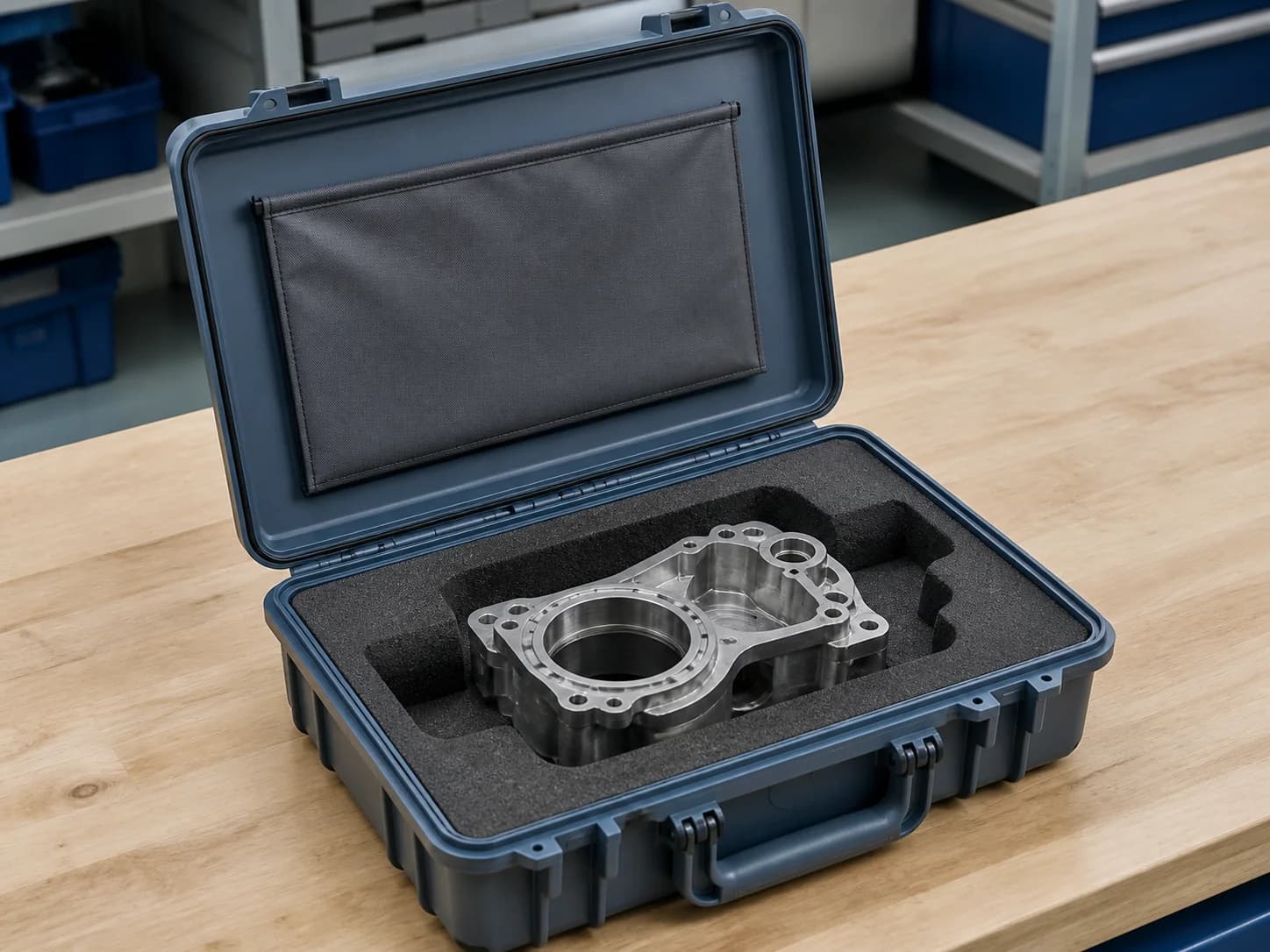
Canada service area request feature map
Illustrative planning layout — surface protection, restraint, and documentation.
Illustrative planning reference only. The image and markers do not establish a provider, facility, part identity, material, process, capability, inspection result, fulfillment route, logistics result, or suitability.
Canada service area request review
Choose a marker to review the supporting inputs.
The face represents sealing, bearing, datum, cosmetic, coated, or cleaned requirements.
Helpful request detail
Mark protected surfaces and required condition before packing and after receipt.
Relevant request contexts
These examples organize remote project inputs; they do not promise process fit, capacity, documentation, or geographic fulfillment.
Define geometry, interfaces, material, finish, critical characteristics, quantity, identification, packaging, and destination.
Identify forming and weld requirements, assembly interfaces, finish, protected surfaces, inspection state, and handling.
Name characteristics, methods, conditions, sampling, decision rules, record fields, revision mapping, and deliverables.
Document incoming condition, damage, wear, mating equipment, design authority, required return state, and destination timing.
Human-managed review flow
Technical, quality, packaging, destination, and logistics decisions are reviewed before acceptance.
Upload files with material, quantity, application, acceptance, destination, and target timing.
Geometry, process fit, open questions, inspection, documentation, protection, and handling are organized.
Fulfillment, timing, packaging, quality scope, and available logistics are confirmed before acceptance.
Identification, destination, receiving limits, project contacts, and confirmed documents are recorded.
Request readiness
Remote review works best when technical and receiving requirements are equally explicit.
Align model, drawing, part number, revision, quantity, and changes.
Identify fits, datums, seals, mating parts, wear, loads, and environment.
State inspection condition, sampling, acceptance, and record fields.
Mark protected faces, contact exclusions, orientation, restraint, and packaging.
Include postal code, site type, receiving limits, contact, and unloading needs.
Name each confirmed record, identifier, language, and mapping requirement.
Material guides
Grade, form, condition, finish, treatment, substitution, and availability are confirmed for each project.
Review alloy, temper, stock form, finish, cosmetic surfaces, joining, protection, and identification.
View materialReview grade, condition, corrosion environment, finish, cleaning, traceability, and preservation.
View materialReview alloy, hardness, heat treatment, wear intent, machining allowance, and surface protection.
View materialReview formulation, moisture, temperature, wear, stability, contact restrictions, and packaging.
View materialRelated guides
Use these guides for machining, fabrication, inspection, remote applications, service areas, and workflow.
Review models, drawings, features, process questions, materials, and acceptance inputs.
Review flat patterns, bends, joins, hardware, finishes, assembly, and protection.
Review characteristics, methods, conditions, sampling, acceptance, and record fields.
Review vehicle or infrastructure context, interfaces, records, handling, and program boundaries.
Compare the city, Ontario, and Canada request guides from one directory.
See how review, follow-up, acceptance, project coordination, and handoff work.
FAQ
A national service-area page opens the request path; it does not confirm universal fulfillment or logistics.
Canadian buyers can submit project files for review. Process availability, fulfillment, timing, packaging, and logistics are confirmed per request.
Provide province, postal code, receiving contact, site type, hours, unloading constraints, and target date.
Mark protected faces, support points, orientation, preservation, restraint, moisture limits, packaging, and inspection state.
List each document, field, revision mapping, language, and item relationship. Availability is confirmed before acceptance.
They depend on destination, size, mass, packaging, service level, and receiving limits. Available options are reviewed per project.
Pearson confirms fulfillment before acceptance. The scope records the point of contact, requirements, destination, and handoff plan.
Start with the part and destination
Share the design, application, acceptance, packaging, and destination details. Pearson will follow up on the remaining questions.
Request a machining quote